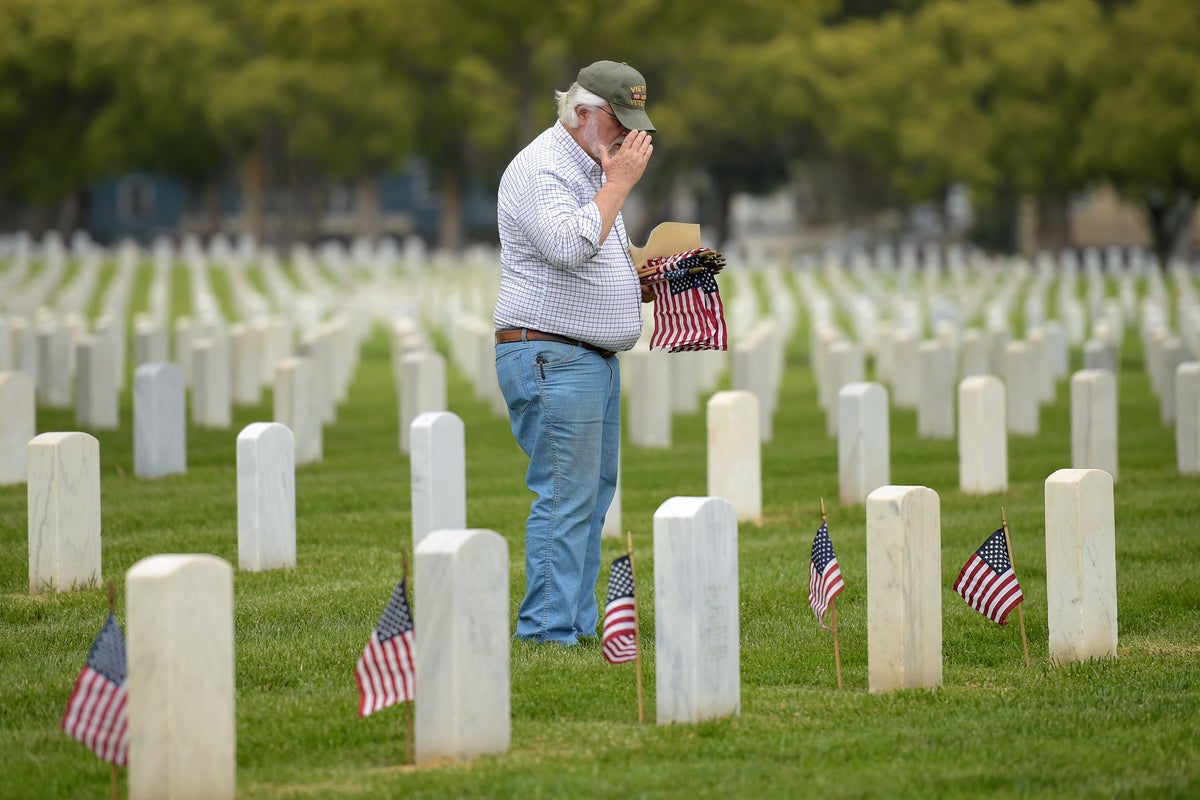
Memorial Day has lost its anchor. What began as a solemn, localized effort to reckon with the staggering human cost of the American Civil War has evolved into a three-day weekend defined by retail sales and backyard cookouts. This shift is not accidental; it is the result of decades of legislative choices and commercial exploitation that systematically decoupled the holiday from its radical, grief-stricken origins. To understand why Memorial Day is failing its foundational purpose, we must look beyond the superficial critique of consumerism and examine the specific historical pivot points that turned a day of communal mourning into a national corporate marketing event.
The Radical Reconstructionist Roots of Decoration Day
The standard textbook narrative credits Waterloo, New York, or various Northern ladies' societies with the creation of the holiday. That narrative is incomplete. It ignores the documented historical reality that one of the earliest, most significant precursors to Memorial Day was organized by formerly enslaved Black Americans immediately following the collapse of the Confederacy.
On May 1, 1865, a crowd of at least 10,000 people, largely consisting of freedmen, marched through the ruins of a Confederate prison camp at the Washington Race Course in Charleston, South Carolina. During the final months of the war, more than 250 Union soldiers had died of disease and exposure in that camp, their bodies buried hastily in mass graves.
In the weeks leading up to the procession, Black Charlestonians exhumed the bodies, gave them proper individual burials, and built a fence around the cemetery. When the march commenced, Black childhood regiments led the procession, carrying armfuls of roses and singing Union anthems. They were followed by Black adults, missionaries, and Union commanders.
This was not a passive act of remembering. It was a fierce, political statement about citizenship, freedom, and the cost of the Union victory. The participants recognized that the dead had fallen to secure a specific future—one that guaranteed the destruction of chattel slavery and the birth of a multiracial democracy.
Three years later, in 1868, General John A. Logan, commander-in-chief of the Grand Army of the Republic, issued General Order No. 11. This order designated May 30 as "Decoration Day," a time for strewing flowers on the graves of comrades who died in defense of their country during the late rebellion. Logan’s order formalized the ritual, but it also began a long process of national sanitization. As the decades wore on, the fiery political context of the post-war South was scrubbed away in favor of a narrative focused exclusively on sectional reconciliation between white Northern and Southern soldiers.
The Uniform Monday Holiday Act and the Great Decoupling
For a century, Decoration Day—which gradually became known as Memorial Day—was observed strictly on May 30, regardless of the day of the week. This permanence forced a pause in the working week. It demanded that communities halt their daily commerce to participate in decoration rituals and parades.
That changed in 1968. Congress passed the Uniform Monday Holiday Act, an piece of legislation designed to create several three-day weekends for federal employees. The law officially moved the observation of Memorial Day from its traditional May 30 date to the last Monday in May. It took effect in 1971.
The legislative debate surrounding the bill reveals a stark tension between honoring the dead and boosting the economy. Proponents openly argued that three-day weekends would stimulate travel, retail sales, and production. Tourism industries lobbied heavily for the change. They won.
The consequence was immediate and profound. By transforming a fixed day of remembrance into a floating Monday, Congress effectively subordinated the holiday to the calendar of American leisure. The long weekend became the primary product; the commemoration became a secondary footnote. Veterans' organizations, including the Grand Army of the Republic's successor groups, warned at the time that moving the date would inevitably dilute its significance. They were proven correct. The holiday was detached from its specific historical anchor and recast as the unofficial start of summer.
The Mechanics of Corporate Co-optation
Once the three-day weekend was codified into law, corporate marketing departments filled the cultural vacuum. Memorial Day sales are now an institutionalized feature of the retail calendar, frequently outstripping the holiday's actual purpose in terms of media real estate and public engagement.
This commercialization operates on a specific psychological mechanism. Advertisements rarely mention the dead; instead, they use generalized patriotic imagery—flags, eagles, and red-white-and-blue motifs—to reframe consumption as an act of civic participation. Buying a mattress or a new vehicle becomes twisted into a celebration of American freedom.
Consider the layout of standard promotional campaigns. Major retailers spend millions of dollars in the weeks leading up to late May optimizing digital advertisements for terms like "Memorial Day deals." This aggressive optimization crowds out historical awareness. A search engine query for the holiday is far more likely to yield a map of local appliance discounts than an explanation of the casualty rates at Gettysburg or the Argonne Forest.
The financial reality is stark. According to retail tracking data, the weekend represents one of the highest-grossing periods of the year for sectors like automotive sales, home improvement, and outdoor recreation gear. The holiday has been successfully monetized because its core theme—sacrifice—has been replaced by its polar opposite: self-indulgence.
The Cost of the All-Volunteer Force and Civil-Military Divides
The erosion of Memorial Day cannot be blamed entirely on retailers. It is also deeply tied to a structural shift in how the United States wages war. The termination of the military draft in 1973 and the subsequent transition to an all-volunteer force created a permanent, professionalized military class that is increasingly isolated from the broader civilian population.
In previous conflicts, such as the Civil War, World War I, and World War II, mobilization was widespread. Nearly every community, neighborhood, and family had a direct stake in the casualty lists. Mourning was a collective, unavoidable social reality.
Today, less than one percent of the American population serves in the active-duty military. The casualties of modern conflicts are borne by a tiny, self-selecting segment of society. Consequently, the vast majority of citizens have no personal connection to anyone who has died in uniform.
This isolation breeds a superficial culture of appreciation that lacks genuine substance. Phrases like "thank you for your service" function as cheap social currency, allowing civilians to absolve themselves of the deeper responsibility of understanding the human cost of foreign policy decisions. On Memorial Day, this manifests as a vague, generalized gratitude toward "the troops," rather than a focused, painful acknowledgment of the individuals who perished. The holiday becomes abstract because the loss is abstract to most of the nation.
Structural Efforts to Reclaim the Day
The degradation of the holiday has not gone unnoticed by those who bear its heaviest burdens. For decades, gold star families—those who have lost a child or spouse in military service—and veterans' advocacy groups have fought to reverse the cultural drift.
In 2000, Congress attempted to address the issue by passing the National Moment of Remembrance Act. This legislation established the White House Commission on the National Moment of Remembrance and designated 3:00 p.m. local time on Memorial Day as a time for all Americans to pause for one minute of silence. The choice of 3:00 p.m. was deliberate, identified as the time when most Americans are maximizing their participation in holiday recreation.
While well-intentioned, the National Moment of Remembrance has largely failed to penetrate the national consciousness. It lacks the institutional teeth to compete with the sheer volume of commercial noise. A voluntary minute of silence cannot easily overcome decades of conditioning that treats the weekend as a consumer festival.
Some veterans' organizations have advocated for a return to the fixed May 30 date. The late Senator Daniel Inouye, a World War II Medal of Honor recipient, introduced a bill in every session of Congress from 1989 until his death in 2012 to restore the original date. Inouye argued that returning to May 30 would restore the holiday's dignity by forcing the nation to pause during the regular workweek, just as it does for the Fourth of July or Thanksgiving. Each time, the legislation died in committee, starved of support by a political establishment unwilling to anger the retail and tourism lobbies.
Recontextualizing the Ritual
Reclaiming Memorial Day requires an intentional rejection of both corporate commercialism and sanitized patriotism. It demands a return to the messy, grief-filled reality of its origin.
True observance is not found in a corporate-sponsored parade or a discount code. It is found in the specific, localized acts of maintenance that characterized the 1865 Charleston procession and the early Decoration Day events. This means visiting local cemeteries, researching the names of the individuals buried there, and understanding the specific historical conflicts in which they fell.
It also requires acknowledging the profound difference between Memorial Day and Veterans Day. The two are frequently conflated by a public that treats them as interchangeable celebrations of the military. Veterans Day, observed in November, honors all who served. Memorial Day is exclusively for those who did not return. Conflating the two dilutes the specific tragedy of the latter; it turns a day of mourning into a general celebration of military might.
The transformation of Memorial Day from a solemn rite of national mourning into a retail engine is a case study in how American culture processes grief: by consuming its way out of it. The holiday can only be restored when communities consciously choose to step away from the cash register and the grill, look directly at the graves of the fallen, and confront the brutal, unvarnished cost of the nation's history.


