Saturday mornings at a suburban polling booth usually smell like damp asphalt, cheap sunscreen, and sizzling onions from a charity sausage sizzle. It is a chaotic, distinctly Australian ritual. You walk past a gauntlet of volunteers thrusting glossy paper into your hands, smiling through exhaustion, hoping a single piece of cardstock will guide your pencil once you step behind the cardboard privacy screen.
Now, picture a hypothetical voter—let’s call her Elena—arriving at a primary school gymnasium in Melbourne just before the doors close. She is tired after a long week, juggling a toddler on one hip and a coffee in her other hand. She already knows how she wants to vote. She wants to support the Greens. As she approaches the entrance, someone hands her a bright green card featuring familiar fonts, environmental messaging, and an unmistakable visual layout. She barely glances at the fine print at the bottom. Why would she? It looks exactly like the material she has seen for years. Inside the booth, she copies the numbered boxes straight onto her ballot paper, folds it, drops it into the slot, and walks out into the afternoon sun, convinced she has just cast a vote for her chosen party.
Except she didn't. Not really.
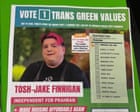
According to court filings and public statements from the Victorian Greens, this exact scenario is what prompted the party to seek an urgent Supreme Court injunction during the Victorian state election campaign. The party alleged that rival political operatives—specifically groups linked to the Labor Party and conservative-aligned independents, depending on the electorate—distributed "how-to-vote" cards designed to mimic the Greens' signature green branding, while actually instructing voters to place the Greens candidate dead last.
Stop and think about that for a second.
In a preferential voting system, every single number you write in those tiny squares matters. It is not a simple tick-the-box exercise; it is a ranked chain of command for your democratic voice. If your first preference doesn't win outright, your ballot physically travels down the line to your second, third, and fourth choices until someone crosses the fifty-percent threshold. When a piece of paper uses the visual language of one movement to steer your hand toward its opponents—placing your actual choice at the very bottom of the heap—it is not merely aggressive campaigning. It is an optical illusion weaponized at the threshold of a voting booth.
The Architecture of a Split-Second Decision
To understand why a shade of green ink can spark an emergency courtroom battle, you have to understand how human beings actually behave on election day. Political strategists spend millions studying the psychology of the "low-information" or "rushed" voter. Most people do not walk into a polling place with a spreadsheet of policy positions memorized. They walk in with a broad allegiance—a color, a party name, a general feeling about who represents their values.
In Victoria, how-to-vote cards are the primary bridge between that broad allegiance and the technical reality of a complex ballot paper. Under the Victorian Electoral Act, parties and candidates are allowed to hand out these cards right up to the legal boundary outside a polling station, usually six meters from the entrance. Volunteers stand there for ten hours straight because those cards work. Data from Australian electoral commissions consistently shows that a substantial percentage of voters follow a how-to-vote card verbatim, particularly in the upper house or in crowded lower-house seats where eight or ten names crowd a single sheet of paper.
This reliance creates an acute vulnerability. Because voters use color as a cognitive shortcut—red for Labor, blue for Liberal, green for the Greens—the visual identity of a party functions much like a trademark on a supermarket shelf. Imagine reaching for a familiar green carton of oat milk, only to get home and discover it is actually heavy cream packaged in an identical shade of emerald with a microscopic disclaimer tucked near the barcode. In commerce, consumer protection laws exist specifically to stop businesses from "passing off" their products as someone else's.
In politics, however, the rules have historically been far murkier.
During the dispute in Victoria, the Greens argued before the Supreme Court that the lookalike cards were likely to mislead or deceive electors in relation to the casting of a vote—a specific offense under state electoral law. Representatives for the party pointed out that the cards used the same green hues, similar typography, and layouts that mirrored official Greens material, all while directing preferences away from Greens candidates and toward rival parties.
On the other side of the legal divide, the creators and defenders of such campaign materials have long argued a very different point. From their perspective, political speech is inherently robust and competitive, and voters are capable of reading the legally required authorization lines printed at the bottom of every pamphlet. In various Australian election disputes over the years, respondents have maintained that no single political party owns a monopoly on a color—especially a color as ubiquitous as green when discussing environmental or progressive policies—and that using similar tones is a standard, if hard-nosed, tactical maneuver to catch the eye of undecided progressive voters.
The Invisible Stakes of the Preference Flow
Why would rival campaigns go to the trouble of printing thousands of green-tinted cards just to bury the Greens at the bottom of the list? The answer lies in the mathematics of tight margins.
In inner-city and suburban seats across Melbourne, elections are rarely decided on primary votes alone. They are won and lost in the distribution of preferences. A shift of just two or three hundred ballots in a marginal seat can flip control of an electorate, altering the balance of power in Spring Street for the next four years.
Consider a hypothetical marginal seat—let's call it Northbridge—where the race comes down to a razor-thin contest between a Labor incumbent, a Liberal challenger, and a surging Greens candidate. If a voter intends to put the Greens first, their second and third preferences might flow to Labor, helping Labor fend off the Liberal candidate. Conversely, if a group wants to ensure the Greens candidate is eliminated early—or wants to harvest first-preference votes for an independent or minor party before flowing preferences elsewhere—convincing a distracted Greens supporter to copy the wrong card achieves two goals at once. It deprives the Greens of a primary vote, and it hijacks the downstream flow of that ballot.
When you are standing in line outside a community hall, clutching a sausage in bread and trying to keep your kids from running into the street, you are not thinking about preference flows or Supreme Court jurisprudence. You are thinking about getting through the line so you can go to the hardware store or make it to your kid's netball game.
That gap—the space between the hyper-calculated strategy of campaign headquarters and the distracted reality of an ordinary Saturday morning—is where electoral trust lives or dies.
A Pattern That Repeats Across Elections
This conflict in Victoria did not emerge in a vacuum. Anyone who has worked inside Australian politics, or stood outside a polling booth as a scrutineer watching ballots get sorted late into the night, recognizes this tactic as part of a broader, recurring playbook.
In previous state and federal elections across Australia, similar controversies have erupted over signage and handouts designed to mimic rival branding. In the 2019 federal election, for example, the Australian Electoral Commission faced intense scrutiny over purple and white signs displayed at polling booths in seats like Chisholm and Kooyong, which mimicked the official colors of the AEC itself while instructing voters in Mandarin that the "correct" way to vote was to put the Liberal Party first. The Federal Court later found that while the signs were likely to mislead voters into thinking they came from the electoral commission, they did not technically alter the outcome of those seats.
In South Australia and New South Wales, legislative battles have similarly raged over "truth in political advertising" laws and the regulation of how-to-vote cards. In some jurisdictions, parties must now register their official how-to-vote cards with the electoral commission days before polling begins, allowing officials to verify that the materials aren't blatantly impersonating an opponent. Yet even with registration rules, the grey zone persists. How close is too close when it comes to a shade of green? When does a "comparative" or "scorecard" flyer cross the line into deceptive impersonation?
I still remember standing outside a cramped polling booth in an inner-northern suburb during an earlier Victorian campaign, watching an elderly man squint at three different flyers he had collected on his walk from the car park. Two of them were green. One was the official party card; the other was a "community scorecard" produced by an opposing interest group that ranked the Greens at the bottom. He turned to me, genuinely bewildered, and asked which one was the "real" one. Under electoral rules, volunteers aren't supposed to interfere with a voter's choice, so all I could tell him was to look closely at the tiny black text at the very bottom edge of the page—the authorization line that reveals who actually paid for the printing.
He held the cards at arm's length, sighed, and stuffed both into his pocket, deciding to wing it inside the booth. For every voter who pauses to ask a question, dozens more simply assume the color tells the whole story.
The Courtroom Clock Against the Election Clock
Seeking an urgent injunction in the middle of an election campaign is one of the hardest maneuvers in Australian law. Unlike a standard commercial lawsuit that can drag on for months or years while lawyers argue over trademarks and consumer confusion, an election has a hard, immovable deadline. Once the ballot boxes are sealed at 6:00 PM on Saturday evening, an injunction is useless. You cannot un-ring a bell, and you cannot easily pull a single tainted ballot out of a pile of forty thousand papers once it has been separated from the voter's name.
Because of this ticking clock, judges hearing emergency electoral applications have to weigh two competing harms on the fly.
On one hand, if a court blocks a political group from distributing its flyers and it turns out later that the flyers were legally permissible, the court has silenced legitimate political expression during the most critical hours of a democracy. Courts in Australia are deeply reluctant to act as censors during an election campaign, recognizing the implied freedom of political communication under the Constitution.
On the other hand, if a court refuses to intervene and the materials genuinely trick thousands of citizens into voting against their own intentions, the integrity of the result itself is compromised. Re-running an election through the Court of Disputed Returns is an extraordinary, expensive, and deeply disruptive last resort that judges prefer to avoid at all costs.
When the Victorian Greens went to court over the lookalike cards, they were asking a judge to step directly into that crossfire—to decide, within hours, whether a piece of cardstock was a clever piece of political persuasion or a fraud on the electorate.
Why the Fine Print Isn't Enough
Defenders of aggressive campaign tactics often fall back on a simple argument: Read the authorization. Every piece of electoral material in Victoria must carry a line stating who authorized and printed it. If a voter fails to read the bottom of the card, the argument goes, that is on the voter.
That defense sounds tidy in a courtroom, but it collapses the moment you step onto the pavement outside a polling place.
First, authorization lines are frequently printed in tiny font, tucked vertically along a margin or blended into a dark background. Second, political operatives routinely use front-group names on those authorizations—names like "Victorian Community Action" or "Better Future Alliance"—that tell an ordinary person nothing about which political party actually funded the print run. Unless you are a political insider who tracks corporate registrations and campaign finance disclosures, reading the authorization line leaves you no wiser than before.
When a system relies on technicalities to excuse visual deception, it sends a corrosive message to the public. It tells voters that election day is a game of caveat emptor—buyer beware—where the burden is on exhausted citizens to outsmart professional campaign strategists trying to trick them at the door.
What Happens to a Democracy When the Signals Break
Democracy runs on low-friction trust. We trust that the person checking our name off the roll is impartial. We trust that the cardboard box holding our ballot won't be tampered with. And, perhaps more fragilely, we trust that the basic visual grammar of the campaign—the names, the logos, the colors—means what it purports to mean.
When political operatives deliberately blur those signals, they aren't just stealing a few hundred preferences from a rival candidate. They are teaching voters to be cynical. They are turning the walk into a polling booth from a civic ritual into an obstacle course where every smiling volunteer might be handing you a trap.
Think back to Elena, standing behind that cardboard screen with her toddler on her hip and a pencil in her hand. She isn't a constitutional lawyer or a party apparatchik. She is just a citizen trying to do her part in the few spare minutes she has on a Saturday afternoon. When she looks down at the green card in her hand and copies the numbers onto her ballot, she is placing an immense amount of faith in the honesty of the system around her.
If the ink on that card is lying to her, the damage goes far beyond who wins a single seat in Parliament. Once people realize they can't even trust the color of the paper they're holding, they don't just stop trusting one party—they start wondering if the whole exercise is rigged against them from the moment they walk through the school gate.