Ash has a distinct weight when it lands on a ceramic coffee cup. It does not fall like snow. It drifts sideways, heavy with the ghost of a pine forest fifty miles away, settling into the white porcelain with a faint, gritty hiss.
If you sat on a terrace in Athens, Madrid, or Lisbon during the height of the summer heatwaves, this was your morning ritual. You brushed the grey flakes off your table before deciding whether it was safe to breathe deeply.
For decades, summer in Southern Europe was a promise. It meant the sharp scent of wild thyme in the hills, the cool shock of the Mediterranean at noon, and long nights spent under dark, clear skies. Now, that promise is fracturing. The new reality is measured in hectares burned, particulate matter levels, and evacuation orders barked through megaphones in three different languages to fleeing tourists.
The standard news feeds give you the geometry of disaster. They report that thousands of firefighters are battling blazes across the Iberian Peninsula and Greece. They note that temperatures have soared past 40°C ($104^\circ\text{F}$), fueled by dry winds blowing north from Africa. But a spreadsheet of burned acreage cannot capture the precise moment a lifetime of security dissolves into a rearview mirror.
The Sound of the Shift
To understand what is happening to the Mediterranean basin, look at Portugal. Specifically, look at the small, sun-baked villages tucked into the central hills, where older residents have spent generations managing the land.
Imagine a farmer named Mateus. He is a composite of the resilient men and women who refuse to leave their ancestral plots until the smoke turns the afternoon into midnight. Mateus knows the wind. He knows that when the eastern gale blows from the Spanish plains, the air dries out until the eucalyptus leaves rattle like bones.
Historically, a forest fire was an enemy you could look in the eye. It moved along the ground, consuming brushwood, giving neighbors time to gather with wet sacks and water pumps.
Not anymore.
The fires of the current era are different beasts entirely. Driven by consecutive years of drought and intense heat, they don't just burn; they explode. They create their own weather systems, throwing embers miles ahead of the main front, leapfrogging rivers and highways that used to serve as firebreaks. When a fire moves that fast, it stops being a localized emergency. It becomes an atmospheric event.
In Spain, the regional borders offer no protection. Fire crews from Andalusia find themselves deployed to Extremadura, fighting blazes so intense that the heat radiation melts the plastic casing on their equipment. The land is essentially a tinderbox waiting for a spark, whether that spark comes from a dry lightning strike or a discarded cigarette butt.
The Poison in the Wind
While the immediate terror belongs to those in the direct path of the flames, a more insidious crisis is drifting across the continent.
In Greece, authorities recently issued an unprecedented warning to the residents of Athens and the surrounding Attica region: stay indoors, close all windows, and turn off air conditioners that draw air from the outside. The reason was a thick, yellow-grey shroud of toxic smoke hanging over the ancient city, obliterating the view of the Parthenon.
Wildfire smoke is not just wood ash. It is a complex, chemically volatile soup of carbon monoxide, volatile organic compounds, and fine particulate matter known as PM2.5. These particles are less than 2.5 micrometers in diameter. To put that in perspective, they are roughly thirty times smaller than the width of a single human hair.
Because they are so small, your body's natural filtration systems—your nasal hairs, your mucus membranes—cannot stop them. They travel deep into the lungs, crossing directly into the bloodstream.
Consider what happens next: for a healthy adult, a few days of inhaling this air manifests as a scratchy throat, stinging eyes, and a dull headache. But for the elderly, for children whose lungs are still developing, and for anyone with asthma or cardiovascular disease, that smoke is a quiet executioner. Medical emergency rooms in Athens reported a surge in respiratory admissions that completely eclipsed the usual summer heatstroke cases.
The smoke transforms a rural tragedy into an urban lockdown. You are trapped inside your home, watching the sun glow a sickening, apocalyptic orange through the blinds, realizing that the very air you breathe has become a hazard.
The Tourist Trap
There is a profound disconnect at play on the beaches of the Mediterranean.
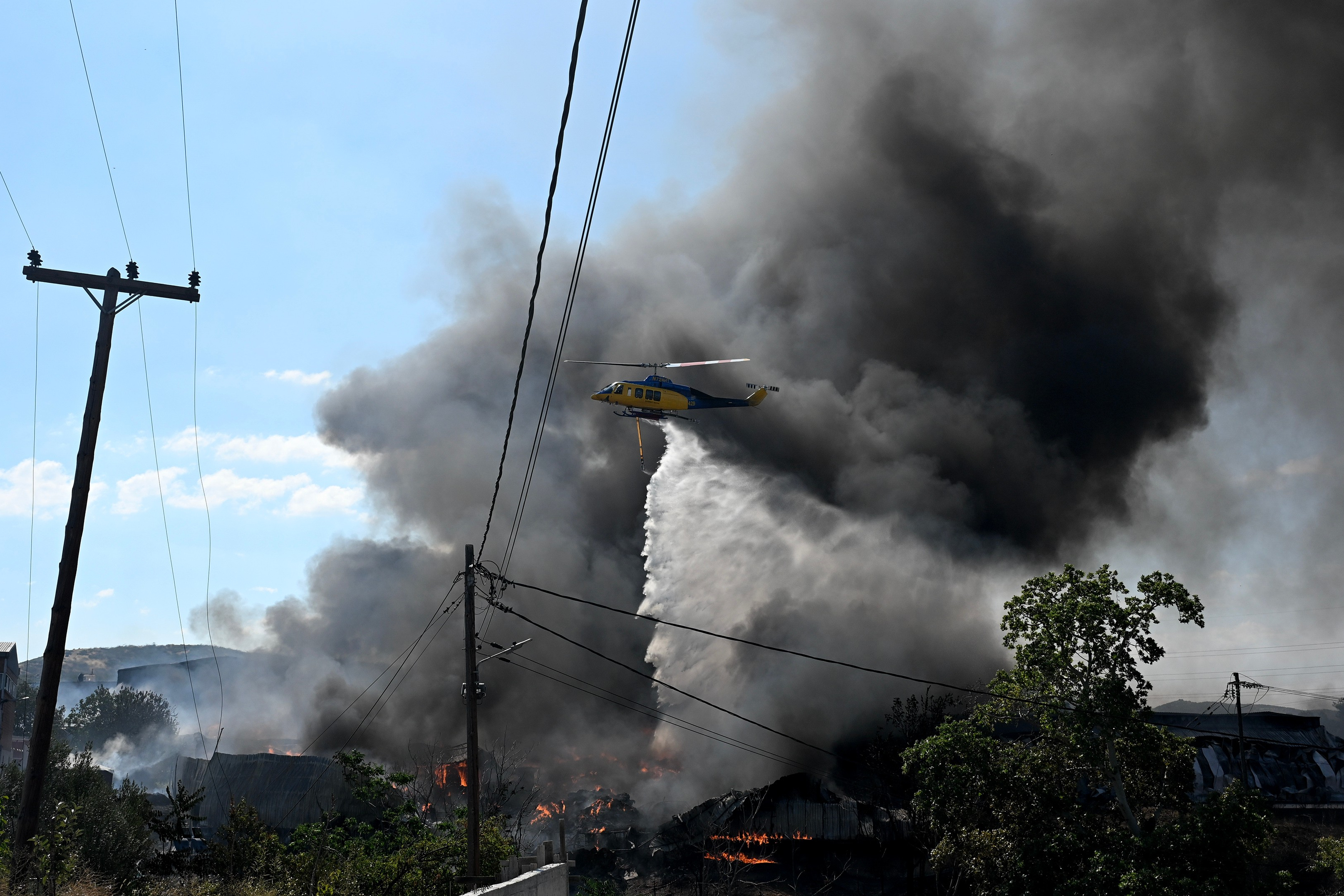
On one side of a coastal highway, British, German, and American holidaymakers lie on sun loungers, determined to enjoy the vacation they planned six months in advance. On the other side of the highway, columns of black smoke rise from the ridges, and the distant thrum of water-dropping helicopters echoes over the waves.
The economics of the region demand this cognitive dissonance. Southern Europe relies heavily on summer tourism to keep its GDP afloat. Yet, the environment that attracted those millions of visitors is becoming increasingly unlivable during July and August.
We are witnessing the beginning of a massive geographic realignment. Travel agencies are quietly noting a shift in consumer behavior, as travelers begin to opt for Scandinavia or the Baltic coast over the traditional southern resorts. The risk of having your holiday interrupted by an evacuation order—or spent entirely inside a hotel room because the air quality index has hit hazardous levels—is changing the calculus of leisure.
It is a terrifying realization for the local economies. If the summer season shrinks because the heat and smoke render it hostile, the financial lifeblood of thousands of coastal towns dries up just as surely as the vegetation in the hills.
The Myth of the New Normal
People often use the phrase "the new normal" to describe these brutal summers. It is a comforting term because it implies a plateau—a new, albeit harsher, stability that we can adapt to, build defenses against, and eventually master.
But this is an illusion. There is no plateau.
What we are seeing in Spain, Portugal, and Greece is a trajectory. Every degree of global warming does not just add a degree to the thermometer; it multiplies the volatility of the weather. The landscapes are changing permanently. The native oak forests, which possessed a natural resistance to fire, were largely replaced decades ago by fast-growing pine and eucalyptus for the paper industry. These non-native species burn like gasoline.
When you combine altered ecosystems with prolonged drought and extreme heat, the result is an environmental debt that is finally coming due.
The firefighters who stand on the front lines understand this better than any politician drafting a climate manifesto. They speak of fires that defy textbook behavior, blazes that burn through the night with the same intensity as they do under the midday sun, ignoring the drop in temperature that used to give suppression crews an advantage.
The Evening Sky
As night falls over the southern peninsula, the wind sometimes drops, offering a temporary reprieve. But the darkness brings a different kind of anxiety. From the hills, you can see the glowing red lines snaking across the ridges, resembling rivers of lava carving through the dark.
The true cost of these fires will not be calculated in the euros spent on firefighting aircraft or the insurance payouts for destroyed villas. It will be found in the slow, cumulative erosion of a way of life.
It is found in the children who grow up associating the summer holidays not with freedom and outdoor play, but with sealed windows and air purifiers. It is found in the farmers who look at their scorched groves and realize that the soil has been baked so severely that nothing will grow there again in their lifetime.
The Mediterranean has always been defined by its light—that bright, piercing clarity that inspired artists, poets, and travelers for millennia. This summer, that light was filtered through a haze of burnt pine and toxic dust, casting a long, dim shadow over the future of the south.