International election observation teams exist to project a calm, procedural authority over moments of profound national panic. On Tuesday, the European Union Election Observation Mission in Colombia did exactly that, declaring the first round of the presidential election transparent, orderly, and smooth. Headed by Esteban González Pons, the mission offered the global press a tidy narrative: despite institutional polarization and peripheral rural violence, Colombia had once given the world a lesson in democracy.
This assessment fundamentally misreads the actual mechanics of modern democratic erosion in Latin America.
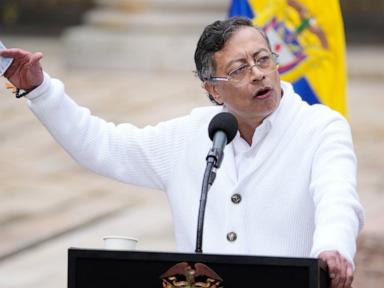
By focusing entirely on the logistics of the ballot boxes, the international community has blindfolded itself to a far more dangerous phenomenon unfolding in Bogotá. Outgoing left-wing President Gustavo Petro has spent weeks laying the groundwork to reject the electoral results. Following Sunday night’s preliminary count, which unexpectedly placed far-right newcomer Abelardo de la Espriella ahead of leftist Senator Iván Cepeda, Petro declared on social media that he would not accept the results provided by the National Civil Registry. He claimed, without presenting a shred of evidence, that the pre-count was artificially inflated by 800,000 phantom voters.
This is not a routine dispute over technicalities. It is a systematic effort to delegitimize the state’s electoral architecture from the absolute pinnacle of state power. The real crisis in Colombia is not that the software is broken, but that the country’s leader is actively trying to break public faith in the idea of counting votes altogether.
The Passport Monopoly and the Ghost in the Registry
To understand why Petro’s claims resonate with a significant portion of his base, one must look past his recent rhetoric and examine a decade-long institutional feud. At the center of the president's conspiracy theory sits Thomas Greg & Sons, a multinational security and printing giant that enjoys a near-monopoly on issuing Colombian passports and managing the logistics of the country's election tally sheets.
Petro has long argued that a private corporate entity cannot be trusted with the raw materials of democracy. On paper, his skeptics can point to historical precedent to justify their anxiety. In 2014, a lengthy legal battle led Colombia’s Council of State to rule that the legislative elections that year suffered from clear inconsistencies between different physical tally forms, specifically the E-14 and E-24 documents. Crucially, the court noted it could not definitively rule out software tampering because the National Registry refused to hand over its proprietary source code for independent forensic review.
The state was ordered to acquire its own internal, fully traceable vote-counting software to prevent corporate opacity from clouding future elections. The National Civil Registry simply ignored the directive. It argued that exposing the source code would leave the system vulnerable to external cyberattacks.
This institutional stubbornness handed Petro an ideal political weapon. By failing to transition to a transparent, publicly owned software model, the Registry allowed a technical dispute to fester into a grand conspiracy theory. When Petro told his supporters that only the physical vigilance of millions of people could overcome the algorithm manipulations of the Registry, he was taking a legitimate critique of corporate procurement and twisting it into an existential battle against a deep-state algorithm.
The Pre Count Optical Illusion
The danger of this rhetoric is that it exploits the natural, messy friction built into the Colombian electoral system. Colombia uses a two-tier counting process: an immediate, unofficial pre-count designed to give the media and the public quick results on election night, followed by an official, judicially supervised scrutiny process that takes days to finalize.
In a normal election cycle, the variance between these two counts is minuscule. Juan Carlos Galindo Vácha, a veteran official who twice led the National Civil Registry, notes that historically, the discrepancy between the unofficial election-night broadcast and the certified judicial count is well under one percent.
There was, however, one glaring exception that Petro now uses as his primary shield. During the 2022 legislative elections, more than half a million votes belonging to Petro’s Historic Pact coalition vanished during the Sunday night pre-count, only to miraculously reappear days later during the official scrutiny.
The institutional damage was done, even though independent watchdogs like the Electoral Observation Mission demonstrated that the omission was caused by terrible ballot design and human error rather than malicious code. The layout of the 2022 ballot sheets made it incredibly easy for tired polling volunteers to overlook the Historic Pact column.
By conflating a design failure from four years ago with a deliberate, algorithmic conspiracy today, the executive branch is performing a dangerous piece of political theater. In a tight race where de la Espriella holds 43.7 percent of the vote to Cepeda’s 40.9 percent ahead of the June 21 runoff, weaponizing these structural anomalies transforms standard bureaucratic errors into evidence of treason.
The Armed Margin and the Real Voter Fraud
While the executive branch tilts at algorithmic windmills in the capital, the true threats to Colombian democracy are happening in plain sight across the rural periphery. The focus on software security obscures the far more pedestrian, violent realities of territorial control.
Large swaths of rural Colombia are currently dominated by a fractured patchwork of criminal syndicates, dissident FARC factions, and the National Liberation Army. In these regions, elections are not compromised by code; they are dictated by rifles. International observers stationed at 591 urban and suburban polling centers routinely miss the quiet coercion occurring in the shadow of illegal armed groups, where communities are told exactly which ballot to cast if they wish to avoid displacement or death.
Simultaneously, traditional networks of cash-for-votes operate with impunity in marginalized urban sectors. Vote-buying remains an entrenched economic reality across several departments. This structural corruption cannot be caught by auditing an E-14 form or checking the integrity of a server room.
The tragedy of the current discourse is that by focusing entirely on a fictitious digital heist, the Colombian political establishment is ignoring the very real, physical erosion of voter autonomy in the countryside. The European Union’s declaration of transparency serves as a comforting illusion, but it fails to capture a electorate caught between the physical intimidation of warlords and the rhetorical subversion of their own president.
Subverting the Rules from the Inside
The playbook being executed in Bogotá is part of a broader, global shift in how populists approach the ballot box. Historically, authoritarian movements seized power through military intervention or blatant, top-down ballot stuffing. The modern strategy is far more sophisticated: utilize democratic mechanisms to achieve power, and then use the megaphone of the presidency to systematically dismantle the credibility of the very institutions that enabled your rise.
By declaring that he will only consider and accept the results if they match his expectations, Petro is shifting the burden of proof. He has forced independent judges, electoral registrars, and citizen volunteer counters into the impossible position of proving a negative.
This structural cynicism ensures that regardless of who wins the June runoff, the next administration will face an immediate crisis of legitimacy. If de la Espriella maintains his lead through his promise of an iron-fist security strategy, the left will view his presidency as the illegitimate product of a corporate conspiracy. If Cepeda manages to close the gap and win, the right will argue that Petro successfully bullied the Registry into altering the final tally sheets.
This is how democratic frameworks collapse. They do not end with a sudden explosion, but with the slow, steady poisoning of the well of public trust, leaving a nation with no shared reality upon which to govern.


