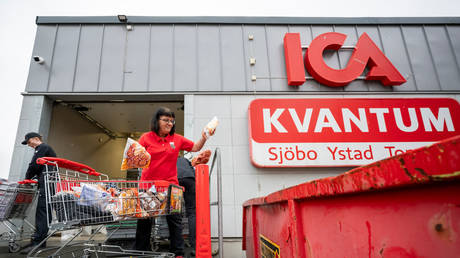
Commercial freezers across Europe and military base commissaries in the United States became the unlikely targets of coordinated cyber-intrusions, revealing a fragile blind spot in the modern food supply chain. Attackers did not deploy complex, multi-stage malware or detonate logic bombs. They simply logged into industrial refrigeration management systems, manipulated thermostats, and turned freezing units into heating elements. Temperatures climbed to 50 degrees Celsius (122 degrees Fahrenheit), spoiling tons of perishable goods, melting equipment housings, and forcing international security agencies to confront a harsh reality. Industrial Internet of Things devices have long prioritized operational convenience over structural defense.
The strategy behind these incidents exposes a fundamental shift in geopolitical friction. Sabotage no longer requires physical infiltration of a warehouse or a secured logistics hub. When hundreds of supermarkets in France, Sweden, and Belgium, alongside select United States defense installations, rely on centralized third-party remote management gateways to monitor cold storage, a single compromised credential or unpatched default password grants remote administrative access to an entire continent's perishables. Investigators tracking the architecture of these intrusions point out that the attackers did not need to break encryption schemes. They walked right through doors left wide open by administrative neglect.
The Illusion of Air-Gapped Isolation
For decades, industrial control systems operated under the assumption of physical isolation. Engineers believed that heavy machinery, HVAC setups, and commercial cooling units remained safe simply because they were disconnected from corporate email networks and consumer-facing websites. That operational philosophy became obsolete the moment facility managers demanded remote tablet monitoring, cloud-based telemetry, and automated diagnostic logging.
To achieve remote oversight, vendors connected legacy refrigeration controllers—such as units manufactured by Danfoss and similar industrial suppliers—to cellular gateways and broadband routers. Many of these deployments lacked multi-factor authentication, proper network segmentation, or routine firmware updates. Shodan, the search engine for internet-connected devices, routinely exposes hundreds of industrial refrigeration management consoles directly to the public web with authentication prompts disabled or set to factory defaults.
When state-linked actors or opportunistic extortionists scan for vulnerable endpoints, they find thousands of commercial freezers broadcasting their operational status to the open internet. The perpetrators do not need sophisticated exploits when hardware management panels accept administrative commands over standard web ports without cryptographic verification.
Supply Chain Logistics as a National Security Vector
The economic damage caused by these coordinated temperature manipulations extends far beyond spoiled inventory. Modern grocery logistics rely on a just-in-time delivery model. Supermarkets maintain minimal backroom stock, depending on continuous cold chain continuity from regional distribution centers to retail display cases. When an entire chain of stores loses its refrigeration capacity simultaneously, the replacement bottleneck creates cascading shortages.
Government inquiries, including those launched by the Pentagon following unexplained commissary failures at domestic military installations, frame these events as structural vulnerabilities rather than isolated acts of vandalism. Food security is national security. Disrupting calorie distribution channels without firing a single kinetic round demonstrates asymmetric leverage that rivals traditional cyberattacks on electrical grids or municipal water systems.
Consider a hypothetical scenario where an adversary targets cold storage facilities during a national emergency or mobilization period. By neutralizing the preservation infrastructure for protein and dairy supplies across multiple logistics hubs, an attacker can severely degrade civilian morale and military readiness simultaneously, all while leaving minimal forensic evidence behind. Because the commands executed by the hackers were legitimate administrative instructions interpreted correctly by the system firmware, traditional intrusion detection systems registered no malicious code execution. The weapon was not a virus; it was the intended functionality of the device abused by an unauthorized user.
Closing the Exposure Gap
Mitigating this vector requires a radical departure from how industrial hardware is deployed and maintained. Retailers and defense logistics commands cannot afford to treat refrigeration units as set-and-forget appliances. Every networked controller demands strict network segmentation, placing operational hardware behind heavily guarded virtual private networks or completely isolated local networks that block inbound connections from the wider internet.
Furthermore, accountability must shift toward the original equipment manufacturers who ship industrial controllers with lax security defaults. Hardware intended for critical infrastructure must enforce credential rotation upon initial setup, mandate multi-factor authentication for any remote access channel, and provide automated, secure firmware delivery paths that do not rely on local store managers remembering to check for updates.
The freezer hacks serve as a brutal wake-up call for an industry that traded physical security for remote convenience. Until standard operating procedures treat industrial appliances with the same rigorous cybersecurity posture applied to financial servers and military communications networks, the infrastructure sustaining our food supply will remain dangerously exposed to anyone willing to twist a digital dial.