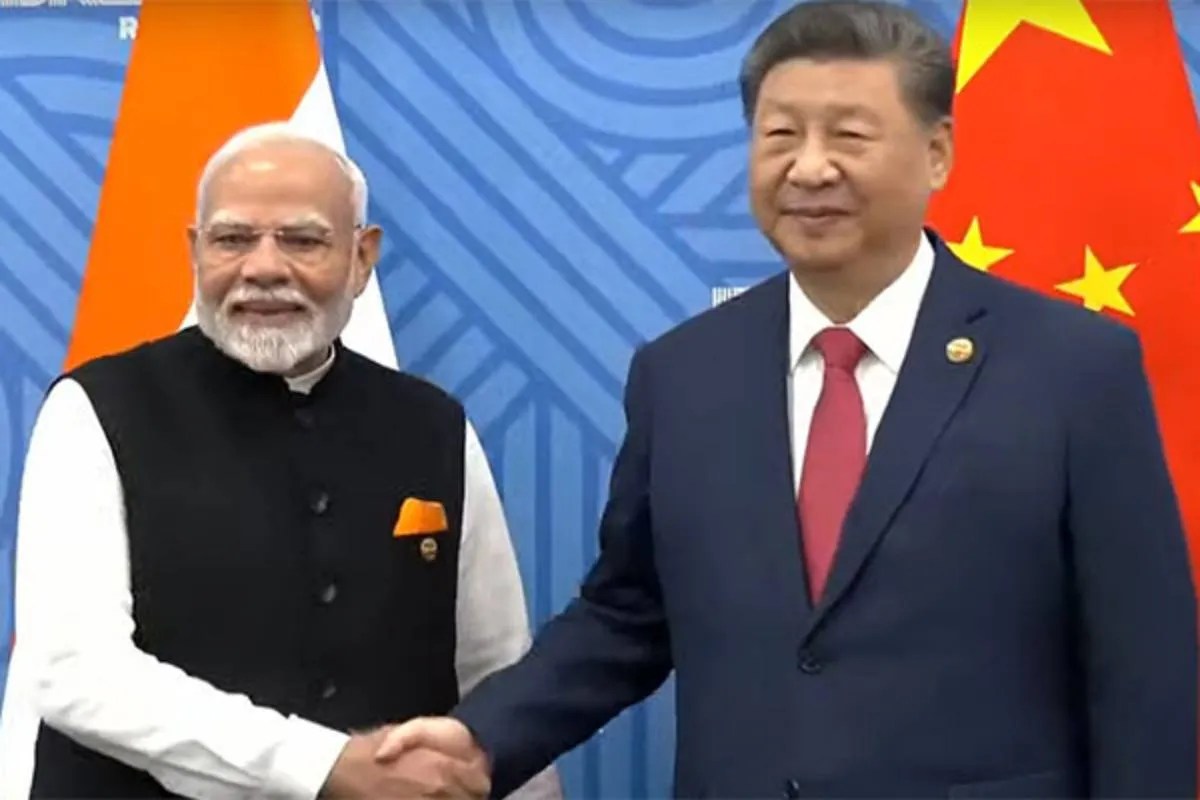
Six years after the lethal hand-to-hand combat in the Galwan Valley, the fundamental structure of India-China relations has permanently fractured, defying any hopes of a return to the pre-2020 status quo. While periodic diplomatic statements hint at disengagement, the reality on the ground tells a radically different story of permanent militarization. New Delhi has realized that Beijing’s territorial ambitions along the Line of Actual Control (LAC) are not temporary incursions but part of a long-term strategy to keep India strategically off-balance. Consequently, India’s foreign policy has shifted from diplomatic accommodation to a hardnosed strategy of military mirroring, economic decoupling, and global alliance-building.
The Illusion of Border Disengagement
Military commanders still meet in synchronized tents, issuing joint press releases that promise peace and tranquility. Yet, these statements mask a grim geographic reality. The buffer zones established in areas like Galwan, Pangong Tso, and Gogra-Hot Springs have effectively altered the patrolling rights that Indian troops enjoyed for decades. India has lost access to several patrolling points, transforming what was once a gray zone into a Chinese-dominated perimeter.
Beijing uses these buffer zones to institutionalize its gains. By pushing Indian patrols back, the People's Liberation Army (PLA) has created a new baseline for negotiations. This is salami-slicing in its purest form. Each minor encroachment is defended as historical possession, forcing New Delhi to negotiate simply to regain access to territory it controlled routinely just years ago.
The infrastructure boom on the Chinese side underscores this permanence. Massive heliports, underground ammunition dumps, and all-weather roads have sprung up across the Tibetan plateau. This is not the behavior of an army planning to withdraw. It is the footprint of an occupying force digging in for a multi-decade confrontation.
The Failure of the Economic Weapon
Immediately after the 2020 clash, India banned hundreds of Chinese applications and threw up regulatory hurdles for Chinese foreign direct investment. The public cheered. Politicians promised to break the back of Chinese manufacturing dependence.
The numbers reveal a harsher truth. India’s trade deficit with China has continued to balloon, routinely breaking records. Indian pharmaceutical companies still rely heavily on Chinese Active Pharmaceutical Ingredients (APIs) to manufacture generic drugs. The domestic solar energy push depends entirely on cheap Chinese photovoltaic cells.
+------------------------------------+------------------------------------+
| Sector                             | Dependence on Chinese Imports      |
+------------------------------------+------------------------------------+
| Active Pharmaceutical Ingredients  | Approx. 65-70%                     |
| Solar Power Components             | Approx. 75-80%                     |
| Electronics (Components/Telecom)   | Approx. 40-50%                     |
+------------------------------------+------------------------------------+
Tariff barriers and tax raids on Chinese smartphone makers make for great headlines, but they cannot replace a missing domestic manufacturing ecosystem overnight. Striking at Chinese corporate interests without viable domestic or Western alternatives only punishes Indian consumers and slows down local infrastructure growth. The economic weapon has proven to be a blunt instrument, capable of irritating Beijing but entirely ineffective at changing its military posture.
The Himalayan Grey Zone Strategy
China’s strategy along the LAC mirrors its tactics in the South China Sea. It avoids outright war while shifting realities on the ground so rapidly that opposition becomes too costly.
A key element of this approach is the construction of Xiaokang villages—dual-use civilian settlements built directly on the disputed border. These are not merely housing projects. They are forward operating bases disguised as civilian communities. By placing Tibetan herders and Han Chinese settlers in these heavily fortified villages, Beijing creates a legal and human shield. Under international norms, removing civilian populations is a logistical and public relations nightmare.
India has responded with its own Vibrant Villages Programme, attempting to counter Beijing by developing its own border hamlets. However, India faces severe demographic headwinds. Decades of underdevelopment have driven young populations away from these harsh border terrains into mainland cities. Reversing this migration requires massive economic incentives, a luxury the Indian treasury cannot easily afford given competing welfare demands.
The Multi Alignment Trap
Faced with a superior economic and military power, New Delhi has leaned heavily into global partnerships, most notably the Quadrilateral Security Dialogue (Quad). This shift has drawn sharp rebukes from Beijing, which views the grouping as a Washington-led effort to contain its rise.
This Western tilt comes with significant strategic baggage. While Washington is eager to sell hardware and share intelligence, it expects India to align with its broader global objectives, including confrontation with Russia and involvement in Western Pacific security. India has historically guarded its strategic autonomy fiercely. Getting dragged into conflicts outside its immediate sphere of interest remains a major concern for South Block planners.
The Western alliance is also transactional. If US focus shifts entirely toward Eastern Europe or the Taiwan Strait, India will find itself facing the PLA alone in the freezing heights of Ladakh. No American soldier will fight on the ridges of the Himalayas. New Delhi knows this, creating a deep sense of hesitation behind its public embrace of the West.
The Nuclear and Conventional Asymmetry
The power imbalance between New Delhi and Beijing cannot be ignored. China’s defense budget dwarfs India’s by a factor of nearly three, allowing the PLA to outspend India in emerging domains like cyber warfare, space assets, and artificial intelligence.
+------------------------------------+------------------------------------+
| Metric                             | Estimated Ratio (China to India)   |
+------------------------------------+------------------------------------+
| Defense Spending                   | ~3:1                               |
| Technological Modernization        | Significant lead in automated tech |
| Infrastructure Deployment Speed    | Superior logistical automation     |
+------------------------------------+------------------------------------+
This asymmetry means India cannot afford a war of attrition. Its military doctrine has traditionally focused on Pakistan, a country it can comfortably manage. Repurposing divisions, rewriting strike corps doctrines, and shifting mountain warfare assets to the northern border has been a painful, ongoing reorganization.
This shift has also fundamentally changed India's nuclear calculations. The traditional focus on maintaining a credible minimum deterrent against Pakistan is obsolete. India now must build out a triad capable of reaching China’s eastern seaboard, driving a silent but rapid expansion of its long-range missile programs like the Agni series.
The Path Forward is Free of Illusion
India must accept that the border dispute will not be resolved through diplomatic goodwill. The era of the "Wuhan Spirit" or informal summits over tea is dead, buried under the debris of the Galwan valley.
Instead of chasing the mirage of a comprehensive border settlement, India needs to focus on building asymmetric denial capabilities. This means investing heavily in loitering munitions, drone swarms, and advanced electronic warfare systems that can neutralize the PLA's technological edge without matching them soldier-for-soldier. The domestic defense industry must be forced to deliver, cutting through bureaucratic red tape that has stalled critical procurement projects for years.
Simultaneously, India must weaponize its maritime geography. The Indian Ocean remains China’s choke point, through which the vast majority of its energy supplies pass. By turning the Andaman and Nicobar Islands into an unassailable maritime fortress, India can create a credible counter-threat. If Beijing threatens India's land borders, India must possess the capability to choke China's maritime lifelines in the Malacca Strait. This is the only leverage Beijing truly respects.