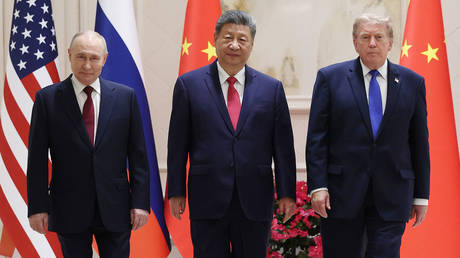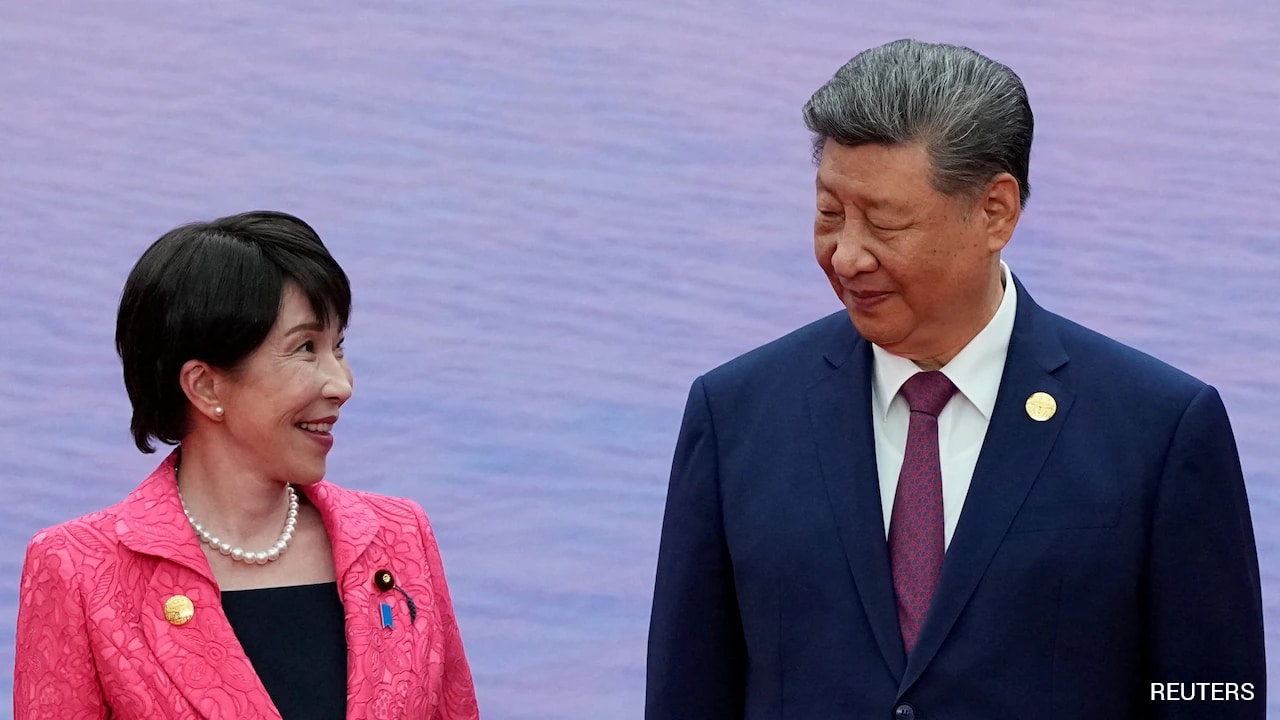
When Beijing declines a bilateral summit with Tokyo and immediately issues public guidance regarding Japan’s political "attitude," it is executing a calibrated exercise in coercive diplomacy rather than an emotional diplomatic slight. Standard political journalism treats these exchanges as isolated personality clashes or vague "tensions." In reality, this sequence represents a structured signaling mechanism designed to impose asymmetric political costs on a Japanese administration without triggering military escalation or comprehensive economic decoupling.
To analyze this dynamic accurately, we must separate the observable diplomatic behaviors from the underlying strategic incentives. The refusal of high-level engagement followed by prescriptive rhetoric functions as a conditioning tool. Beijing establishes a baseline where diplomatic access is treated not as a standard channel for conflict resolution, but as a reward contingent upon Tokyo's prior alignment with Chinese core interests.
The Mechanics of the Diplomatic Snub
In international relations, summitry is rarely the venue where breakthroughs are negotiated; rather, it is the ceremonial ratification of agreements already secured by lower-level bureaucrats. Therefore, when Chinese leadership refuses a meeting with a Japanese Prime Minister—whether on the sidelines of a multilateral forum like APEC or the G20, or through formal state channels—the immediate operational impact on routine bilateral administration is minimal. Working-level channels between the Ministry of Foreign Affairs in Tokyo and the Ministry of Foreign Affairs in Beijing remain open. Trade volumes continue to clear customs.
The true function of the refusal lies in audience costs and agenda control.
By withholding a leader-level meeting, Beijing forces the Japanese Prime Minister to absorb domestic political pressure. In Tokyo, a Prime Minister's foreign policy competence is routinely measured by their ability to manage relations with Washington while keeping Beijing stable enough to protect Japanese corporate interests. A public snub signals to Japanese business lobbies—such as the Keidanren—that the incumbent administration lacks the diplomatic traction necessary to safeguard commercial stability in mainland China.
Simultaneously, the refusal allows China to dictate the precondition phase of diplomacy. Instead of negotiating over substantive disputes—such as maritime incursions near the Senkaku/Diaoyu Islands, export controls on semiconductor manufacturing equipment, or security cooperation with Taiwan—Beijing shifts the diplomatic goalpost. The negotiation ceases to be about policy compromises and becomes an existential debate over whether Tokyo possesses the "correct attitude" to warrant a conversation.
Deconstructing the "Attitude" Directive
When Chinese state media or Foreign Ministry spokespersons advise Japan to "adjust its attitude," "meet China halfway," or "reflect on history," Western analysts frequently dismiss the phrasing as boilerplate propaganda. This is an analytical error. In Chinese diplomatic lexicon, "attitude" (taidu) is a precise operational variable that encompasses three specific behavioral demands.
1. Rhetorical Restraint on Core Interests
Beijing demands that Tokyo refrain from internationalizing disputes that China defines as internal affairs. Specifically, this targets Japanese official statements linking the security of the Taiwan Strait to Japan's own survival-threatening situations. When Tokyo explicitly states that a Taiwan contingency is a Japanese contingency, it violates Beijing’s baseline expectation of strategic ambiguity. The "attitude" critique is an attempt to compel self-censorship among Japanese cabinet members before any substantive talks can occur.
2. Decoupling from US Containment Architecture
China views Japan's defense buildup—specifically the acquisition of counterstrike capabilities and the tightening of the US-Japan-South Korea trilateral framework—as an extension of American containment strategy. However, because Beijing recognizes it cannot easily sever the US-Japan security alliance, its diplomatic messaging targets the economic and technological domains. An acceptable "attitude" requires Tokyo to resist Washington’s pressure to restrict exports of advanced lithography and semiconductor chemicals to Chinese firms, or at least to implement those restrictions with maximum friction and delay.
3. The Historical Framing Asymmetry
Invoking historical grievances serves as a moral veto. By framing contemporary security policies through the lens of mid-20th-century Japanese militarism, Beijing attempts to delegitimize Japan's normalization as a standard security actor in the Indo-Pacific. This framing is intended to resonate not only domestically within China, where nationalism provides regime legitimacy, but also within Southeast Asian nations that harbor historical memories of imperial Japan, thereby complicating Tokyo's regional coalition-building.
The Cost Function of Asymmetric Engagement
To understand why Beijing relies on this two-step maneuver—snub followed by moralizing advice—one must evaluate the cost function governing Sino-Japanese relations. Both nations face severe structural constraints that limit their options for direct coercion.
- Military Escalation: Direct kinetic conflict over disputed maritime features carries catastrophic risks, including automatic US treaty intervention under Article 5 of the US-Japan Security Treaty. The cost is prohibitively high.
- Total Economic Sanctions: While China has utilized targeted economic coercion—such as the ban on Japanese seafood imports following the release of treated water from the Fukushima Daiichi nuclear plant—broad economic sanctions against Japan would severely damage China's own manufacturing supply chains. Japan remains a critical supplier of high-precision machinery, specialty chemicals, and intermediate electronic components that Chinese factories cannot quickly replace.
Because military and broad economic tools carry unacceptable blowback, diplomatic access becomes the lowest-cost lever of influence. Withholding a summit costs Beijing virtually nothing in material terms, yet it generates immediate media narratives of Japanese diplomatic isolation.
| Coercive Lever | Implementation Cost to Beijing | Blowback Risk to Chinese Economy | Primary Target in Tokyo |
|---|---|---|---|
| Summit Refusal & Rhetoric | Negligible | Zero | Prime Minister's domestic approval; Keidanren |
| Targeted Import Bans | Low | Minimal (e.g., seafood) | Regional Japanese political constituencies |
| Rare Earth / Tech Restrictions | Moderate | High (disrupts global supply chains) | Japanese manufacturing and tech sectors |
| Maritime Gray-Zone Escalation | Moderate to High | Moderate (triggers regional balancing) | Japan Coast Guard and Self-Defense Forces |
Cause-and-Effect Failures in Traditional Diplomatic Responses
Historically, Japanese administrations have fallen into predictable traps when responding to this sequence. Understanding these causal chains reveals why standard diplomatic counter-moves often fail.
The Premature Concession Loop: When a Japanese administration prioritizes securing a photo-op at a multilateral summit to boost domestic polling ahead of an election, it often dispatches senior party officials or business delegations to Beijing to "smooth the waters." Beijing interprets this urgency as political vulnerability. Rather than rewarding the outreach with an unconditional summit, Chinese negotiators typically extract quiet concessions—such as softening language in upcoming defense white papers or delaying joint military exercises—merely to grant the meeting. Once the precedent is set that a meeting must be bought, the price for the next meeting rises.
The Reactive Escalation Trap: Conversely, when Tokyo responds to Chinese rhetoric with aggressive counter-statements from conservative lawmakers, it provides Beijing with the exact evidence needed to validate its narrative of a "revanchist" Japan. This allows the Chinese Ministry of Foreign Affairs to justify ongoing gray-zone operations by the China Coast Guard in the East China Sea as defensive reactions to Japanese provocation.
Limitations of Beijing’s Conditioning Strategy
While effective in the short term, China's reliance on summit refusals and attitude directives suffers from diminishing marginal returns and significant strategic blind spots.
First, the strategy consistently underestimates the structural shift in Japanese public opinion and elite consensus. Over the past decade, persistent Chinese maritime assertiveness and coercive economic measures have eroded the traditional pro-Beijing factions within Japan's ruling Liberal Democratic Party (LDP). When Beijing withholds diplomatic engagement today, it no longer triggers panic among a powerful pro-China lobby in Tokyo; instead, it reinforces the argument of Japanese defense hawks that diplomacy with Beijing is futile and that deterrence is the only viable policy.
Second, public lectures on "attitude" alienate the broader Japanese electorate. Rather than blaming their own Prime Minister for failing to secure a meeting, Japanese voters increasingly view Beijing’s rhetoric as arrogant interference. This sentiment reduces the domestic political cost for the Japanese government when it passes record defense budgets or deepens security ties with NATO, Australia, and the Philippines. In effect, Beijing's tactic accelerates the exact regional balancing coalition it seeks to prevent.
Third, the tactic creates rigidity for Chinese leadership. By publicly framing a bilateral meeting as conditional on Japan changing its fundamental security posture, Beijing boxes itself in. If geopolitical circumstances change—such as a severe downturn in the Chinese domestic economy requiring urgent foreign direct investment from Japan—Xi Jinping cannot easily pivot to warm engagement without appearing to compromise on the very "principles" and "attitude" requirements his own diplomats publicly established.
Strategic Execution for Tokyo
For policymakers in Tokyo, neutralizing this coercive cycle requires altering the incentive structure so that Beijing bears the reputational cost of non-engagement.
- De-escalate the Value of Summitry: Tokyo must explicitly treat leader-level meetings as optional administrative conveniences rather than diplomatic milestones. When Beijing signals reluctance to meet, the Japanese Prime Minister’s office should avoid public expressions of desire for dialogue, instead stating neutrally that Tokyo remains open to talks without preconditions whenever Beijing is ready to engage responsibly. Removing the appearance of eagerness eliminates Beijing's leverage.
- Institutionalize Multilateral Framing: Instead of absorbing Chinese critiques bilaterally, Tokyo should embed its responses within multilateral statements alongside the G7, ASEAN, and Quad partners. When Beijing demands an "attitude adjustment" regarding the East China Sea or Taiwan, Japan should frame its position not as a unilateral Japanese stance, but as adherence to international maritime law and universal norms supported by a coalition of democracies. This forces Beijing to confront a collective front rather than isolating Tokyo.
- Maintain Asymmetric Operational Tempo: Keep diplomatic rhetoric calm, procedural, and devoid of nationalist emotion, while steadily executing material deterrence upgrades—such as hardening southwest island defenses, expanding ammunition stockpiles, and integrating command-and-control structures with US forces. Cold, polite professionalism paired with relentless capability acquisition denies Beijing both the rhetorical ammunition it seeks and the strategic space it attempts to claim.