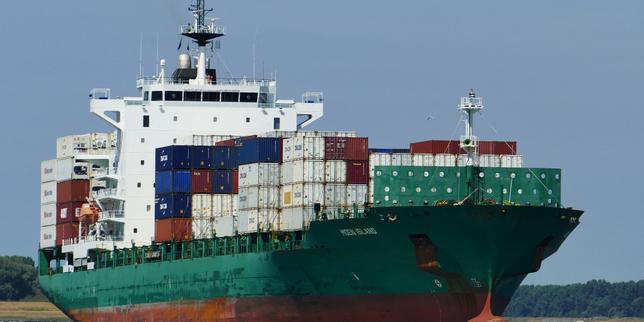
The Strait of Hormuz is arguably the most stressed piece of water on the planet. It's a choke point where global energy security and maritime logistics collide with old-school geopolitics. When a CMA CGM container ship gets hit by gunfire despite having a U.S. Navy escort, it’s not just another headline. It’s a loud signal that the old rules of engagement are breaking down. You’d think a massive American destroyer nearby would be enough to keep the peace. It isn't. This incident shows that the deterrent power we take for granted is fraying at the edges.
The ship in question, operated by the French shipping giant CMA CGM, found itself in the crosshairs in one of the world's most sensitive maritime corridors. Even with the presence of Task Force 53 and other international coalitions, the risks for merchant vessels are climbing. If you're a logistics manager or an investor, this isn't just about one boat. It’s about the rising cost of "doing business" in a world where the oceans are no longer neutral territory.
Why the Strait of Hormuz remains a powder keg
The geography is a nightmare. At its narrowest point, the Strait of Hormuz is only about 21 miles wide. The shipping lanes themselves are even narrower—just two miles wide in each direction, separated by a two-mile buffer zone. It’s a literal funnel. Every day, roughly 20 to 30 percent of the world’s total liquefied natural gas and oil passes through here.
When a vessel like a CMA CGM container ship moves through this gap, it's a sitting duck. High-speed boats, coastal missiles, and drones can reach the shipping lanes in minutes. The Iranian Revolutionary Guard Corps (IRGC) has spent decades perfecting "asymmetric" warfare here. They don't need a massive navy to cause chaos. They just need to make the insurance premiums so high that companies think twice about the route.
The recent gunfire incident happened while the ship was supposedly under the watchful eye of U.S. forces. That’s the kicker. The American military presence is meant to prevent exactly this. When it fails to stop a direct hit, the psychological impact on the shipping industry is massive. It tells captains that the "shield" isn't as solid as the Pentagon says it is.
The failure of traditional naval escorts
Escorting ships is a logistical grind. You can't put a destroyer next to every single tanker and container ship. It's impossible. Instead, the U.S. Navy and its allies use "area defense" or "associated support." This means they're in the neighborhood, watching the radar, and ready to respond.
But modern threats are fast. Small arms fire or shoulder-launched projectiles can be deployed and finished before a billion-dollar warship can even turn its turrets. I've talked to maritime security experts who say the lag time between a threat appearing and a response being authorized is often too long for these tight waters.
- Proximity doesn't mean protection. A ship three miles away can't stop a bullet.
- The rules of engagement are restrictive. U.S. sailors can't just open fire on every fast-moving boat that gets close.
- De-escalation often looks like weakness. To an aggressor, a Navy ship that watches but doesn't strike back is just a spectator.
This creates a "grey zone" where actors can harass commercial shipping with almost zero consequences. They know the U.S. doesn't want to start a full-scale war over a few bullet holes in a French ship. So, they keep pushing.
The massive cost of maritime insecurity
When bullets start flying, the spreadsheets start bleeding. The shipping industry isn't just about moving boxes; it's about managing risk. Every time an incident like this occurs, the "war risk" insurance premiums for the region spike.
A few years ago, these premiums were a negligible part of a voyage's cost. Now, they can run into the hundreds of thousands of dollars per transit. For a company like CMA CGM, which operates a massive global fleet, these costs add up. They eventually get passed down to you. That coffee machine you ordered or the car parts coming from overseas? They're getting more expensive because a handful of people in the Middle East decided to take target practice at a hull.
The French government and CMA CGM have been relatively quiet about the specifics of the damage, which is standard. They don't want to freak out the markets. But the message is clear: the Strait of Hormuz is a high-risk zone, and the presence of Western navies is no longer a guarantee of safety.
What this means for global supply chains
We're seeing a shift in how companies plan their routes. Some are looking at the Cape of Good Hope as an alternative, even though it adds weeks to the journey and burns millions in extra fuel. Others are sticking to the Strait but hiring private maritime security teams—basically mercenaries with rifles—to stand on the deck.
It's a messy, expensive solution to a problem that shouldn't exist. The global economy relies on the "freedom of navigation." If a major carrier like CMA CGM can't pass through a primary waterway without getting shot at, the system is fundamentally broken.
Why the U.S. presence isn't working like it used to
The U.S. Fifth Fleet, based in Bahrain, is the primary force in the region. But their focus has shifted. They're looking at long-range drone threats and ballistic missiles from groups like the Houthis or Iran. Small-scale harassment—the kind that hit the CMA CGM ship—often falls through the cracks of their high-tech surveillance.
The U.S. is also spread thin. With tensions in the South China Sea and the Mediterranean, the number of hulls available for patrol in the Persian Gulf isn't what it was ten years ago. Adversaries know this. They're testing the limits of what they can get away with. Every time they fire and the U.S. doesn't retaliate, the "red line" moves a little bit further.
The reality for crews on the water
It's easy to look at this as a geopolitical chess match. For the merchant mariners on those ships, it's terrifying. These aren't soldiers. They're civilians doing a job. Imagine sitting on a bridge 80 feet above the water, knowing that at any moment, a projectile could come through the glass because of a political dispute you have nothing to do with.
The psychological toll on crews is leading to staffing shortages in high-risk zones. Captains are increasingly vocal about the lack of support. They feel like pawns. If the situation doesn't improve, we might see more "no-go" zones declared by maritime unions, which would effectively shut down these trade routes regardless of what the navies say.
How to navigate this mess as a business
If you're involved in international trade, you can't just ignore this. The "just-in-time" delivery model is dead in regions like this. You need to build "just-in-case" buffers into your supply chain.
- Diversify your routes. Stop relying on a single corridor. If you can move goods via rail or different ports, do it now.
- Budget for insurance hikes. Don't assume your shipping costs will stay flat. They won't.
- Pressure for policy change. Industry groups need to stop being polite. They need to demand that the coalitions protecting these waters actually do their jobs or find a different way to secure trade.
The CMA CGM incident isn't a one-off. It's the new normal. The Strait of Hormuz is a place where diplomacy has failed, and military might is being tested by small, aggressive actors. Don't wait for a total shutdown to change your strategy. The bullets are already flying, and the "escort" is just watching from the sidelines. Keep your eye on the "Joint Maritime Information Center" (JMIC) reports; they're the only ones telling the truth about how dangerous these waters have actually become. Reach out to your freight forwarders today and ask for their contingency plans for the Persian Gulf. If they don't have one, find a new forwarder.