Every time municipal leaders announce a fresh sweep of a public park or alleyway, they roll out the exact same predictable script. They stand in front of microphones, invoke the sacred talisman of public safety, and promise that clearing out tents will restore order to the neighborhood.
It is a comforting narrative for taxpayers who want to believe that urban decay can be scrubbed away with power washers and moving trucks. It is also entirely, dangerously wrong.
I have spent years watching cities deploy municipal code enforcement like a blunt instrument against housing scarcity, expecting tents to vanish into thin air rather than simply migrate two blocks over. The lazy consensus among urban policymakers is that encampment removals are logistical measures designed to protect public health and safety.
Call it what it actually is: an expensive, cyclical shell game that displaces human beings while preserving the structural conditions that forced them onto the asphalt in the first place.
The Logistics of Displacement
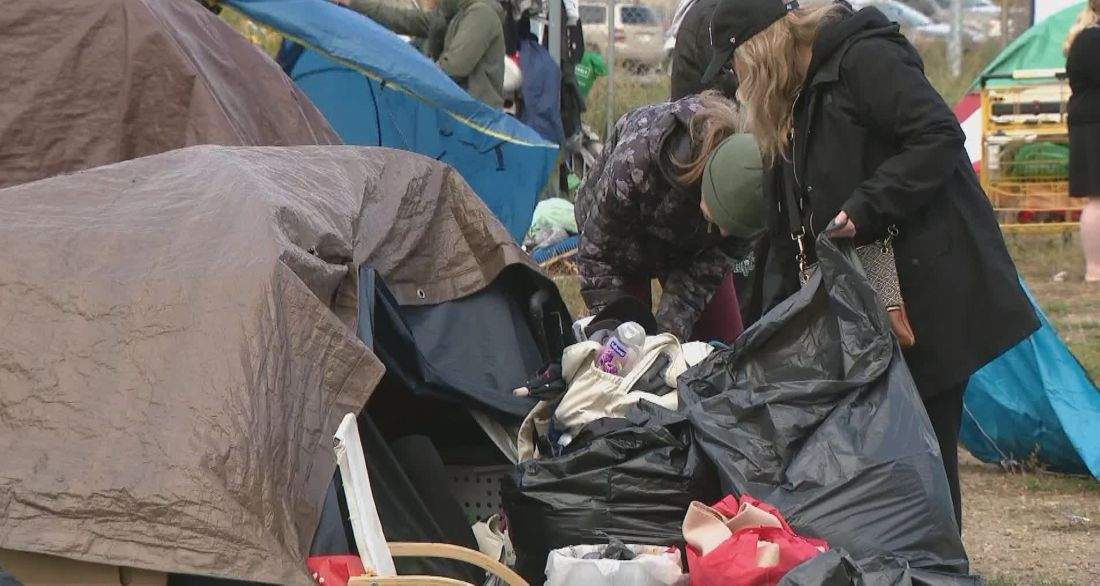
When a city administration targets an encampment under the banner of safety concerns, the immediate operational reality is rarely clean or orderly. Heavy machinery rolls in. Dumpsters fill up with survival gear, identification documents, and irreplaceable personal belongings. Residents are told to pack their lives into plastic trash bags and move along.
To the average commuter driving by an hour later, the pavement looks clear. The problem appears solved.
This is an optical illusion. You cannot arrest or bulldoze your way out of a housing deficit. When you dismantle an established site without providing a viable, permanent alternative, you destroy the fragile social infrastructure that vulnerable populations rely on for survival.
Encampments are not spontaneous eruptions of lawlessness. They are organized, self-governing microcosms born from absolute market failure. Within these spaces, residents often form mutual aid networks, sharing heat, food, and medical monitoring. When a sweep shatters those networks, overdose rates spike, chronic health conditions worsen, and people scatter into more dangerous, hidden corridors where emergency services cannot find them.
The safety argument collapses under the weight of basic math. Dispersing a camp does not eliminate the people who lived in it. It merely fractures them across a wider urban grid, multiplying the safety hazards for both the unhoused population and the surrounding neighborhoods.
The Economics of Inaction
Municipalities spend staggering sums on these operations. Between overtime police deployment, sanitation crews, biohazard cleanups, and repeated legal battles, the per-capita cost of a single sweep rivals the price of stable, supportive housing interventions.
We are funding a perpetual motion machine of fiscal waste. Cities treat homelessness as a public order offense rather than a structural supply crisis, pouring money into reactive enforcement while starving proactive solutions.
Economists who study municipal budgets point out a glaring absurdity: it is systematically more expensive to manage the chronic crisis of street homelessness through police and emergency rooms than it is to simply pay rent for permanent housing paired with wraparound care. Yet, political incentives reward short-term theater over long-term efficacy. A bulldozer provides an immediate photo opportunity for a mayor desperate to look decisive. A supportive housing block takes three years to zone, fund, and build, which makes for poor television coverage.
Challenging the Premise
Public discourse around encampments is poisoned by a false binary. The debate is framed as a choice between lawless urban anarchy or authoritarian sweeps.
That framework is a trap.
The real question is not whether public spaces should be accessible to everyone—of course they should. Parks are meant for communities, not permanent habitation. The question is why cities refuse to build the housing capacity that would render tent cities obsolete.
When administrators argue that sweeps are necessary because unsanitary conditions pose a biohazard, they are describing a problem of their own making. Denying unhoused people access to public restrooms, running water, and trash collection guarantees that sanitation will deteriorate. Blaming the resulting filth on the victims of housing precarity is like locking someone in a basement and then fining them for the lack of fresh air.
What Actually Works
If you want to understand why current policies fail, look at jurisdictions that have abandoned the sweep-and-disperse cycle in favor of radical supply-side interventions and low-barrier shelter models.
When Houston dramatically reduced its homeless population over the past decade, it did not do so by buying more bulldozers. It centralized its housing intake, redirected funding away from hostile architecture and policing, and poured resources directly into rapid rehousing. They recognized a fundamental truth that many cities refuse to accept: housing stability is the prerequisite for everything else. You cannot treat an addiction, stabilize a mental health crisis, or secure employment when a person spends every waking hour wondering where they will sleep without getting ticketed or robbed.
Contrarian approaches require admitting uncomfortable truths. Housing-first models are expensive upfront. They require political courage to face down NIMBY homeowners who scream about property values every time a supportive apartment complex is proposed. They demand a shift from moralizing punishment to pragmatic engineering.
Stop pretending that clearing a tent transforms a life. It merely hides the failure behind a temporary clean slate, waiting for the exact same tents to rise again tomorrow morning.