The map of the world looks static in a schoolroom, but in the darkened situation rooms of Washington and Tehran, it pulses. It breathes. Right now, all eyes are fixed on a sliver of blue water no wider than a morning commute. This is the Strait of Hormuz. It is a geographical fluke that holds the global economy by the throat, and the latest diplomatic proposal from Iran has the U.S. State Department leaning over the table, squinting at the fine print.
Everything you touched today likely has a ghost of this waterway attached to it. The fuel in your car, the plastic in your phone, the fertilizer that grew your breakfast. One-fifth of the world’s liquid petroleum passes through this twenty-one-mile gap. If the Strait closes, the world stops. Not figuratively. Literally.
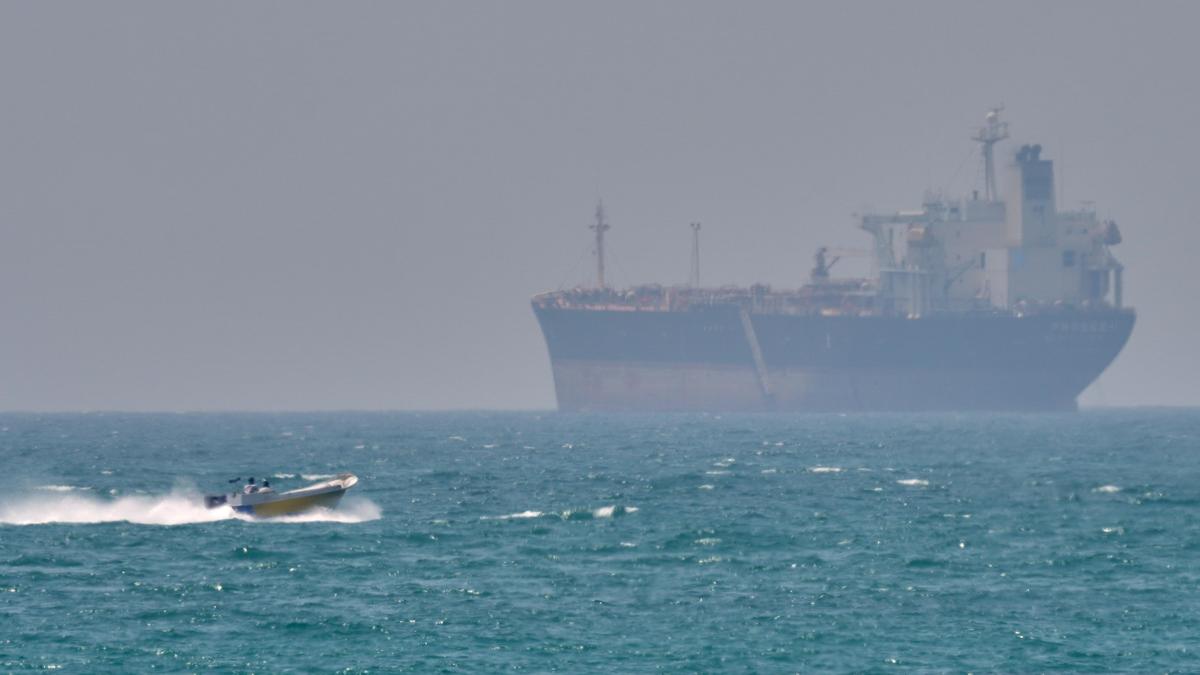
Imagine a merchant mariner named Elias. He is fictional, but his reality is shared by thousands. He stands on the bridge of a Very Large Crude Carrier (VLCC), a vessel so massive it takes miles to come to a full stop. As he steers through the "Traffic Separation Scheme"—the maritime equivalent of highway lanes—he isn't just looking at sonar. He is looking for the shadows of fast-attack boats. He is listening for the crackle of a radio warning from a Revolutionary Guard patrol. For Elias, a "proposal on maritime security" isn't a headline. It’s the difference between a quiet shift and a catastrophe that could incinerate his ship and bankrupt half a dozen small nations.
The Paper Shield
The State Department confirmed they are "examining" the latest Iranian proposal. In the dry language of diplomacy, "examining" is a heavy word. It means hours of translation, the cross-referencing of intelligence, and the weary skepticism of people who have seen a hundred such papers crumble into dust. Iran calls it a "Hormuz Peace Endeavor." The U.S. calls it a gamble.
At its core, the proposal suggests a regional coalition. Iran wants the neighbors—Saudi Arabia, the UAE, Iraq—to handle security themselves. They want the American carriers and British destroyers out of their backyard. On paper, it sounds like local empowerment. In practice, it is a move to redefine who owns the gate.
History teaches us that gates are rarely left unguarded. For decades, the U.S. Navy has played the role of the global locksmith. They ensure the tumblers turn and the oil flows. When Iran suggests a new set of keys, the tension isn't just about security. It’s about trust. You don't hand the keys to your house to a neighbor who has spent the last year threatening to change the locks.
The Invisible Mathematics of Risk
Why does a piece of paper in a briefcase in D.C. matter to a suburban family in Ohio? The answer is the "Risk Premium."
Insurance companies are the silent gods of global trade. They don't care about ideology. They care about probability. Every time a mine is spotted or a tanker is seized, the cost to insure a hull skyrockets. Those millions of dollars in extra premiums don't just vanish. They are baked into the price of every gallon of gas and every plastic toy. We are all paying a "Hormuz Tax" every day, an invisible tribute to the volatility of this twenty-one-mile stretch.
Consider the math of a single barrel. If the Strait is open, it moves freely. If a conflict breaks out, that barrel stays in the ground or sits on a ship that can’t move. Supply drops. Demand stays. Prices spike. It’s a simple, brutal equation that can trigger a recession faster than any stock market crash. The diplomatic dance over this latest proposal is, in reality, a high-stakes negotiation over the cost of living for billions of people.
A Neighborhood of Mirrors
The tragedy of the Persian Gulf is that no one sees the same map. To Washington, the Strait is a vital international artery that must be kept open at all costs. To Tehran, it is a sovereign doorstep being trampled by foreign boots. Both sides are trapped in a cycle of "defensive" moves that look like "offensive" threats to the other.
When Iran proposes a regional peace plan, they are testing the waters. They are asking the world to acknowledge them as the natural leader of the Gulf. But the regional neighbors are wary. They remember the tankers set ablaze. They remember the drones. They see a proposal not as an olive branch, but as a velvet glove over a mailed fist.
Behind the scenes, the diplomats are looking for the "trap." Is there a clause that allows Iran to board ships under the guise of "environmental protection"? Does the language sneak in a requirement for the U.S. to lift sanctions before the peace begins? Every word is a potential landmine.
The Silence of the Deep
There is a specific kind of silence that happens on a ship in the Strait. It’s the sound of thousands of tons of steel gliding through water, knowing that just beneath the surface, the rules of the world are being rewritten.
The latest proposal isn't just a news cycle. It is a pulse check for a dying era of diplomacy. We are moving toward a world where the old certainties—that the U.S. will always be there to guard the lanes, that oil will always flow, that the Strait will always remain open—are being questioned.
If the "Hormuz Peace Endeavor" is real, it could be the start of a seismic shift in how the world's energy travels. If it’s a feint, it’s a precursor to a darker chapter. The U.S. officials "examining" the text aren't just reading a memo. They are trying to predict the future of global commerce.
Elias, on his bridge, watches the horizon. He sees the sun setting over the jagged mountains of the Musandam Peninsula. To him, the Strait isn't a geopolitical pawn. It is a narrow, dangerous road. He knows that as long as men in far-off capitals are arguing over papers, his passage remains a gamble. He waits for the radio to crackle. He waits for the world to decide if the gate stays open.
The ink on the Iranian proposal is dry, but the blood in the water is never far from anyone's mind. We wait for the verdict, while the tankers keep moving, heavy and slow, through the most dangerous twenty-one miles on Earth.