Everyone is panicking over patent counts. Again.
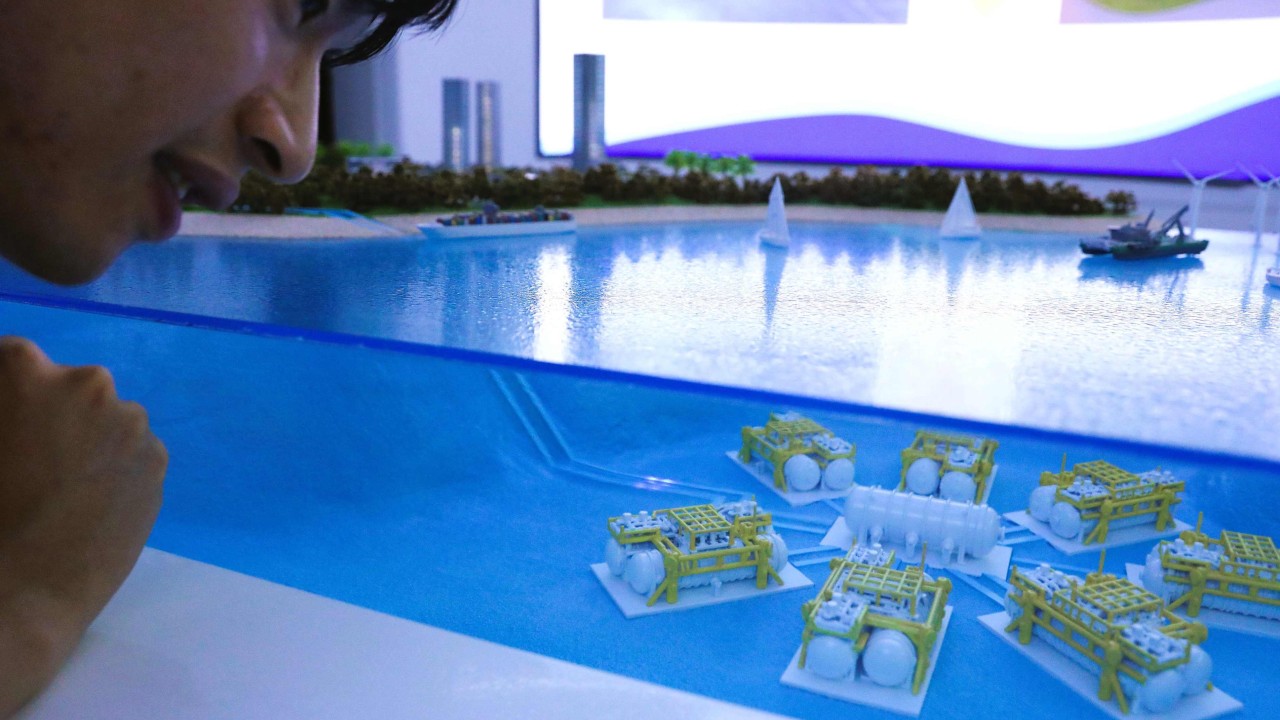
Tech journalists see a headline claiming China holds 80% of the world’s underwater data center patents and immediately start writing eulogies for Western cloud supremacy. They see photographs of massive steel cylinders being lowered into the South China Sea off the coast of Hainan and assume the future of artificial intelligence infrastructure belongs to the bottom of the ocean.
They are wrong. Completely, fundamentally wrong.
Counting patents in an emerging sector is the laziest metric in technology journalism. In the Chinese intellectual property ecosystem, filing patents is heavily subsidized by local governments, tied to corporate tax breaks, and used to pad state-owned enterprise performance metrics. Holding 80% of the patents for a niche, brutally expensive engineering experiment does not mean you have won the compute race. It means you are aggressively filing paperwork for a thermal management strategy that Western hyperscalers already tested, validated, and quietly moved past.
Microsoft proved underwater data centers work back in 2018 with Project Natick. They sank a sealed shipping container off the Orkney Islands in Scotland, ran it for two years, and pulled it up. The failure rate of the servers inside was one-eighth that of a land-based facility. The ocean acted as an infinite heat sink. The nitrogen atmosphere prevented corrosion.
And yet, Microsoft never mass-produced them. Google didn't build an underwater fleet. Amazon Web Services isn't dropping server racks into the Mariana Trench.
Why? Because in the real world of multi-gigawatt AI clusters, sinking your hardware into saltwater is an operational nightmare disguised as a clever cooling hack.
The Patent Illusion and the Myth of Free Cooling
The core argument behind the underwater data center hype is simple. Artificial intelligence chips like Nvidia’s Blackwell and Rubin architectures run hot. Air cooling is dead for high-density compute. Water absorbs heat roughly 3,500 times more efficiently than air. Therefore, putting the servers directly into the ocean solves the energy crisis.
This logic ignores basic thermodynamics and the brutal economics of modern power grids.
First, ocean water is not free cooling. It is a heat transfer medium. You still have to move that heat through a thick steel hull or a complex heat exchanger, and you still have to pump water or rely on natural currents that fluctuate wildly with the seasons. When you dump massive amounts of thermal energy into a localized marine environment, you create a thermal plume. Coastal waters warm up. Marine ecosystems react. Environmental regulators step in.
Second, a patent portfolio is not a balance sheet. In China, state-backed initiatives like the Hainan commercial underwater data center project—developed by Highlander in partnership with state entities—generate hundreds of defensive and incremental patents. A patent for a slightly different rubber gasket on a subsea pressure vessel counts the exact same in a patent database as a foundational breakthrough in silicon photonics.
When Western tech outlets aggregate patent filings from databases like PatSnap or the World Intellectual Property Organization without weighting them by commercial viability or citation impact, they create a mirage of technological dominance. Western cloud providers stopped filing subsea data center patents because they realized the unit economics collapse the moment you scale past a few megawatts.
The Maintenance Trap Nobody Mentions
If you have ever managed physical infrastructure at scale, you know one absolute truth. Hardware breaks. Constantly.
In a traditional hyperscale facility in Northern Virginia or Dublin, a failed dual inline memory module, a dead power supply, or a burned-out optical transceiver is a fifteen-minute ticket. A technician walks down the cold aisle, pulls the server blade, swaps the component, and closes the rack.
Now imagine that same hardware failure occurring 35 meters below the surface of the South China Sea.
You cannot send a technician down with a screwdriver. Subsea data centers operate on a "lights-out, zero-maintenance" model. You seal the nitrogen-filled capsule, drop it to the seabed, and pray that redundancy carries you through a five-year hardware refresh cycle. When components fail—and even at one-eighth the normal failure rate, thousands of parts will fail in a large cluster—that compute capacity is simply dead weight until you charter a heavy-lift crane vessel, haul a 1,300-ton steel cylinder out of the ocean, crack the pressure seal, and service it on dry land.
- Vessel charter costs: Heavy-lift marine vessels cost tens of thousands of dollars per day, require calm weather windows, and take weeks to schedule.
- Stranded capital: Every dead GPU sitting inside a sealed underwater pod represents tens of thousands of dollars in depreciating assets generating zero revenue.
- Upgrade paralysis: AI hardware cycles move every twelve to eighteen months. Locking your infrastructure inside a submerged pressure vessel for five years means your facility is hopelessly obsolete by year three.
I have watched infrastructure teams blow tens of millions of dollars chasing exotic cooling architectures that looked brilliant in a white paper and failed miserably in production. Anytime you introduce maritime logistics into an IT supply chain, your operational expenditure explodes. You are no longer running a technology company. You are running a deep-sea salvage operation.
Power Is the Bottleneck, Not Cooling
The most glaring flaw in the underwater data center narrative is that it solves the wrong problem.
Data centers do not face a cooling crisis. They face a power generation and transmission crisis.
A state-of-the-art land-based data center using direct-to-chip liquid cooling already achieves a Power Usage Effectiveness (PUE) of 1.10 to 1.15. That means for every watt of power going to the servers, only 0.10 to 0.15 watts are spent on cooling and overhead. Underwater data centers boast a PUE of roughly 1.07.
Think about that math. You are enduring the engineering hell of building submarine-grade pressure hulls, laying armored subsea power and fiber cables, battling marine biofouling, and giving up physical access to your servers—all to save a fraction of a decimal point on cooling efficiency.
Meanwhile, the real bottleneck remains untouched. Where does the electricity come from?
Whether your servers sit in a concrete warehouse in Iowa or a steel tube off the coast of Sanya, they still require hundreds of megawatts of continuous, uninterruptible baseline power. You still have to build high-voltage substations. You still have to pull massive copper power trunks from onshore grids out to the seabed. Putting the server underwater does not generate a single megawatt of electricity. It just makes the extension cord longer, heavier, and infinitely harder to repair when a cargo ship drags an anchor across it.
The Geopolitical Reality Behind the Subsea Push
If the economics are so terrible, why is China pouring capital into underwater data centers and locking down 80% of the patents?
Because China’s primary constraint is not return on capital. It is land, coastal zoning, and geopolitical resilience.
China’s economic engine hugs its eastern coastline. Shanghai, Shenzhen, Guangzhou, and Beijing are densely populated, land-constrained, and desperate for low-latency compute. Building massive, sprawling single-story hyperscale campuses near these tier-one cities requires tearing up expensive real estate or agricultural land. Pushing data centers offshore into shallow coastal waters bypasses urban land scarcity entirely.
Furthermore, there is an undeniable dual-use military and strategic angle. Distributed, submerged compute nodes tethered to subsea fiber networks are inherently harder to target, harder to surveil via satellite thermal imaging, and capable of processing ocean acoustic and hydrographic data right at the edge.
In that specific context—coastal land scarcity combined with state-subsidized strategic infrastructure—the subsea model makes sense for Beijing. It is a localized solution to a specific geographic and political constraint. It is not a universal blueprint for the global cloud industry.
What Hyperscalers Are Actually Building Instead
While commentators obsess over underwater server pods, the engineers actually running the world’s largest AI clusters are moving in a completely different direction. They are keeping their feet firmly on dry land and rethinking thermodynamics from the silicon up.
1. Direct-to-Chip Closed-Loop Liquid Cooling
Instead of submerging an entire room in the ocean, engineers route dielectric fluid or treated water directly through cold plates mounted on top of the CPUs and GPUs. It captures up to 80% of the heat right at the source, requires zero submarine hulls, and allows technicians to swap a server in minutes.
2. High-Temperature Coolant Loops
Modern chips can safely operate at higher temperatures than legacy silicon. By running warm water through the cooling loops—sometimes up to 45 degrees Celsius—data centers can reject heat into the outside air using simple dry coolers, completely eliminating water evaporation and avoiding coastal environmental permits.
3. Behind-the-Meter Power Generation
The winners of the next decade are not looking for cold oceans. They are co-locating data centers directly next to nuclear power plants, natural gas turbines, and massive solar-plus-storage arrays. Eliminating grid transmission losses saves far more energy than ocean cooling ever will.
The Honest Trade-Offs of Staying Onshore
To be completely fair, land-based liquid cooling is not without its own headaches.
Retrofitting legacy air-cooled facilities for high-density liquid loops is brutal, expensive work. Floor loading limits have to be reinforced to handle liquid-filled racks that weigh over two tons each. Plumbing leaks inside a server room can destroy millions of dollars in hardware in seconds if leak-detection manifolds fail. Water scarcity in regions like Arizona, Spain, and parts of northern China remains a genuine political flashpoint when data centers rely on evaporative cooling towers.
Subsea data centers neatly sidestep local freshwater consumption. They eliminate real estate taxes. They offer physical security against onshore intruders.
If your only goal is building a small, isolated, zero-water-consumption edge node near a dense coastal city where land is unavailable at any price, drop a steel cylinder in the ocean. It will work.
Stop Measuring Innovation by Patent Volume
The narrative that China is running away with the future of data centers because of an 80% patent share is a textbook example of confusing activity with progress.
Patents measure legal filings, not engineering superiority. If patents dictated market dominance, IBM would own the entire cloud computing industry right now instead of trailing far behind AWS, Microsoft, and Google.
The future of AI infrastructure will not be built on the ocean floor. It will be built wherever cheap, abundant, gigawatt-scale power meets accessible, modular, serviceable hardware. Saltwater and silicon have always been mortal enemies. Putting a thick steel wall between them doesn't change the economics—it just makes the inevitable failure more expensive to fish out of the sea.