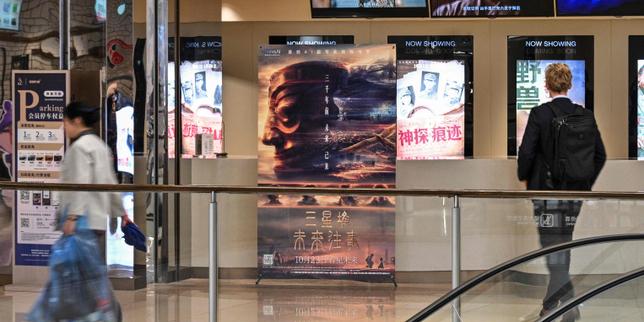
Chinese film students watched Sanxingdui—billed as the country’s first feature-length movie generated entirely by artificial intelligence—and delivered a blunt verdict. They felt nothing. While tech executives celebrated the automated pipeline as a breakthrough in low-cost production, the next generation of working directors and editors dismissed the project as an emotional void, pointing to lifeless pacing, erratic visual continuity, and an absence of human intent behind the camera.
That reaction exposes the widening fault line in global cinema. Tech firms measure success by rendering speed, prompt fidelity, and budget compression. Filmmakers and audiences measure it by emotional resonance. When you strip away the physical friction of a film set—the lighting adjustments, the actor’s hesitation before a line, the director’s instinct to hold a shot two seconds longer—you do not just cut costs. You gut the medium’s primary engine.
The Illusion of Automated Cinema
To understand why Sanxingdui failed to move an audience trained in visual storytelling, you have to look at how generative video models actually operate. Diffusion and transformer architectures do not understand narrative weight, subtext, or dramatic irony. They predict pixel arrangements based on statistical probability.
When an algorithm generates a scene set in the ancient Bronze Age civilization of Sanxingdui, it pulls from billions of indexed visual references—gold masks, dramatic lighting, sweeping landscapes, historical dramas. It stitches these tokens together to satisfy a text prompt. The result often looks impressive in a five-second social media clip. Stretched across ninety minutes, the seams tear open.
Film students spotted the cracks immediately. In traditional cinema, camera movement is a psychological tool. A slow push-in signals mounting dread or sudden realization. A handheld tremor conveys panic. In an AI-generated feature, camera motion frequently drifts without motivation, gliding smoothly over moments that demand tension or cutting abruptly when a scene needs room to breathe. The software mimics the surface aesthetics of cinema while remaining completely blind to its grammar.
The Uncanny Valley of Emotion
Human viewers possess an almost involuntary sensitivity to micro-expressions and physical presence. Even in heavily stylized animation—from hand-drawn Studio Ghibli classics to Pixar’s digital worlds—every eyebrow twitch and shoulder slump is deliberately keyed by an artist who understands human vulnerability.
Generative video lacks that authorial anchor. Characters in all-AI films suffer from what veteran editors call "float." Eyes fail to lock onto scene partners with genuine focus. Facial muscles shift smoothly between approximated expressions without the messy, contradictory micro-movements that signal real thought. To a casual viewer scrolling on a phone, it passes as passable spectacle. To film students who spend their days dissecting frame-by-frame performances, it reads as a mannequin parade.
Why Executives Are Pushing All-AI Features Anyway
If the artistic output falls flat, why are studios and tech conglomerates pouring capital into fully automated features like Sanxingdui? Follow the balance sheet.
Traditional historical epics are financial nightmares. Recreating ancient Sichuan—complete with period costumes, bronze artifacts, massive sets, and hundreds of extras—requires tens of millions of dollars and years of logistical grind. A generative pipeline promises to compress that timeline into months for a fraction of the capital.
For studios facing shrinking theatrical margins and volatile box office returns, the temptation is obvious. If an AI film costs five percent of a traditional production, it does not need to be a masterpiece to turn a profit. It only needs to be good enough to capture streaming subsidies, novelty curiosity, or niche licensing deals.
This creates a fundamental divergence in incentives:
- Tech companies need flagship demos to prove their models can handle long-form consistency, driving enterprise subscriptions and investor valuation.
- Studios want leverage over rising labor costs, using automated production as a bargaining chip against unions, guilds, and below-the-line crews.
- Audiences simply want a story that makes them care, and they have zero obligation to grade a movie on a curve because a server farm rendered it.
The Structural Flaws of Prompt-Driven Storytelling
Having watched multiple waves of production technology sweep through the entertainment industry—from early CGI and digital intermediate grading to virtual LED volumes—a clear pattern emerges. Tools succeed when they expand a creator's control. They fail when they replace decision-making with probability.
Consider a hypothetical example of how a director works on a real set versus a prompt-based workflow. On a physical set, a director watches an actor deliver a line of grief. Maybe the actor’s voice cracks unexpectedly. The director tells the cinematographer to kill half the key light, leaving the actor’s face in shadow, and holds the lens steady instead of cutting away. That single, unplanned adjustment transforms a scripted scene into an unforgettable moment.
In an all-AI workflow, that organic discovery vanishes. The creator types a prompt, generates four variations, picks the least flawed clip, and moves on. Because current video models struggle to maintain strict spatial and character consistency across complex edits, directors end up writing around the software’s limitations. Scenes become shorter. Dialogue grows simpler. Complex blocking—where three characters move through a room while shifting power dynamics—gets abandoned because the AI loses track of who is standing where.
The story bends to serve the machine, never the other way around.
The Myth of Democratization
Proponents of 100% AI cinema routinely argue that these tools democratize filmmaking, allowing lone creators with laptops to build blockbusters without studio gatekeepers. That argument confuses asset generation with storytelling.
Making a film has never been easier in terms of basic hardware; anyone can shoot a feature on a smartphone. Yet the barrier to making a good film remains as brutal as ever. It requires taste, ruthless editing, rhythmic intuition, and an understanding of human behavior. Giving an inexperienced creator the ability to generate infinite photorealistic shots does not turn them into Akira Kurosawa. It usually just produces ninety minutes of visually noisy clutter.
When Chinese film students criticized Sanxingdui for lacking soul, they were defending the exact skills they are spending years trying to master: pacing, subtext, restraint, and intentionality.
Where AI Actually Belongs in the Pipeline
Dismissing artificial intelligence entirely is just as shortsighted as claiming it will replace human directors. Inside post-production houses and visual effects studios, targeted machine learning tools are already proving indispensable—precisely because they leave creative control in human hands.
Rotoscoping, wire removal, voice cleanup, crowd replication, and pre-visualization have always been grueling, repetitive tasks. Automating them frees up budgets and hours so directors and artists can spend more time on lighting, performance, and story structure. In animation, AI-assisted in-betweening can accelerate frame rates while lead animators retain strict control over key poses and emotional beats.
The distinction is surgical. Using AI as a specialized brush inside a human-led pipeline enhances the craft. Using it as an automated factory to extrude an entire feature film strips away the very friction that creates art.
The Audience Verdict Will Always Be Final
Every major technological shift in cinema history faced skepticism, from synchronized sound to digital cameras. Yet the winners of those transitions—films like Toy Story, Jurassic Park, or Avatar—succeeded because visionary directors used new tools to tell deeply human stories that resonated at a primal level. They never asked the audience to admire the software at the expense of the characters.
Sanxingdui stumbled because it inverted that priority. It treated filmmaking as an engineering problem to be solved rather than an emotional experience to be shared. You can train a neural network on every frame of cinema ever shot, optimize its rendering speed, and flood the screen with digital spectacle, but until a machine knows what it feels like to lose someone, audiences will keep walking out of the theater feeling nothing at all.