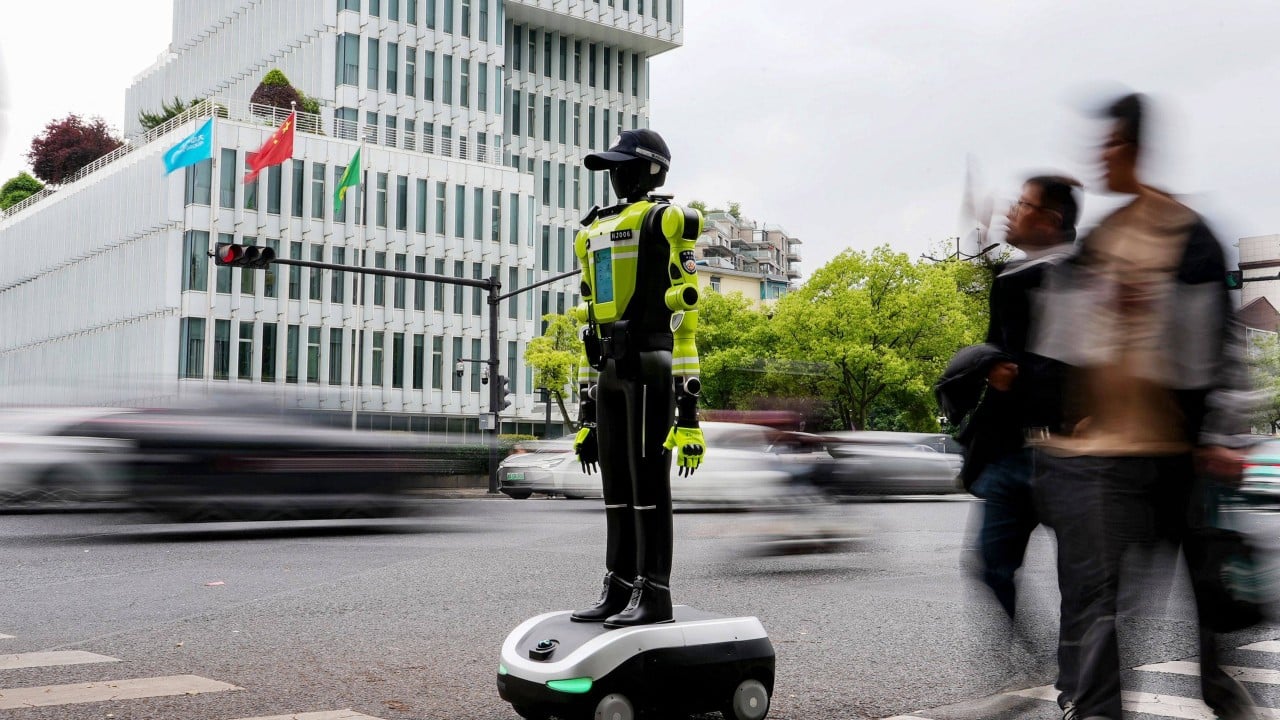
The tech press is swooning over Beijing’s latest regulatory roadmap. You have likely read the headlines: China plans to assign a unique digital ID to every single humanoid robot spinning off its assembly lines. The stated goal sounds reasonable on paper. They want to standardize the industry, track liability, and streamline the integration of autonomous machines into the public sphere.
The mainstream consensus is that this is a masterstroke of forward-thinking governance. Analysts are calling it a vital infrastructure play that will give Chinese robotics companies an insurmountable lead in safety and deployment.
They are completely wrong.
This digital ID mandate is not a springboard for innovation. It is an anchor. By treating an embryonic, fast-evolving software-hardware hybrid like a registered automobile or a human citizen, Beijing is about to institutionalize bureaucratic stagnation. I have spent years tracking autonomous systems and supply chains, and I have seen exactly how premature regulation kills foundational hardware breakthroughs before they can scale.
The Fatal Flaw of the Digital ID Illusion
The core mistake of the digital ID push is the assumption that a humanoid robot is a static product. It is an understandable error if your only exposure to robotics is watching polished promotional videos. But in the real world, a humanoid robot is a fluid, constantly morphing platform.
When you assign a permanent digital identity to a robot, you create an administrative nightmare.
- Software Is Not Hardware: If a robot updates its core neural network from a localized computer vision model to an end-to-end multimodal transformer, is it still the same robot?
- Modular Cannibalization: In any industrial setting, parts are swapped constantly. A hand from Manufacturer A is replaced by a gripper from Manufacturer B. Actuators fail and get upgraded.
- The Identity Crisis: If a machine features a completely different sensor suite, a new torso architecture, and an overhauled operating system compared to its baseline registration, the digital ID becomes a fiction.
If regulators require companies to re-verify or update the digital passport for every significant hardware or software modification, the pace of iteration drops to zero. Engineers will spend more time filling out compliance paperwork for local bureaus than optimizing torque density or training locomotion models.
What the "Experts" Miss About Standardization
Mainstream tech journalists love the word standardization. They think standardizing early creates efficiency. But history proves that standardizing an immature technology simply locks in inferior designs.
Imagine if the wireless industry forced a strict, national digital registry and rigid operational standards on mobile phones in 1993, when bags and bricks were the norm. We would have ended up with incredibly secure, tracked, utterly useless bag phones.
Humanoid robotics is currently in its "bag phone" era. The optimal kinematics are not settled. The ideal actuation methods—whether hydraulic, electric, or pneumatic—are still hotly debated. Forcing a digital ID ecosystem onto hardware that needs to change radically every six months is a recipe for building highly compliant, thoroughly documented tech that nobody actually wants to buy.
The Hidden Cost of Centralized Liability
Proponents argue that digital IDs are necessary to solve the liability question. If a 150-pound bipedal machine falls over and crushes a factory worker's foot, or damages high-value inventory, the digital ID instantly points to the owner, the manufacturer, and the operator.
This sounds elegant. In practice, it shifts the entire industry's focus from engineering excellence to defensive compliance.
[Traditional Development] ---> Fail Fast ---> Iterate ---> Improve
[Regulated ID Development]  ---> Avoid Penalty ---> Document ---> Stagnate
When every mechanical glitch or edge-case failure is tied to a centralized government ledger, manufacturers will stop taking risks. They will cap the operational envelope of their machines. They will reduce walking speeds, limit payload capacities, and restrict environments to the point of uselessness just to guarantee they never trigger an incident report associated with License Plate #00018472.
I have seen automotive startups blow tens of millions of dollars trying to comply with rigid, legacy-minded testing frameworks instead of building better vehicles. The companies that survived were the ones that operated in regulatory gray zones long enough to prove out the tech. China is closing that gray zone before the tech even works.
The Real Security Threat Isn't What You Think
There is a glaring counter-intuitive reality regarding the cybersecurity aspect of this plan. The narrative suggests that digital IDs make robots secure against hacking. The exact opposite is true.
By creating a unified, state-backed registry and communication standard for robot identities, you create a massive, centralized attack surface. A malicious actor does not need to hack ten different proprietary enterprise security systems anymore. They just need to exploit a vulnerability in the centralized authentication protocol used to verify these digital IDs. If you compromise the registry, you compromise every machine connected to it.
Dismantling the Consensus
Let us address the common arguments used to defend this top-down regulatory approach.
"Without rules, the public won't trust humanoid robots."
Public trust is earned through utility and safety, not barcodes. Consumers do not trust smartphones because they are registered with a government agency; they trust them because they work consistently without exploding. If a humanoid robot repeatedly drops dishes or trips over rugs, a digital ID will not salvage its reputation.
"China needs this to beat Western competitors who lack coordination."
The lack of central coordination in Western robotics is not a weakness; it is an evolutionary advantage. In an open market, ten different companies can pursue ten entirely different architectures. Boston Dynamics, Figure, Tesla, and Agility are not bound by a single national framework dictating how a robot must identify itself or communicate data. The market will brutally prune the failures and reward the setups that deliver actual return on investment. China’s top-down approach risks forcing every domestic player into a single, predictable mold.
The Reality of Deployed Autonomy
If you want to deploy humanoid robots successfully, stop trying to turn them into citizens with passports. Treat them like what they actually are: complex, variable factory tooling.
The companies that win the robotics race will not be the ones with the cleanest compliance records. They will be the ones that maximize uptime and lower the cost per hour of operation.
Here is how you actually scale an autonomous workforce without killing innovation:
- De-couple Software from Hardware Registration: If regulators insist on tracking hardware, the identity must be tied strictly to the physical chassis, treated exactly like an industrial CNC machine or a forklift. The software layer must remain entirely unregulated and untracked to allow for daily over-the-air deployment of new capabilities.
- Isolate the Risks via Sandbox Environments: Instead of tracking robots across the entire country, focus regulation purely on the environment. If a robot operates inside a geo-fenced, human-free zone in a warehouse, it should require zero digital oversight. Let the machines fail, break, and learn where they cannot cause human harm.
- Accept the Scar Tissue: True hardware development requires breaking things. If your regulatory environment punishes failure through a permanent digital black mark on a machine's record, your engineers will build timid, expensive, useless products.
The rush to catalog every humanoid robot in China is a classic symptom of technocratic overreach. It mistake legibility for control, and control for progress. While bureaucrats cheer for their new database, the real innovators are looking for ways to build hardware that refuses to be neatly filed away.