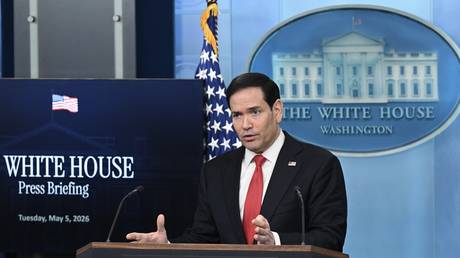
The American foreign policy establishment is currently obsessed with a fairytale: the idea that Washington can outsource its Middle East stabilization to Beijing. Senator Marco Rubio and his cohorts are peddling the narrative that if the U.S. just squeezes hard enough, China will magically transform into a regional sheriff and muzzle Iran.
It is a comfortable lie. It suggests we still hold the remote control. The reality? China has no incentive to solve America’s problems, and Iran knows it.
We are watching a masterclass in geopolitical theater where the U.S. plays the desperate director of a play the lead actors have already walked out on. To believe that Beijing will prioritize U.S. security interests over its own energy security and strategic depth is not just naive—it is a dereliction of duty.
The Myth of Chinese Leverage
The "lazy consensus" suggests that because China is the primary buyer of Iranian oil, they hold the "off" switch for Tehran’s regional ambitions. This assumes that trade is a one-way street of dominance.
In reality, China’s relationship with Iran is built on the very fact that Iran is an international pariah. By being the only major buyer willing to navigate the shadow banking systems and "ghost fleets" required to move Iranian crude, China has secured a massive discount on its energy needs.
Why would Beijing trade that economic advantage and its burgeoning influence in the Global South just to do a favor for a U.S. administration that has labeled China its "pacing challenge"?
When we ask China to pressure Iran, we are asking them to dismantle their own strategic assets. Imagine a scenario where a competitor asks you to burn down your own warehouse to help them lower their insurance premiums. You wouldn't do it. Neither will Xi Jinping.
The Sanctions Paradox
Washington’s reliance on sanctions has created the very monster it now fears. We have spent decades pushing Iran, Russia, and China into a corner. Instead of surrendering, they built a new room.
The "China-Iran-Russia" axis isn't a formal alliance of shared values; it is a marriage of convenience necessitated by Western financial hegemony. Every time the U.S. Treasury Department adds a new name to the SDN list, it inadvertently strengthens the "Anti-Dollar" bloc.
I have watched policy analysts in D.C. celebrate "crippling" sanctions for twenty years. If they were actually crippling, the target wouldn't still be standing. Instead, these measures have forced Iran to diversify its survival tactics, making it more resilient to the exact "pressure" Rubio wants China to apply.
- Fact Check: Iran’s oil exports reached a six-year high in 2024.
- The Reality: Most of that went to private refineries in China (the "teapots") that have zero exposure to the U.S. financial system.
The U.S. cannot "pressure" China to stop these transactions because the entities involved don't care about U.S. sanctions. They don't use SWIFT. They don't hold dollars. They are invisible to the tools we keep trying to use.
Beijing’s Real Play: The Mediator’s Mask
China’s 2023 brokering of the Saudi-Iran rapprochement wasn't an act of peacemaking. It was a branding exercise.
Beijing wants to be seen as the "rational" alternative to American "chaos." By doing the bare minimum to keep tensions from exploding into a global oil crisis, China maintains its energy flow while letting the U.S. exhaust its resources and political capital playing whack-a-mole with Iranian proxies.
If China actually "pressured" Iran to the point of regime instability, they would lose their most consistent thorn in the side of the U.S. military. From a cold, realist perspective, a distracted America is a win for China in the South China Sea.
The "People Also Ask" Delusion
People often ask: "Why can't the UN stop Iran?" or "Will China eventually side with the West to keep the peace?"
The premise of these questions is flawed. It assumes there is a "global community" with shared goals. There isn't. There are competing interests.
China sees the Middle East as a gas station and a construction site. The U.S. sees it as a security puzzle. You cannot solve a security puzzle using someone else’s gas station receipts.
If you want to understand the modern Middle East, stop looking at the State Department’s press releases and start looking at the balance sheets of the Bank of Kunlun.
Stop Asking the Wrong Questions
The question isn't "How do we get China to help?"
The question is "Why are we still pretending we can dictate terms in a multipolar world?"
The "Rubio Strategy" is a relic of 1998. It relies on a level of American dominance that simply no longer exists. By begging Beijing to intervene, we are signaling weakness, not leadership. We are essentially admitting that our primary tool of statecraft—economic coercion—has reached its expiration date.
The Brutal Truth of Energy Realism
Iran provides roughly 10% of China's crude imports. In a world where energy is the ultimate currency, asking a nation to cut off 10% of its lifeblood is an act of hostility.
Beijing isn't going to risk a domestic energy crisis to help a U.S. President—Republican or Democrat—score points in an election year. They will continue to play both sides, buying cheap oil from Tehran while selling technology to Riyadh and Abu Dhabi.
This isn't a "failure of diplomacy." It is the natural outcome of a shifting global order where the "policeman of the world" has run out of badges to hand out.
Actionable Order: Abandon the Proxy Approach
If the U.S. wants to counter Iranian influence, it needs to stop looking for a middleman in Beijing.
- Accept the New Reality: Sanctions are a diminishing asset. The more they are used, the faster the world develops workarounds.
- Direct Engagement or Total Containment: Pick one. The current middle-ground of "asking China to do it" is a recipe for strategic paralysis.
- Domestic Energy Independence: The only way to stop worrying about Iran’s influence on global oil prices is to make the U.S. and its direct allies immune to price shocks.
The era of "convincing" China is over. They aren't confused about the situation. They just don't work for us.
The Biden-Rubio consensus is a ghost. It is a haunting of a time when Washington spoke and the world listened. Today, Washington speaks, and Beijing checks the current price of Brent crude before deciding whether to even pick up the phone.
Stop looking for a Chinese savior. It’s not happening.