Forget the slow-moving diplomatic talk you're used to hearing. The space race in South Asia isn't just about flags and footprints anymore; it's about who owns the data and who controls the orbit. While most people were looking at highways and power plants under the CPEC umbrella, China and Pakistan quietly built a "Space Information Corridor" that's now hitting full throttle.
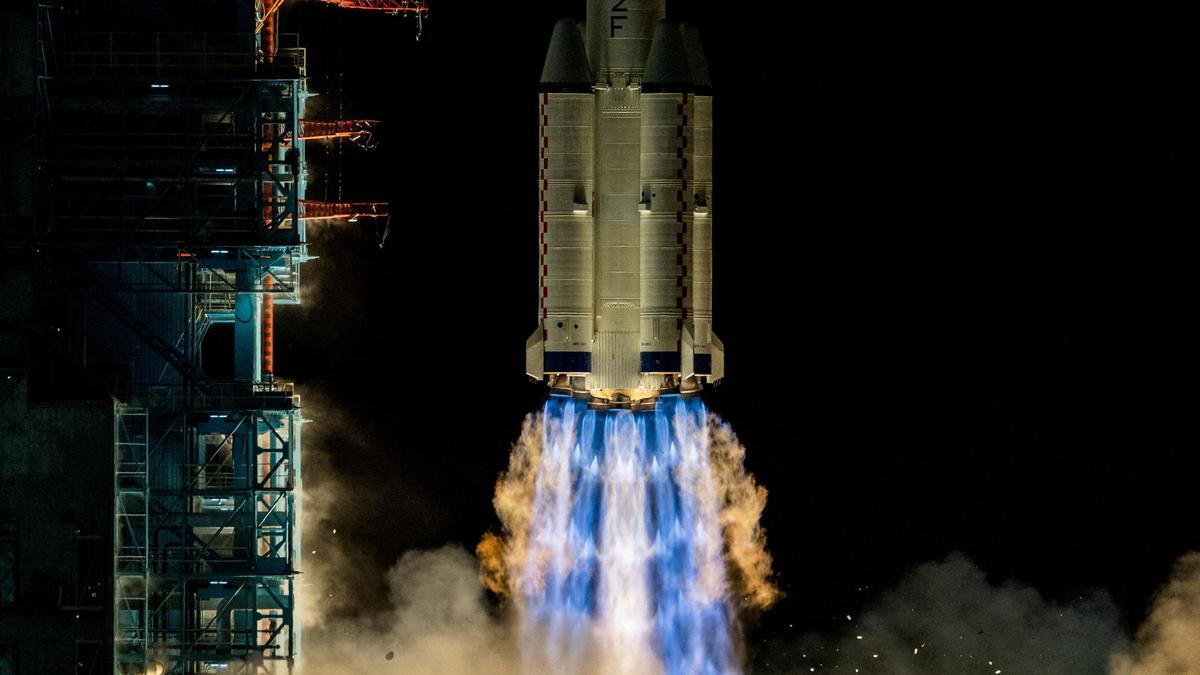
It's not just a friendship. It's a calculated, high-stakes integration that's changing how Pakistan manages everything from its borders to its broadband. If you think Pakistan is just a passenger in China's space program, you're missing the bigger picture. In April 2026, the launch of the EO-3 satellite from the Taiyuan Satellite Launch Centre proved that the training wheels are coming off. This wasn't just another Chinese gift; it was an indigenous electro-optical satellite designed to give Pakistan real-time, AI-powered eyes in the sky.
The First Pakistani Astronaut is Actually Happening
For years, the idea of a Pakistani astronaut felt like a PR stunt. It's not. In early 2025, the two countries inked a formal Astronaut Cooperation Agreement. Fast forward to today, and two candidates—Khurram Daud and Muhammad Zeeshan Ali—are already on the ground at the Astronaut Center of China.
These guys aren't just there to take photos with a flag. They’re training as payload specialists. One of them is slated to board the Tiangong Space Station by late 2026. This is a massive shift in how China uses its space station. By bringing a Pakistani scientist on board, China is effectively turning Tiangong into a regional hub for its "all-weather" allies, directly challenging the Western-led International Space Station model.
The mission will focus on:
- Biotechnology and Life Sciences: Testing how Pakistani crop seeds handle radiation to boost food security back home.
- Fluid Physics: Research that could help in industrial manufacturing and climate resilience.
- Space-based Data Processing: Refining how AI handles massive datasets while still in orbit.
Moving Beyond Just Buying Satellites
Pakistan's space agency, SUPARCO, has historically been criticized for being slow. But the recent streak of launches shows a more aggressive strategy. Take PakSat-MM1, which went operational in September 2024. It’s a multi-mission beast that covers everything from the Middle East to East Africa.
We’re seeing a transition from "turnkey" projects—where China builds and launches everything—to co-development. The EO-3 satellite launched in April 2026 is the perfect example. It carries a "Multi-Geometry Imaging Module" and an onboard AI unit. This means the satellite doesn't just dump raw data to a ground station; it processes it in flight. For a country dealing with flash floods and complex border security, that kind of speed is a necessity, not a luxury.
Why the Space Information Corridor Matters
You probably haven't heard much about the Space Information Corridor, but it’s the digital backbone of the Belt and Road Initiative. It’s basically a web of satellites—Beidou for navigation, remote sensing for imaging, and communication birds for internet—that links Pakistan’s infrastructure directly to Chinese tech.
Honestly, it's about ending reliance on Western GPS and satellite imagery. When Pakistan uses Beidou instead of GPS, it gets higher accuracy in the region and, more importantly, a guarantee that the "switch" won't be turned off during a geopolitical crisis. It’s about digital sovereignty.
Realities and Risks
Let’s be real—this partnership isn't without its critics. Some argue that Pakistan is becoming too dependent on Chinese tech, creating a "vendor lock-in" that lasts decades. There's also the military elephant in the room. Any satellite that can track a locust swarm can also track a tank division.
But from Islamabad’s perspective, what’s the alternative? Building a domestic space industry from scratch costs billions that the treasury doesn't have. Partnering with China provides a shortcut to high-end tech that would otherwise be decades away. It’s a pragmatic move.
What to Watch for Next
The momentum isn't slowing down. If you want to see where this is going, look at these specific moves over the next 12 months:
- The Final Selection: Watch for which candidate, Daud or Ali, gets the prime seat for the 2026 Tiangong mission. The training data coming out of the Astronaut Center of China will tell us a lot about the mission's true scientific depth.
- Ground Station Expansion: Look for new satellite ground stations popping up in Pakistan. These are the physical links that make the Space Information Corridor work.
- Beidou Integration: Keep an eye on how many Pakistani government sectors—especially agriculture and transport—officially migrate to the Beidou navigation system.
Space isn't a vacuum; it’s a mirror of what’s happening on the ground. The China-Pakistan bond is no longer just about roads and bridges. It’s about who holds the high ground. If you’re still thinking of Pakistan as a "developing" space nation, the 2026 mission to Tiangong is about to give you a very loud wake-up call.