Donald Trump just claimed victory in Beijing by dangling a massive numbers game. Flying back on Air Force One, he told reporters that China agreed to purchase 200 Boeing aircraft, with a handshake promise that could scale up to 750 planes. He called it a commitment that means a lot of American jobs.
Don't buy the hype just yet.
If you look past the headlines, this announcement looks less like a historic commercial triumph and more like a carefully orchestrated theatrical performance. Boeing desperately needs a win. China needs to keep the White House from slapping on fresh tariffs. Trump loves huge numbers that sound great on television. Everyone got exactly what they wanted from the summit, but the aviation industry runs on binding contracts, not political theater.
The numbers behind the noise
Let's look at what's actually on the table versus what Trump is claiming. Boeing wanted a deal for 150 planes, but according to Trump, Chinese President Xi Jinping stepped up and offered 200 instead. The White House is hinting at a mix of roughly 500 Boeing 737 MAX narrow-body aircraft and nearly 100 wide-body jets, including 787 Dreamliners and 777 models.
The math gets even wilder when you add General Electric to the mix. Trump stated GE would supply 400 to 450 engines to power these aircraft. GE Aerospace CEO Larry Culp and Boeing CEO Kelly Ortberg both tagged along on this Beijing trip. They stood in the rooms. They smiled for the cameras.
But notice what didn't happen. Neither Boeing, nor GE, nor the Chinese government has issued a single formal press release confirming the details. When reporters asked Boeing for a statement, a spokesperson shrugged and referred all questions back to the White House.
That silence speaks volumes. In aviation, an order isn't real until it's listed on Boeing's official Orders and Deliveries ledger as a firm commitment. Right now, this has all the markings of a political framework agreement. It's a non-binding shopping list that China can slow-walk, alter, or quietly cancel the moment geopolitical winds shift.
A decade of being locked out
To understand why Boeing is willing to play along with this announcement, you have to understand how desperate the company is. Boeing hasn't secured a major commercial sale from China in nearly a decade. The last big win was back in 2017 during Trump's first term, a $37 billion deal for 300 planes that mostly vaporized as trade tensions escalated.
Since then, Beijing has frozen Boeing out. The company faced a brutal mix of self-inflicted wounds and geopolitical retaliation:
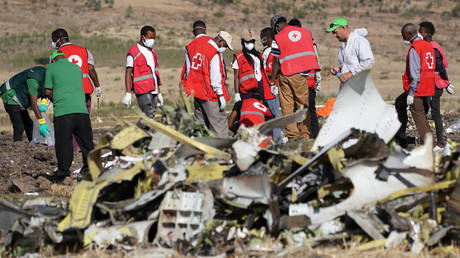
- The MAX Grounding: China was the first country to ground the 737 MAX in 2019 after two horrific crashes in Indonesia and Ethiopia. They didn't let Chinese airlines fly them again until January 2023, long after the rest of the world cleared the jet.
- The Quality Crisis: Last year was a disaster for Boeing's factory floor. A door plug blew out of an Alaska Airlines MAX jet mid-flight, triggering federal investigations, criminal case revivals, and a grueling eight-week machinist strike in Washington state that paralyzed assembly lines.
- The Airbus Pivot: While Boeing struggled, European rival Airbus feasted on the Chinese market. Chinese airlines handed Airbus massive multi-billion-dollar block orders while American jets gathered dust.
Boeing's new CEO, Kelly Ortberg, admitted to investors last month that any future sales to China are 100% dependent on U.S.-China negotiations and political relations. Translation: We can't sell planes based on merit anymore; we need the President to beg for us.
What China actually gets out of this deal
Xi Jinping isn't buying American jets out of the goodness of his heart. This is a calculated diplomatic shield. Trump has spent his return to the White House threatening massive tariffs on Chinese imports. By tossing a potential 750-plane order into the mix, China gives Trump a massive manufacturing win he can boast about to voters.
It's a classic strategy that worked during Trump's first term, and it's working again now. Remarkably, Trump admitted to reporters that tariffs didn't even come up during his summit talks with Xi. By offering to buy American planes and GE engines, China successfully changed the subject.
Furthermore, China genuinely needs the capacity. Their state-backed domestic aerospace company, COMAC, has been trying to scale up production of its own narrow-body jet, the C919. But COMAC is plagued by production bottlenecks and still relies heavily on Western components. It can't produce planes fast enough to feed China's soaring domestic travel demand. Airbus alone can't fill the void either, because its production lines are booked out for years. China needs Boeing jets to keep its airlines flying, but they want to dictate the political terms of the purchase.
The Taiwan wildcard that could ruin everything
If you want to know why this deal might never cross the finish line, look at the other major headline from the Beijing summit. Taiwan remains a massive diplomatic breaking point.
While Trump was boasting about jet engines, Xi Jinping was giving him a stern warning behind closed doors. Xi reiterated that mishandling the Taiwan situation could push the U.S. and China directly toward conflict. Trump told reporters on his flight home that he hasn't yet decided whether to proceed with a major authorized U.S. arms sale to Taiwan.
"I heard him out. I didn't make a comment," Trump said regarding Xi's warnings.
This is where the 750-plane illusion completely falls apart. China uses aircraft orders as a geopolitical thermostat. If Secretary of State Marco Rubio or the Trump administration pushes forward with aggressive military support for Taiwan, Beijing will simply turn off the valve. Those 200 firm orders will get delayed. The option for 750 planes will vanish. We've seen this movie before, and it always ends with Boeing holding an empty bag.
How to track if this deal is real
If you're an investor or an aviation watcher, stop listening to the political speeches. Watch the regulatory filings and industry trackers instead. Here is exactly how you can tell if this announcement turns into real economics:
- Check the Boeing Order Book: Look at Boeing's monthly commercial orders report. If these 200 planes don't move from "identified customer" to firm, named orders with down payments within the next six months, the deal is stalling.
- Watch the Engine Contracts: CFM International—the joint venture between GE Aerospace and Safran—has to finalize the actual production schedule for the LEAP-1B engines. Look for concrete contract announcements from GE.
- Monitor the Delivery Schedule: Airlines need planes now. If China is serious, they will accept immediate deliveries of existing 737 MAX jets that Boeing already built and parked in storage. If those planes don't start flying across the Pacific soon, it's a bad sign.
Uncertainty is the only real takeaway from this summit. As independent analysts have rightly pointed out, we have to wait until we see actual numbers from the airlines themselves. Until the Chinese carriers sign the contracts, this massive 750-plane promise is just a stack of paper used to buy a brief moment of peace between two superpowers.
Boeing's China Deal Breakdown provides a quick broadcast overview of the immediate news report covering Trump's initial announcement regarding the 200-jet commitment.