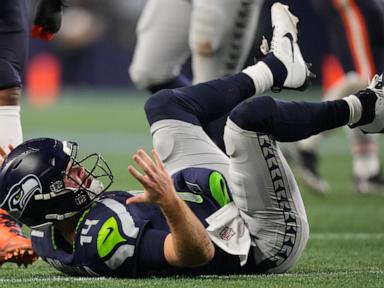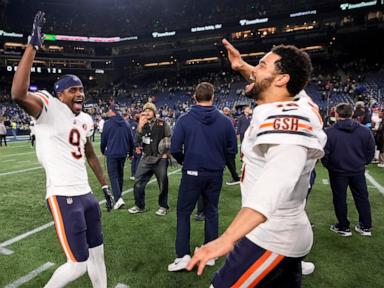
Everyone in Chicago is popping champagne over third-down conversion rates. Stop. Put the bottle down. Look at the tape instead of the box score.
Local beat writers and national talking heads are tripping over themselves to praise the Chicago Bears for sustaining drives during their 6-2 start. The lazy consensus says that converting on third down is the hallmark of an elite, disciplined offense. They point to the raw conversion percentage, nod sagely at the time-of-possession numbers, and declare the offensive rebuild complete. If you liked this post, you should read: this related article.
They are completely missing the point.
In the modern NFL, living on third down is not a sign of offensive dominance. It is a symptom of early-down failure. If you are constantly bragging about how well you survive car crashes, you might want to ask why you keep driving into walls. For another perspective on this development, see the recent update from NBC Sports.
The Myth of the Clutch Offense
I have spent over a decade breaking down NFL film and sitting in analytics rooms where front offices actually decide who gets paid and who gets cut. Nobody in those rooms celebrates high third-down volume. When an offense relies heavily on third-down heroics to sustain a 6-2 record, smart evaluators do not see a juggernaut. They see a regression candidate waiting to happen.
Let us define what third down actually represents in football architecture. Third down is a recovery mechanism. It exists to bail an offense out when first and second down fail to generate expected yardage.
When analysts like Brian Burke of ESPN or the research teams at Pro Football Focus look at offensive sustainability, they rarely start with third-down conversion rate. Why? Because third down is notoriously noisy. It has one of the highest variance rates of any situational metric in football. A single defensive holding call, a tipped pass falling into a receiver's lap, or an off-script quarterback scramble can swing a game's third-down efficiency by twenty percentage points.
Early-down efficiency, measured by Expected Points Added (EPA) per play and Success Rate on first and second down, is where real contenders separate themselves. Contenders avoid third down altogether. They stay ahead of the chains, dictate defensive personnel, and force coordinators into predictable shells.
The Bears are doing the exact opposite. They are bogging down on first down, taking low-percentage shots or running into stacked boxes on second down, and forcing their quarterback to pull a rabbit out of a hat every third series.
Why Early-Down Failure Masks Itself as Grit
Fans love grit. Coaches love talking about toughness. When a quarterback stands in a collapsing pocket on 3rd-and-8 and fires a laser across the middle to move the chains, Soldier Field erupts. It feels heroic. It looks great on Sunday night highlight reels.
It is also completely unsustainable over a seventeen-game season and a postseason run.
Consider the mechanics of what happens when an offense fails on early downs:
- The Playbook Shrinks: On 3rd-and-7 or longer, the run game is dead. Screen passes become obvious. The defense knows a pass is coming and can pin its ears back.
- Pass Protection Erodes: Defensive coordinators save their most exotic simulated pressures and stunt packages specifically for third-and-long. Your offensive line is forced to block elite athletes in pure passing situations without the threat of play-action to freeze linebackers.
- Quarterback Exposure Skyrockets: Every extra third-and-long dropback increases the probability of a sack, a strip-fumble, or a tipped interception. You are voluntarily subjecting your franchise player to maximum-violence snaps.
Imagine a scenario where a poker player constantly goes all-in with a gut-shot straight draw and hits it three times in a row. He walks away from the table with a massive stack of chips. Does that make him a brilliant strategist, or did he just get lucky playing terrible odds? Right now, the Bears are that poker player.
Dismantling the Common Defenses of the Bears Offense
Whenever you point out the statistical fragility of a 6-2 team, the pushback is entirely predictable. Let us dismantle the three most common arguments used to defend Chicago's current offensive formula.
Does Time of Possession Actually Win Games?
This is the oldest dinosaur metric in football. The conventional wisdom claims that keeping the opposing offense on the sideline rests your defense and wears down the opponent.
The data flatly rejects this. Time of possession is a byproduct of winning, not the cause of it. When teams lead in the fourth quarter, they run the ball to bleed the clock, artificially inflating their possession numbers. Furthermore, modern sports science has repeatedly shown that defensive linemen do not magically collapse from exhaustion in the fourth quarter simply because they played thirty-two minutes instead of twenty-eight. What actually exhausts a defense is defending explosive plays and getting gashed for seven yards on first down.
Isn't Converting Third Downs Proof of Good Coaching?
Good coaching is scheming wide receivers open on first down so you never have to see third down.
If your offensive coordinator is drawing up brilliant concepts on third down, that is great—for a backup plan. Why are those same concepts not being deployed on first down against base defenses? When a staff consistently waits until third down to unveil its best passing concepts, it usually means they are stubbornly committed to establishing the run on early downs, regardless of defensive alignment. Running into a seven-man box for two yards on first down is not toughness. It is throwing away a down.
Doesn't a 6-2 Record Speak for Itself?
Ask the 2022 Minnesota Vikings or the 2023 Philadelphia Eagles how much an early-season record built on high-variance situational football matters in January. Both teams stacked wins early while masking glaring structural flaws in their down-to-down efficiency. Both teams collapsed the moment the statistical luck evened out against competent playoff defenses.
The Structural Flaw Nobody Wants to Acknowledge
To understand why Chicago's third-down success is a trap, you have to look at average distance to go.
There is a massive difference between converting 3rd-and-2 and converting 3rd-and-8. Third-and-short is an extension of the run game; offenses convert those at roughly a sixty-five to seventy percent clip across the league. Third-and-long is a graveyard.
When a team thrives on third-and-medium and third-and-long during a hot streak, it is almost always driven by two things: unsustainable contested-catch rates by wide receivers and off-script scrambling by the quarterback.
Both of those skills are real. Having a quarterback who can evade a free rusher and extend a play is a massive asset. Having receivers who can win one-on-one matchups in tight coverage is a luxury.
The problem is defensive adjustment.
By Week 9, opposing defensive coordinators have two months of tape on your third-down tendencies. They stop rushing four pass rushers recklessly upfield, which closes the scramble lanes your quarterback used to escape. They start playing more two-high safety shells with zone underneath, taking away the deep crossers and forcing your quarterback to check the ball down short of the sticks.
Once those easy escape hatches close, an offense that cannot function on first and second down hits a brick wall. The drives stall. The punts pile up. Suddenly, the defense that looked elite during the 6-2 start is defending short fields all afternoon.
How to Actually Build a Sustainable Offense
If the Bears want to turn a hot start into genuine contention, they have to stop patting themselves on the back for surviving third down and fix their early-down architecture. In my years evaluating offensive systems, the teams that last into February follow a strict set of principles.
- Pass on First Down to Set Up the Run: Flip the traditional football cliché on its head. Defenses are built to stop the run on first down. Attack their base personnel with quick-game concepts, play-action bootlegs, and RPOs. Once you force them into nickel and dime packages to stop the bleed, then run the ball against light boxes.
- Eliminate Negative Plays: A two-yard gain on first down is annoying. A three-yard loss on a poorly blocked screen or an inside zone run blown up in the backfield is a drive killer. Offenses must prioritize positive yardage over home-run swings on first down.
- Script the First Fifteen Plays for Rhythm, Not Tricks: Too many coordinators use their scripted opening drives to test exotic formations. Use those plays to get the quarterback into a fast, decisive rhythm with high-percentage throws that get the ball out in under 2.5 seconds.
- Treat Third Down as a Failure State: Shift the internal culture of the offensive meeting room. Stop handing out game balls for converting 3rd-and-9. Start grading the offense on how many drives end in points without ever seeing a third down.
The Uncomfortable Reality of the Contrarian Approach
Let us be completely honest about the downside of abandoning the conservative, third-down-heavy approach.
Passing more on first down and attacking aggressively early in the count increases short-term volatility. When you throw the ball on first down, incomplete passes happen. Suddenly, you are staring at 2nd-and-10, and the clock stops, giving the opponent extra possessions if your drive stalls. If your offensive line struggles in pass protection, aggressive early-down passing can expose your quarterback to hits before the defense even gets tired.
There is a reason coaches default to conservative early-down runs and rely on third-down execution. It feels safe. It protects the coach from criticism if an early pass gets intercepted. If you run twice and throw incomplete on third down, fans blame the players for not executing. If you throw three times in forty seconds and punt, fans blame the coordinator for abandoning the run.
Coaches coach to protect their jobs. Analysts evaluate to find the truth.
The Verdict on Chicago
The Chicago Bears have talent, their defense plays fast, and their 6-2 record is locked into the standings. Nobody can take those six wins away from them.
However, mistaking a hot streak on third down for a sustainable offensive identity is the fastest way to get embarrassed when the schedule toughens up. Real contenders do not live on the edge of the cliff. They build a wide road and drive straight down the middle.
Stop celebrating the bailouts and fix the early downs before the luck runs out.