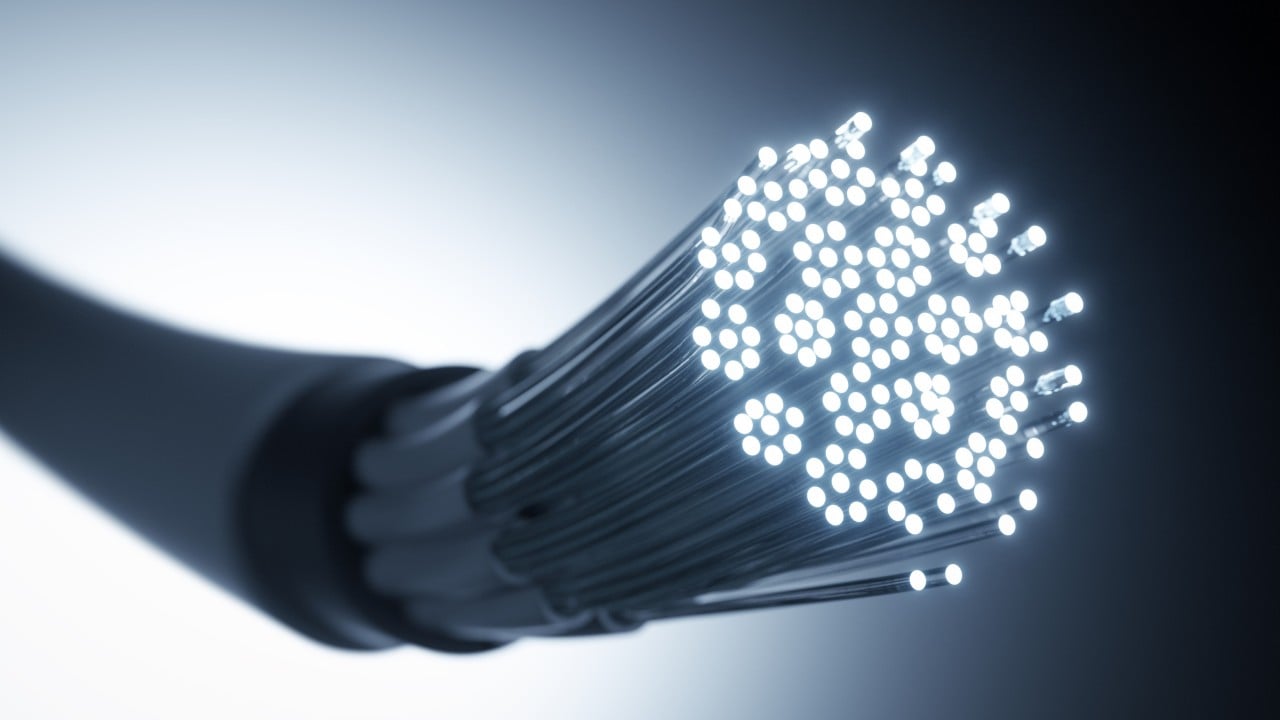
Every few months, a physics lab somewhere in China or Europe drops a press release celebrating another quantum milestone. They pushed atomic entanglement further. They stretched the distance. They broke their own record by a factor of four. The tech press swoops in, regurgitating phrases about global quantum networks and unhackable comms, while investors scramble to throw cash at hardware that looks brilliant in a Nature paper and fails completely in the real world.
Stop celebrating the distance records. They are a distraction.
I have watched venture funds and government agencies blow tens of millions of dollars chasing headline metrics that bear zero resemblance to operational engineering. If you think stretching an entanglement distance across a specialized optical fiber bench inside a sterile laboratory means we are a step closer to a functioning quantum internet, you do not understand the physics. You are falling for a parlor trick.
Let us dismantle the lazy consensus.
The Dirty Secret of Quantum Optics Labs
Here is what the press releases omit. When a team boasts about extending atom entanglement distance, they are talking about pristine, highly controlled environments. We are looking at ultra-high vacuum chambers, cryogenic cooling systems, active magnetic shielding, and custom-tuned photon detectors that cost more than a luxury sports car.
More importantly, they are operating under conditions that violate reality.
Distance in quantum networking is not a linear scaling problem. You do not just wind a longer spool of standard single-mode fiber, plug it into your atomic node, and watch the fidelity hold steady. Every single kilometer of standard telecommunications fiber introduces Rayleigh scattering, chromatic dispersion, and attenuation that eats photons alive. At standard telecom wavelengths around 1550 nanometers, silica glass absorbs and scatters light. At 780 nanometers, where many rubidium-based atomic transitions happen, the attenuation in fiber is catastrophic. You lose half your signal every few kilometers.
So how do these record-breaking teams hit hundreds of kilometers?
They cheat. They use quantum frequency conversion to shift atomic wavelengths up to telecom bands, or they deploy intermediate quantum memories that require conditions so fragile a stray Wi-Fi signal might as well be an EMP. They engineer an extreme, hyper-optimized physics experiment that exists precisely nowhere outside a university basement.
Building a cathedral in a vacuum chamber does not mean you know how to build houses in an earthquake zone.
The Wrong Metric
The entire industry is obsessed with the wrong variable. We talk about distance like we are laying transatlantic telegraph cables in the nineteenth century.
Distance without fidelity is useless. Entanglement generation rate matters infinitely more than how far apart your two vacuum chambers sit. If your protocol takes six hours of averaging data to confirm a single entangled pair across a hundred kilometers because your success probability is $10^{-9}$ per trial, you do not have a communication channel. You have a very expensive random number generator that works on a glacial timescale.
Consider the raw mathematics of heralded entanglement distribution. The success probability scales exponentially with loss. Let the transmission efficiency of your channel be $\eta$. The probability of a successful entanglement swap or direct transmission drops precipitously as $\eta$ shrinks.
$$\text{Success Rate} \propto \eta^2$$
When you scale up distance, $\eta$ plummets. To counteract this, researchers crank up pump laser powers, which introduces multi-photon emission noise. This noise destroys the purity of the state, plunging the concurrence or fidelity below the threshold required for entanglement distillation or quantum error correction.
You cannot simply brute-force distance through attenuation. No amount of clever press releases changes Maxwell's equations or the laws of quantum mechanics.
Why Repeaters Are Not the Silver Bullet
The standard counter-argument from techno-optimists is simple: quantum repeaters.
The narrative goes like this: we will scatter quantum repeaters every fifty kilometers along the fiber route, use entanglement swapping to stitch the links together, and boom, global quantum internet.
Imagine a scenario where you try to build this infrastructure across the continental United States.
To make a quantum repeater work, you need local quantum memory with coherence times longer than the round-trip light propagation time, high-efficiency entanglement generation, and deterministic Bell-state measurements. We do not have a single physical platform that satisfies all three criteria simultaneously with high enough efficiency to beat direct transmission over medium distances.
Diamond vacancy centers, trapped ions, neutral atom arrays, rare-earth-ion-doped crystals—every single one of them involves severe engineering compromises. If your memory lifetime is a millisecond, but your cooling and control overhead takes ten milliseconds to reset, your repeater is a bottleneck. It drops packets faster than a congested router in 1995.
We are trying to build the internet before we have invented the transistor, and we are measuring our progress by the length of the copper wire instead of the reliability of the switch.
The Commercial Reality Check
Enterprise leadership needs to wake up. If your corporate strategy relies on deploying quantum key distribution (QKD) over long-distance public fiber networks based on these laboratory distance milestones, you are exposing your infrastructure to severe vulnerabilities while burning capital.
QKD is frequently conflated with a quantum internet, which is another marketing sleight of hand. QKD requires trusted nodes or point-to-point dedicated fiber links. If you run QKD over fifty kilometers of shared dark fiber, you are vulnerable to detector blinding attacks and Trojan-horse attacks unless you implement rigorous, expensive countermeasures. And if you use trusted nodes—meaning intermediate stations where the keys are decrypted and re-encrypted—you have completely eliminated the unconditional security guarantee that makes quantum cryptography attractive in the first place. You are just trusting a landlord with your encryption keys.
The companies winning in this space right now are not the ones flexing distance records on arXiv. They are the ones quietly solving deterministic photon-atom interfaces, miniaturizing vacuum chambers into photonic integrated circuits, and figuring out how to manufacture quantum transducers that don't require an entire room of PhDs to keep aligned.
What We Should Be Measuring Instead
If we want to stop lying to ourselves, we need to shift our metrics immediately.
- Entanglement Generation Fidelity ($F$): If it is not above error-correction fault-tolerance thresholds under real-world thermal noise, distance is irrelevant.
- Attempt-to-Success Latency: How many seconds or microseconds pass between firing the pump laser and holding a verified, usable entangled state?
- System Footprint and Uptime: Can the hardware run for 72 hours without a laser losing lock or a vacuum seal degrading?
We need to stop evaluating quantum hardware through the lens of classical telecommunications. Classical bits can be amplified, boosted, regenerated, and copied infinitely. Entangled qubits cannot. The moment you measure them, you destroy them. The moment they interact with stray environmental thermal photons, decoherence swallows them.
The next time a headline breaks about a physics team doubling or quadrupling an entanglement distance record, look past the hype. Check the raw generation rate. Check the noise floor. Check whether the experiment could survive being placed in a standard utility manhole beneath a busy city street.
Until those answers change, these records are nothing more than expensive academic vanity metrics.
Stop funding the distance race. Start funding the engineering grit required to make a single quantum link reliable enough to survive outside a physics department.