The Trophy Hunting Of Public Health
Every few years, international bureaucracies need a win. They need a shiny plaque to hand out at regional assemblies, a press release that makes decades of administrative inertia look like forward motion, and a headline that satisfies donors.
Enter Chile.
The World Health Organization and the Pan American Health Organization recently popped the champagne. They certified Chile as the first South American nation to stamp out dog-transmitted rabies. The global health press erupted in unanimous applause. Analysts praised visionary leadership, strict vaccination protocols, and municipal vigilance.
It is a neat story. It is also dangerously misleading.
I have spent years watching public health ministries trade substance for status symbols. I have seen budgets torched on vanity metrics while baseline structural failures fester in plain sight. Declaring a country free of a specific viral variant based on narrow epidemiological criteria does not mean the threat is gone. It means the bureaucracy has successfully narrowed the definition of the problem until they could win the game.
Let us look past the celebratory press releases and examine what actually happened in Chile, why the achievement cannot be replicated across the continent, and why treating this milestone as a continental model is an administrative catastrophe waiting to happen.
Geography Beats Bureaucracy
The lazy consensus credits Chile's success to political willpower and superior public health management. That is diplomatic fiction designed to protect egos in Geneva and Washington.
Chile did not defeat rabies through an ingenious vaccine strategy that can be copy-pasted into the shantytowns of Lima, the favelas of Rio, or the ungoverned rural stretches of the Bolivian altiplano. Chile won because of natural geographical borders and a heavily centralized, highly urbanized population distribution.
Look at the map. Chile is a narrow strip pinned between the driest desert on earth, the Antarctic ice, the Pacific Ocean, and the highest peaks of the Andes. It is an epidemiological fortress. Porous borders with countries harboring endemic canine rabies strains are minimal compared to the massive, permeable frontiers shared by Brazil, Argentina, Bolivia, and Peru.
Furthermore, over eighty percent of Chile's population lives in a concentrated central valley dominated by Santiago and a few major urban centers. Municipal control over domestic animal populations in a centralized, highly monitored urban corridor is an administrative accounting exercise compared to managing free-roaming dog populations across thousands of square miles of tropical rainforest or sprawling informal settlements without paved roads or running water.
When you isolate a country geographically, choke off permeable animal migration corridors, and concentrate your population into easily surveilled metropolitan nodes, stamping out a slow-moving, direct-contact virus is an engineering problem, not a miraculous public health breakthrough. Pretending that Chile's milestone is a replicable policy template for the rest of South America is an insult to the structural realities faced by every other health ministry on the continent.
The Sylvatic Blind Spot
Public health officials love single-variable victories because they are easy to measure. Dog-transmitted rabies fits the spreadsheet neatly. Vaccinate the dogs, track the bites, declare victory.
Nature is less cooperative.
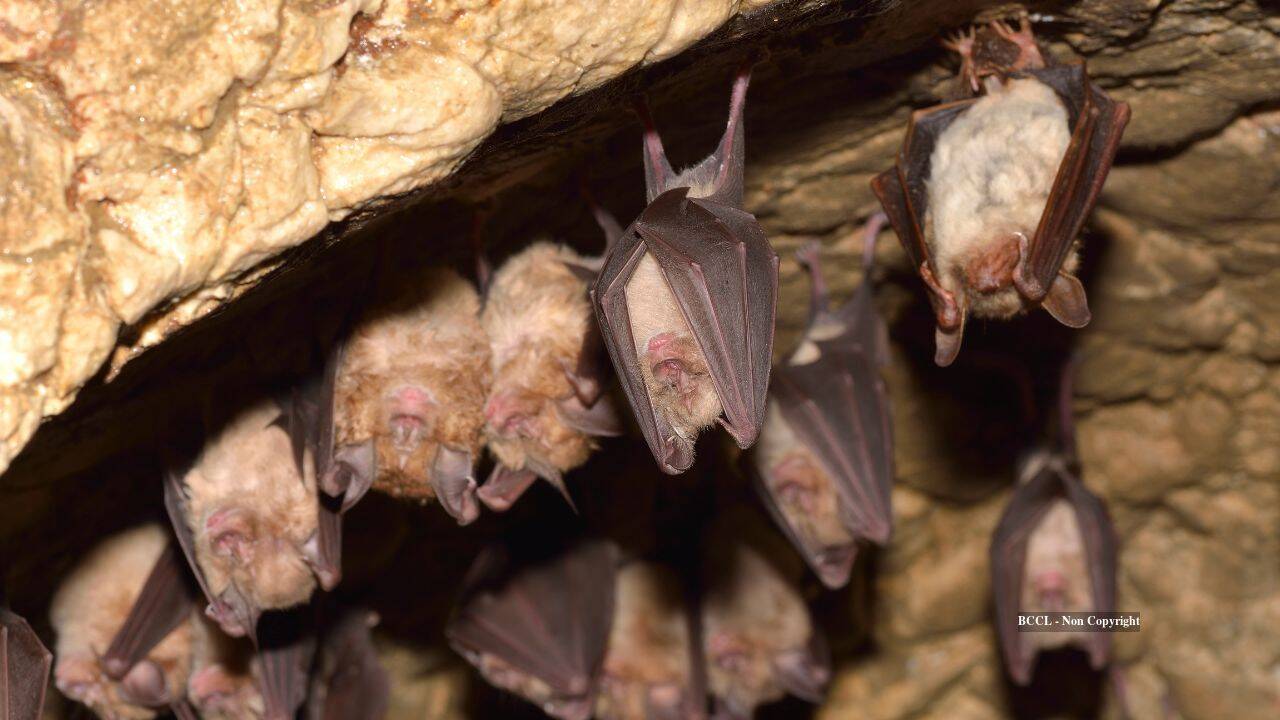
While ministries celebrate the elimination of canine rabies variants, vampire bats and insectivorous bat species continue to fly across borders, roost in urban attics, and harbor rabies strains that infect livestock, domestic pets, and humans. The elimination of the canine variant does not mean Chile is rabies-free. It means they eradicated one specific transmission vector while leaving the wildlife reservoir completely intact.
In fact, as canine-adapted variants disappear, ecological space opens up. When you eliminate one dominant strain in an ecosystem, you frequently see spillover adaptations from sylvatic reservoirs. Bat-mediated rabies is notoriously difficult to control because you cannot round up wild chiropteran populations and vaccinate them with a collar tag.
By framing the Chilean milestone as a total eradication of rabies rather than what it actually is—the suppression of one specific dog-to-dog variant—public health agencies are conditioning the public to drop their guard. When a patient walks into a clinic in Santiago with unexplained neurological symptoms after a bat scratch, doctors trained to think of Chile as a "rabies-free country" lose crucial diagnostic time. That is not safety. That is professional negligence disguised as a diplomatic triumph.
The Myth Of The Replicable Playbook
International health organizations are currently packaging Chile's validation into toolkits, workshops, and technical assistance manuals. They want health ministers from Asuncion to Caracas to adopt the Chilean model.
This is dangerous advice.
To replicate Chile's success, a country needs several preconditions that money cannot simply buy overnight. It needs a high GDP per capita that allows municipal governments to fund permanent, professionalized animal control infrastructure. It needs low levels of extreme poverty where families do not abandon pets or leave dogs roaming in the streets to scavenge. It needs a rigid legal framework with actual enforcement mechanisms for animal registration and vaccination mandates.
Take away those structural pillars, and a mass vaccination campaign becomes a temporary band-aid on a gushing wound. You can vaccinate fifty percent of the street dogs in a sprawling metropolitan periphery today, but thanks to high turnover rates, free-roaming reproduction cycles, and constant migration from rural areas, that vaccination coverage drops below the herd immunity threshold within eighteen months.
Consider the logistical nightmare of cold-chain maintenance in tropical or remote regions. Vaccines degrade rapidly when exposed to heat fluctuations during transport across unpaved provincial roads. A vaccination campaign executed in a temperate, highly organized capital city with reliable refrigeration infrastructure looks entirely different from an immunization push in an Amazonian department where power grids fail daily.
I have watched millions of dollars vanish into dog-catching trucks and syringe distribution programs that achieved impressive short-term coverage rates only to watch the virus flare right back up the moment funding cycles shifted or an economic crisis hit. Chile did not invent a new way to break this cycle; Chile simply operated in an environment where the cycle was already suppressed by wealth, geography, and state capacity.
Why People Also Ask The Wrong Questions
When readers search for information regarding Chile and rabies, the automated queries focus on superficial mechanics. They ask how many dogs were vaccinated, what the WHO criteria are, and whether tourists need prophylaxis before visiting Santiago.
These questions miss the entire point of the crisis.
People ask: "How did Chile achieve zero cases?"
The honest answer is that Chile capitalized on structural advantages while international agencies cherry-picked the data to validate their own bureaucratic existence.
People ask: "Is it safe to pet stray dogs in Chile now?"
The honest answer is that you should never pet a stray dog anywhere on earth, regardless of what a Geneva bureaucrat signed off on, because urban ecosystems are fluid, wildlife migration is continuous, and zoonotic pathogens do not respect administrative validation certificates.
The obsession with binary validation—either you have the disease or you have the certificate—creates a false sense of security. It turns public health into a checkbox exercise.
The Cost Of Complacency
When a government achieves a milestone like this, the political incentives shift immediately. Funding shifts away from surveillance toward maintenance. Staffing gets reassigned. Laboratory capacity gets repurposed for trendier diseases with higher social media visibility.
That is when the system rots from the inside out.
Another insidious consequence of declaring total elimination is diagnostic drift. In countries where a disease has been officially eradicated for years, medical schools stop emphasizing it in curricula. Young doctors rotate through emergency rooms having never seen a clinical presentation of rabies in a human. When an atypical case slips through—perhaps via a bat vector or an imported animal from an unregulated border crossing—clinicians misdiagnose the early neurological symptoms as Guillain-Barre syndrome or viral encephalitis. By the time anyone connects the dots, the patient is dead, because clinical rabies has a near-hundred-percent mortality rate once symptoms manifest.
Diseases like rabies do not vanish because a committee in Washington issues a certificate of compliance. They retreat when continuous, paranoid, unrelenting vigilance makes it impossible for them to establish a foothold. The moment a health ministry starts believing its own press releases, the pathogen wins.
Chile's medical professionals did exceptional work on the ground. Veterinarians, lab technicians, and municipal workers executed grueling, unglamorous surveillance tasks for decades to suppress the canine virus. My critique is not aimed at the boots on the ground in Santiago. My critique is aimed at the international apparatus that takes localized operational success and weaponizes it into a deceptive continental fairy tale.
We do not need another celebratory workshop. We do not need another glossy PDF manual titled the Chilean Roadmap. We need an honest admission that public health success in one sheltered, middle-income nation has zero predictive value for the chaotic, under-resourced, geographically vulnerable reality of the rest of the continent.
Stop treating health administration like a marketing campaign. Stop pretending that stamping out one variant in one country is a blueprint for a continent.
The virus does not care about your plaque.