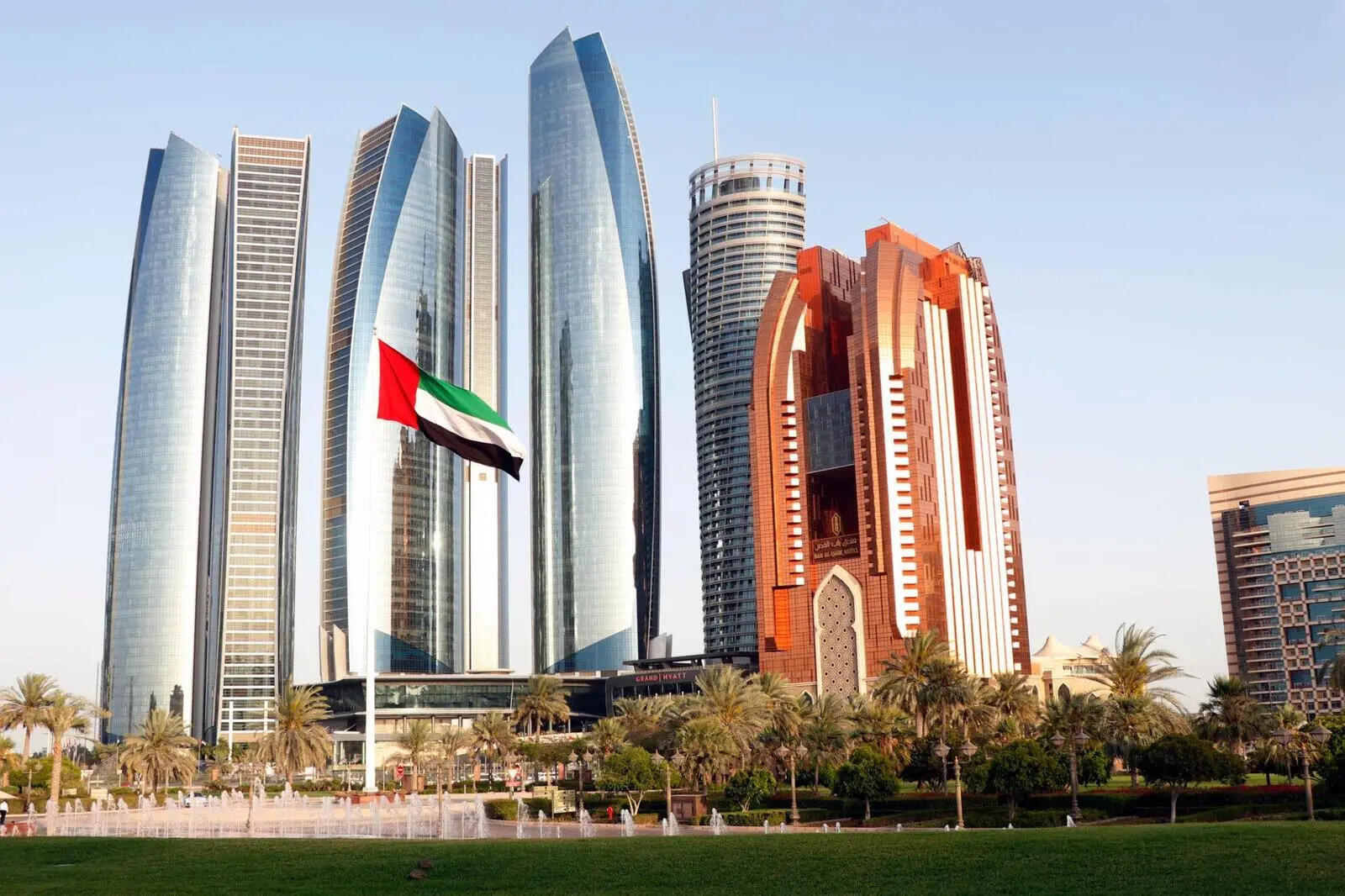
The UAE currently serves as a high-density laboratory for the global migration of private capital, characterized not just by the presence of 17 billionaires holding $212.6 billion, but by the specific structural mechanics that allow such a concentration to persist. Forbes data indicates that while the raw number of individuals is relatively small compared to the United States or China, the per-capita wealth density and the velocity of capital inflow outpace traditional Western hubs. This phenomenon is not an accident of geography; it is the result of a deliberate policy architecture designed to arbitrage the friction found in other global jurisdictions.
The growth of this billionaire hub relies on three distinct operational pillars: Jurisdictional Arbitrage, Asset Protection Frameworks, and The Integrated Family Office Ecosystem.
The Mechanics of Jurisdictional Arbitrage
Capital moves toward the path of least resistance. In the context of the UAE, this resistance is measured by the delta between global tax burdens and the local fiscal environment.
- Fiscal Friction Reduction: The absence of personal income tax, capital gains tax, and inheritance tax transforms the UAE into a "holding environment" where the compounding effect of wealth is maximized. For a billionaire with $10 billion in liquid assets, a 20% capital gains tax in a Western jurisdiction represents a $2 billion drag on liquidity. In Dubai or Abu Dhabi, that $2 billion remains deployed in the market.
- Regulatory Agility: Unlike the bureaucratic inertia of the EU or North America, the UAE’s regulatory bodies—specifically the DFSA (Dubai Financial Services Authority) and ADGM (Abu Dhabi Global Market)—function with a "Private Equity" mindset. They iterate on laws quickly to accommodate emerging asset classes like digital assets and green energy credits.
This environment creates a self-reinforcing loop. As more high-net-worth individuals (HNWIs) relocate, the service provider infrastructure (law firms, private banks, concierge services) scales, further reducing the operational cost of being wealthy in the region.
The Structural Anatomy of UAE Billionaire Wealth
The $212.6 billion figure cited by Forbes is not a monolithic block of cash; it is a complex web of equity, real estate, and sovereign-linked partnerships. To understand the stability of this wealth, one must categorize it by its origin and its "stickiness."
Legacy Trade and Diversified Conglomerates
A significant portion of the resident billionaire class consists of heads of multi-generational family businesses. These entities—often centered around retail, automotive, and construction—provide the foundational liquidity for the region. Their wealth is "sticky" because it is tied to physical infrastructure and long-term government contracts.
The New Arrival Alpha
The recent surge in the UAE’s billionaire count is driven by "Portable Wealth"—individuals who made their fortunes in tech, hedge funds, or commodity trading and have opted to relocate their primary tax residency. This group is more sensitive to global shifts and represents the "hot money" segment of the $212.6 billion total.
The Cost Function of Global Residency
Every jurisdiction has a cost function. While the UAE offers tax efficiency, it historically faced challenges regarding "Soft Infrastructure"—healthcare, education, and long-term residency security. The introduction of the Golden Visa program fundamentally changed the risk-reward calculation for the global elite.
- Permanent vs. Transient Stakes: By de-linking residency from employment, the UAE converted the billionaire population from "visitors" to "stakeholders."
- The Safety Premium: In an era of increasing geopolitical volatility, the "neutrality" of the UAE acts as a hedge. Billionaires are willing to pay a premium for a jurisdiction that maintains functional trade and diplomatic relations with both the East and the West.
Why the Standard Metrics of Wealth Growth are Incomplete
Most analysts look at the Forbes list as a static leaderboard. This is a mistake. The real metric of success for a billionaire hub is Capital Velocity—how quickly a resident can move from a liquidity event to a re-deployment of that capital.
In traditional markets, a major acquisition or divestment might be tied up in regulatory reviews and tax audits for 18–24 months. In the UAE, the streamlined nature of the Free Zones allows for much faster turnaround times. This "Velocity Alpha" means that a dollar in Dubai is more productive over a 10-year horizon than a dollar in London or New York, simply because it spends less time sitting idle in a regulatory or tax clearinghouse.
The Three Pillars of Wealth Preservation in the Middle East
The sustainability of the UAE as a billionaire hub is supported by a specific triadic structure:
- Sovereign Wealth Fund (SWF) Co-Investment: The presence of Mubadala and ADIA creates a unique "deal flow" environment. Billionaires in the UAE often find themselves co-investing alongside state entities, which provides a layer of geopolitical insurance and access to institutional-grade opportunities.
- Physical Security and Discretion: For the ultra-wealthy, privacy is an escalating cost. The UAE’s strict privacy laws and controlled social environment provide a level of security that is increasingly difficult to find in transparent, democratic Western cities where "wealth shaming" has become a political tool.
- The Family Office Maturation: The transition from simple asset management to sophisticated Multi-Family Offices (MFOs) has institutionalized the presence of billionaires. They are no longer just individuals; they are private institutions with their own CIOs, legal teams, and philanthropic arms.
Strategic Constraints and Downside Risks
It is intellectually dishonest to suggest the UAE’s trajectory is without friction. The primary limitation is the Concentration Risk of being tied to a dollar-pegged currency.
- Monetary Policy Dependency: Because the AED is pegged to the USD, the UAE must import the Federal Reserve’s interest rate environment. This can create a mismatch between local economic needs and the cost of capital.
- Global Tax Harmonization: The OECD’s push for a global minimum corporate tax represents a direct challenge to the UAE’s competitive advantage. While the UAE has introduced a 9% corporate tax to comply, the margin of advantage is narrowing.
- Reputational Arbitrage: As the UAE grows as a financial hub, it faces increased scrutiny from organizations like the FATF. Maintaining "White List" status is the single most critical variable for the continued inflow of $100M+ capital blocks.
The Shift from Lifestyle to Infrastructure
The UAE's billionaire growth has moved past the "luxury lifestyle" phase. The 17 residents mentioned are not there for the real estate alone; they are there because the UAE is positioning itself as the Global Clearing House for the Global South.
As trade routes shift toward the BRICS+ block and the "Middle Corridor," Abu Dhabi and Dubai serve as the logistical and financial nodes connecting the capital of the East with the markets of Africa and Central Asia. The $212.6 billion is the vanguard of this shift.
Reallocating the Strategic Playbook
For global investors and family offices, the UAE is no longer an "emerging" option; it is a core structural requirement. The strategic play is to stop viewing the region as a tax haven and start viewing it as a Liquidity Hub.
- Action 1: Transition holding companies to ADGM or DIFC to take advantage of the Common Law frameworks, which provide a more predictable legal environment for contract enforcement than local civil courts.
- Action 2: Pivot from passive real estate investment to "Sovereign-Adjacent" sectors—tech, energy transition, and food security—where the interests of private billionaires and the state's strategic goals overlap.
- Action 3: Monitor the "Billionaire-to-GDP" ratio. When wealth concentration exceeds a certain threshold, the risk of "succession friction"—both at the corporate and state level—increases. Diversification within the region across different emirates (Dubai for trade, Abu Dhabi for institutional capital) is the hedge against localized volatility.
The growth from $0 to $212.6 billion was driven by incentives. The next phase, moving toward the $500 billion mark, will be driven by the UAE’s ability to provide the world’s most sophisticated Conflict Resolution and Capital Deployment infrastructure. The billionaires aren't just living there; they are building the next generation of private-state synthesis.