The institutional architecture of the Canadian Senate is undergoing its most significant structural realignment in a decade. By appointing his principal secretary, Tom Pitfield, alongside sitting Conservative MP Richard Martel, Prime Minister Mark Carney has formally ended the non-partisan appointment framework established under Justin Trudeau. This shift is not merely a personnel change; it is a calculated optimization strategy designed to address systemic bottlenecks in the legislative assembly.
To analyze this executive maneuver, one must look past the partisan optics and examine the core transactional mechanisms at play: legislative throughput, tactical poaching, and institutional equilibrium.
The Legislative Optimization Problem
The Independent Senators Group (ISG) and other non-affiliated factions established during the Trudeau administration introduced unintended systemic frictions into the legislative process. While intended to reduce partisan bias, the injection of institutional neophytes created an operational bottleneck.
Without clear party discipline, the legislative cost function shifted dramatically. Bills that previously moved through predictable partisan channels became bogged down in months of distributed negotiation.
[Legislative Velocity] = (Party Discipline + Procedural Expertise) / (Individual Autonomy)
The appointment of Pitfield—a veteran Liberal strategist who has managed executive priorities from artificial intelligence to the digital economy—signals a deliberate effort to inject procedural expertise into the upper house. By placing high-functioning political operators directly into the chamber, the executive branch intends to minimize the transaction costs of passing priority legislation. The objective is simple: accelerate legislative velocity by reintroducing structured, predictable party management under the guise of restoring operational balance.
Tactical Poaching and Regional Asymmetry
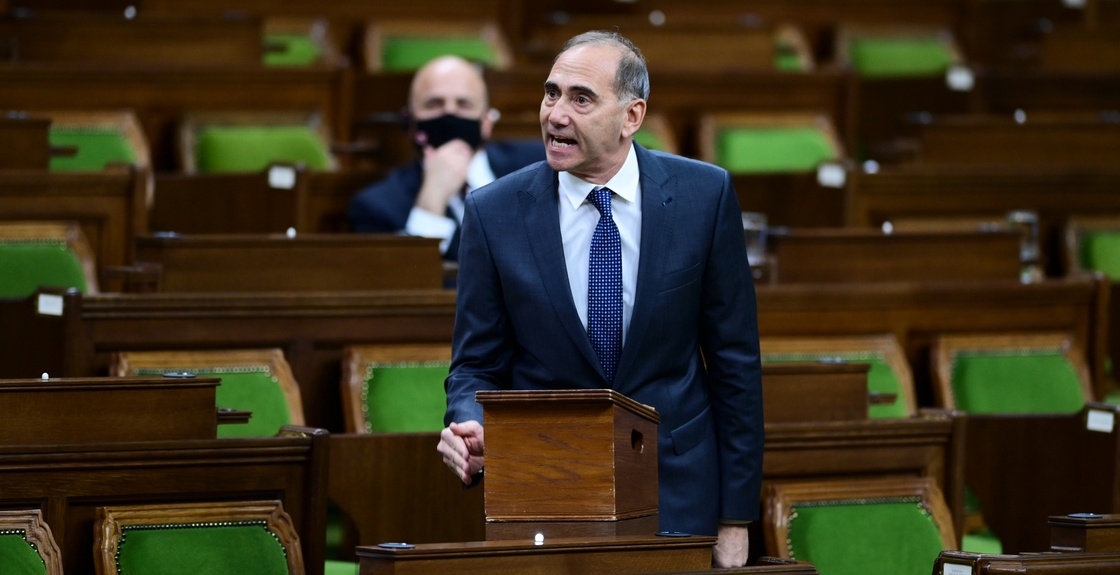
The appointment of Richard Martel, a sitting Conservative MP for Chicoutimi—Le Fjord, represents a highly calculated asymmetrical maneuver. This appointment acts as a multi-layered strategic lever:
- Caucus Depletion: Martel represents the fifth Conservative lawmaker to depart the opposition caucus since the last election cycle, compounding a steady dilution of opposition voting power in the House of Commons.
- Electoral Disruption: By removing Martel from the lower house, the administration forces a highly competitive by-election in Quebec. In the 2025 election, Martel captured the riding with a narrow 34.1% of the vote, with the Bloc Québécois and the Liberals trailing closely at 31% each. A vacant seat triggers a three-way marginal race that drains opposition resources and forces tactical defensive spending.
- Regional Neutralization: Quebec representation in the Senate requires careful regional navigation. Pairing Pitfield (a Montreal native and institutional insider) with Martel (the former Quebec lieutenant under Erin O'Toole) provides geographic and ideological cover for a highly aggressive executive overreach.
Institutional Equilibrium and Technocratic Balancing
The removal of the explicit "non-partisan" criteria does not mean the Senate will immediately snap back to a pure Liberal-Conservative duopoly. The executive cannot risk completely alienating the roughly 80 non-aligned senators who currently dominate the chamber. Instead, the administration is pursuing a hybrid technocratic model.
To balance the highly political appointments of Pitfield and Martel, the government simultaneously appointed Dr. Rodney Ouellette, a prominent New Brunswick cancer researcher, and Geeta Tucker, a Manitoba corporate executive and chartered professional accountant.
This composition reflects a diversified asset allocation strategy. The political operatives (Pitfield and Martel) provide the functional machinery required to navigate legislative procedures and break gridlocks. The technocrats (Ouellette and Tucker) provide the necessary external credibility to defend the upper house's traditional role of "sober second thought".
Systemic Risks and Operational Limits
The execution of this strategy contains two primary structural vulnerabilities.
First, the nominal independence of these new political appointees creates an accountability deficit. While Pitfield will not formally sit in a national Liberal caucus, his proximity to the prime minister's core campaign and policy teams means his legislative independence is a legal fiction. If the broader independent factions in the Senate view these appointments as an existential threat to their non-aligned model, it could spark a defensive voting bloc, achieving the exact opposite of the legislative acceleration Carney seeks.
Second, the structural precedent of abandoning non-partisan criteria lowers the barrier to entry for future administrations. A subsequent opposition government will inherit a newly re-politicized chamber, equipped with the validated precedent to stack the upper house with explicit loyalists, fundamentally shifting the risk profile of future legislative cycles.
The final strategic play here belongs to the remaining opposition. The Conservative leadership in the Senate has already offered to welcome Martel into their caucus with open arms. To counter Carney's optimization strategy, the opposition must weaponize this invitation, integrating Martel immediately to rebuild their defensive perimeter in the upper chamber while focusing maximum electoral pressure on the newly exposed vacancy in Chicoutimi—Le Fjord.