Australia’s foreign policy establishment is having another collective meltdown.
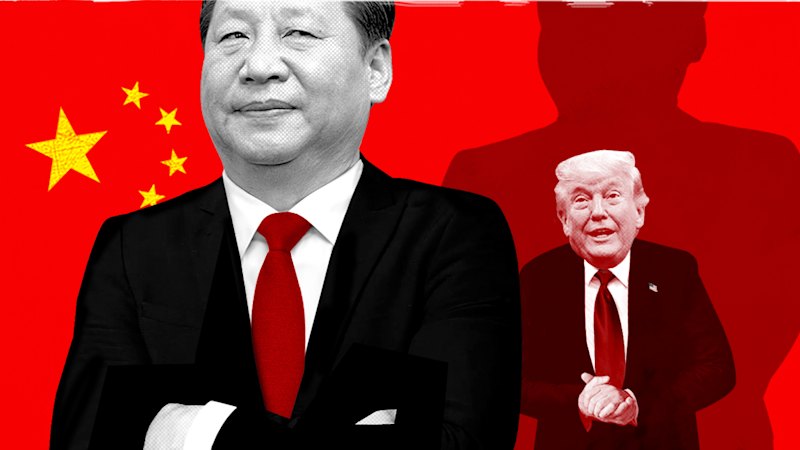
The immediate catalyst is Donald Trump’s high-stakes Beijing summit with Xi Jinping. The institutional panic centers on a predictable narrative: Trump is transactional, he wants to trade Taiwan arms deals for Boeing orders and soybean purchases, and he is abandoning the US security umbrella in the Pacific. Mainstream commentators are warning Canberra that Washington is no longer a reliable partner, leaving Australia exposed to an aggressive, unchecked China.
This assessment is entirely wrong.
The traditional defense consensus routinely misreads transactional diplomacy as structural weakness. The real risk to Australia is not that Trump will sell out the regional order for a few billion dollars in agricultural exports. The real danger is that Trump’s erratic bilateral deal-making will actually succeed in freezing the US-China conflict, rendering Australia’s hyper-expensive, long-term military bets entirely obsolete.
Canberra has spent years structuring its entire national identity around a permanent, multi-decade confrontation between superpowers. Trump just demonstrated that the future may not be an inevitable march toward total war, but rather an ongoing series of transactional realignments.
The Flawed Premise of the "Reliable Alliance"
The foundational argument of the standard defense analysis is that Australia requires absolute consistency from Washington. Think tanks like the Australian Strategic Policy Institute (ASPI) have long asserted that US security guarantees are the bedrock of Indo-Pacific stability. When Trump tells reporters on Air Force One that weapons packages to Taipei are just a "very good negotiating chip," or states on television that he is "not looking to travel 9,500 miles to fight a war" over Taiwan, the foreign policy elite panics. They see this as a betrayal of a sacred duty.
This view mistakes rhetoric for systemic collapse. Global geopolitics is not structured around sacred duties; it is structured around leverage.
I have watched bureaucrats and corporate boards burn through millions of dollars preparing for catastrophic supply chain decoupling based on the assumption that US-China relations are locked in a permanent downward spiral. They treat cold war dynamics as an unalterable rule of nature. Trump’s approach proves that everything—including red lines—is negotiable.
By treating the strategic competition as a series of commercial transactions, Trump disrupts the ideological gridlock that his predecessor maintained. When Xi Jinping introduces a diplomatic framework like "constructive strategic stability," Beijing is not preparing for an immediate invasion; they are signaling a willingness to establish transactional guardrails. The goal is to manage friction, not to trigger an existential clash.
The Real Cost of Canberra's Rigid Strategy
The true vulnerability for Australia is not that the US will leave it defenseless. The vulnerability lies in the fact that Australia has spent hundreds of billions of dollars on a rigid defense posture designed exclusively for a total conflict that its primary ally is actively trying to negotiate its way out of.
Consider the absolute mechanics of Australia's current posture:
- Sunk Capital in Stranded Assets: Canberra’s commitment to the AUKUS framework involves spending up to $368 billion to acquire a small fleet of nuclear-powered submarines. These assets will not be operational in significant numbers until the 2040s.
- The Single-Scenario Trap: This massive expenditure makes sense only under one specific condition: a sustained, high-intensity naval war with China alongside the United States.
- The Transactional Pivot Risk: If Washington and Beijing decide to settle their differences via market access agreements, bilateral tariffs, and joint resource management, those submarines become the most expensive white elephants in maritime history.
Imagine a scenario where the US secures massive energy export agreements to China, uses Taiwan as leverage to limit Chinese semiconductor dominance, and establishes a shared policing agreement for the Strait of Hormuz. In that world, Australia’s hyper-specific, long-term military buildup does not look strategic. It looks obsolete.
The downside of this contrarian reality is stark: breaking away from a rigid, alliance-first mindset requires Australia to build genuine domestic resilience, which demands massive structural economic reforms that Canberra is currently too timid to execute.
The Taiwan Delusion
The consensus view asserts that any softening of US language regarding Taiwan’s defense threatens Australia's core security. The argument goes that if China takes Taiwan, it controls the primary global shipping lanes and can project power directly into the Pacific, endangering Australian sovereignty.
Let’s dismantle the premise of this question. Why is Australia’s national security structurally tethered to the political status of an island 4,500 miles away?
The Lowy Institute’s data consistently reveals a massive disconnect between elite panic and public reality. While over 60% of Australians support using the navy to prevent a Chinese blockade of Taiwan, less than half support sending military personnel to fight a hot war. The public intuitively understands what the defense establishment denies: Taiwan is a crucial commercial hub, but it is not a vital sovereign asset for Australia.
Trump treating Taiwan as a negotiating chip is not an existential crisis for Australia unless Australia chooses to make it one. By tying its defense policy completely to the preservation of the status quo in the Taiwan Strait, Canberra has surrendered its strategic autonomy. If the US decides the status quo is too expensive to maintain—a position Trump openly holds—Australia is left stranded by its own choice, not by Washington's betrayal.
Redefining the Real Economic Threat
The competitor piece focuses heavily on the geopolitical optics of the Beijing summit—the tea ceremonies, the walks through Zhongnanhai, and the personal flattery. They worry that a weak US president is being rolled by a calculating Chinese state.
They are looking at the wrong balance sheet. The real issue is commercial integration, not political pageantry.
While Trump brags about securing commitments for 200 Boeing jets and billions of dollars in American soybeans, he is effectively trying to crowd out competitors. If China opens its wallet exclusively to American agricultural and aerospace exports to satisfy Trump’s transactional demands, who loses market share?
Australia does.
When the US demands that China purchase American energy, American beef, and American grain to balance the bilateral trade deficit, it directly threatens Australia’s primary export engines. The threat to Australia from a US-China summit is rarely military abandonment; it is economic displacement. The alliance does not protect Canberra from American commercial self-interest.
Stop Asking for Guarantees
Australian policymakers constantly hunt for explicit, unshakeable guarantees from whoever happens to be sitting in the Oval Office. They want Secretary of State Marco Rubio to go on television and repeat formulas about an "unchanged policy" and "ironclad commitments."
This pursuit is futile. No foreign superpower will ever value Australia’s regional preferences over its own domestic economic realities.
Instead of panicking over whether Trump is going to maintain a military shield, Australia needs to adapt to a world governed by transactional pragmatism. This means diversify trading relationships instead of waiting for the next round of trade wars, build sovereign domestic capabilities instead of outsourcing defense procurement to foreign shipyards decades into the future, and accept that the US-China relationship will fluctuate between conflict and collusion based on immediate national interest.
The Beijing summit proved that the era of predictable, bloc-based competition is over. If Australia continues to base its entire national strategy on the illusion of a permanent, principled superpower struggle, it will find itself entirely unprepared for the messy, transactional reality that is already unfolding.


