Canada just made the biggest military gamble in its history, and most people are completely misreading the real motivation behind it.
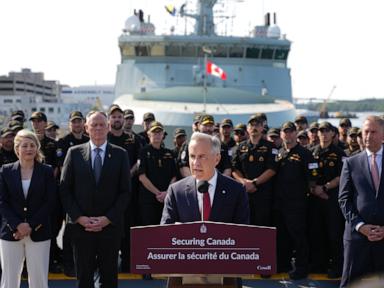
Prime Minister Mark Carney stood on the docks in Halifax and announced that German shipbuilder ThyssenKrupp Marine Systems (TKMS) is the preferred choice to build up to 12 new submarines. On paper, it looks like a standard, albeit massive, defense procurement. The media is framing it as a straightforward play to appease NATO partners.
That misses the point. This isn't just about hit-and-run spending targets to satisfy an incoming Donald Trump administration. It's a calculated, nervous pivot away from a fading American security blanket and toward a European alliance. It's about a country realization that it can no longer rely on its southern neighbor to protect its three ocean coastlines.
The Real Cost of an Empty Ocean
Let's look at the numbers. The baseline acquisition for these Type 212CD submarines is pegged between $20 billion and $30 billion. But don't let those initial figures fool you. When you factor in infrastructure, armaments, and a 40-year operational lifecycle, the real cost climbs to $100 billion.
Why drop that kind of cash now? Because Canada's current underwater capability is basically nonexistent.
Right now, the Royal Canadian Navy operates four ancient, secondhand Victoria-class submarines purchased from the United Kingdom back in 1998. They are notorious money pits. Reports show that only one of those four boats is actually operationally ready right now. The rest are trapped in endless maintenance cycles.
Canada has the longest coastline in the world. Facing the Atlantic, the Pacific, and an increasingly contested, melting Arctic, it's defending those waters with a single working submarine. That isn't just embarrassing. In 2026, it's dangerous.
The new deal promises to deliver the first four German-designed submarines by 2034. That timeline is two years faster than TKMS originally promised, mostly because Germany and Norway agreed to give up their own production slots to fast-track Ottawa's order. It's a desperate scramble to prevent a total capability gap before the Victoria-class boats retire for good.
Why Germany Beat Out South Korea
The bidding war for the Canadian Patrol Submarine Project (CPSP) was a brutal, ten-month fight between Germany's TKMS and South Korea's Hanwha Ocean.
South Korea didn't lose because its boats were bad. In fact, many defense analysts argue Hanwha's KSS-III was technically superior for Canada's specific geographic needs. The South Korean vessels are larger, pack a heavier weapons punch, and boast incredible range. Hanwha even sailed a 3,000-ton submarine straight to Canada's western naval base in May to show it off. They promised massive economic offsets and lightning-fast delivery times.
Germany won because of politics and integration.
The Type 212CD is a joint German-Norwegian design. By choosing this platform, Canada isn't just buying hardware; it's buying into an existing, operational NATO ecosystem. Germany and Norway offered full integration. We're talking shared logistics, joint training, common maintenance hubs, and even interchangeable crew deployments.
In a world where global supply chains can snap overnight, that level of standardisation is worth more than a slightly larger missile payload. Canadian officials recognized that sticking with European NATO allies offered a predictable, long-term strategic anchor.
The Indo Pacific Sacrifice
You can't make a $100 billion decision without making enemies. By picking Germany, Canada handed a massive disappointment to South Korea. Hanwha Ocean's stock tanked 22% the morning after the announcement.
This move exposes a massive contradiction in Canadian foreign policy. Ottawa has spent years hyping its "Indo-Pacific Strategy," claiming it wants to be a major player in countering Chinese dominance in Asia. Shunning South Korea for a European partnership undercuts that narrative entirely.
Carney tried to smooth things over, insisting Canada remains committed to its Asian partners through other economic initiatives. But actions speak louder than press releases. When the chips were down, Canada looked across the Atlantic, not the Pacific.
The 5 Percent Defense Target
The timing of this announcement wasn't an accident. Carney dropped the news right before heading to the NATO Summit in Ankara, Turkey.
For years, Canada has been the slacker of the alliance, consistently failing to spend the required 2% of GDP on defense. But the geopolitical climate shifted. Under intense pressure from Washington and European allies, Ottawa didn't just hit the 2% mark this year; it blew past old expectations.
The government's fiscal plan now projects defense spending to hit 4% of GDP by 2030, with a firm commitment to reach a staggering 5% by 2035. This submarine purchase is the foundational pillar of that massive spending spike. The new Defence Investment Agency, created to cut through Canada's historically sluggish procurement red tape, managed to push this entire bid through in under a year.
The Stealth Technology in Play
What does $100 billion actually buy? The Type 212CD is a radically different beast compared to traditional diesel-electric subs.
The most striking feature is its diamond-shaped hull. This isn't an aesthetic choice. The flat, angled surfaces are designed to deflect active sonar signals, making the vessel incredibly difficult for enemy warships to detect.
More importantly for Canada's vast territory, it uses an Air-Independent Propulsion (AIP) system that pairs traditional diesel engines with hydrogen fuel cells. This allows the sub to stay submerged for weeks at a time without needing to surface to breathe through a snorkel. For missions under Arctic ice or long surveillance runs through the Northwest Passage, that endurance is a prerequisite for survival.
What Happens Next
The "preferred supplier" tag means the deal isn't entirely done. Canada and TKMS now enter formal contract negotiations, with a hard deadline to finalize the paperwork by the end of 2027.
Carney left himself a backdoor. If the Germans try to hike the price or stumble on technical guarantees during negotiations, Canada retains the explicit right to walk away and hand the contract to South Korea's Hanwha Ocean.
For Canadian defense contractors, the immediate next step is positioning themselves for the massive wave of domestic investment. The deal is tied to Canada's modernized Industrial and Technological Benefits Policy. That means TKMS has to legally plow billions of dollars back into the Canadian supply chain, creating tech transfer programs and manufacturing jobs across the country.
If you run a Canadian maritime, software, or advanced manufacturing business, your immediate move is to get your credentials in front of the Defence Investment Agency and TKMS supply chain managers. The feeding frenzy for the largest military contract in Canadian history starts right now.