Diplomacy is not a family reunion. Yet every time a Thai prime minister steps off a plane in southern China, foreign policy commentators dust off the same tired cliché about "home ground."
They point to Teochew ancestry. They romanticize centuries-old maritime trade routes between Shantou, Shenzhen, and Bangkok. They treat complex, cutthroat statecraft like a nostalgic heritage tour. In related updates, take a look at: Stop Laughing at China's Carrier Nannies Before They Sink Western Naval Strategy.
That narrative is not just lazy. It is actively blinding observers to the brutal economic reality of the 2026 APEC summit in Shenzhen.
When a Thai leader walks into Guangdong province, they are not returning to the warm embrace of distant cousins. They are entering the industrial nerve center of an economic superpower that has systematically hollowed out Thailand’s traditional manufacturing base over the last five years. Calling Shenzhen "home ground" confuses cultural familiarity with geopolitical alignment, and in modern trade negotiations, that confusion costs billions of dollars. BBC News has analyzed this critical subject in extensive detail.
The Myth of the Seamless Sino-Thai Embrace
Let’s dismantle the core premise of the conventional punditry. The argument usually goes like this: because a massive percentage of Thailand’s political and business elite—including current and former prime ministers—trace their roots to Guangdong province, Bangkok enjoys a natural, frictionless advantage when negotiating in cities like Shenzhen.
This is a fundamental misunderstanding of how the Chinese Communist Party and Shenzhen’s hyper-competitive tech sector operate.
Shenzhen is no longer the sleepy fishing village across from Hong Kong that welcomed overseas Chinese diaspora capital in the 1980s. It is the headquarters of BYD, Huawei, Tencent, and DJI. It is a ruthless engine of state-backed industrial policy designed to dominate global supply chains from electric vehicles to artificial intelligence.
In boardrooms in Nanshan District, sentimentality is a rounding error. Chinese executives and state planners do not offer tariff exemptions, technology transfers, or balanced trade agreements because a visiting dignitary shares a dialect or an ancestral shrine in Chaoshan. They care about market access, regulatory compliance, and securing critical mineral and agricultural supply lines.
I have sat across the table in regional trade advisory meetings watching Southeast Asian delegations lean heavily on cultural affinity, expecting warm banquets and shared history to soften hard commercial demands. Every single time, those delegations walked away with ceremonial memorandums of understanding while their counterparts walked away with binding market concessions. Cultural proximity creates a comfortable atmosphere at dinner, not an asymmetric advantage at the negotiating table.
What "Home Ground" Actually Means in Modern Supply Chains
To understand why the "home ground" framing fails, you have to look at the structural shift in bilateral trade between China and Thailand.
For decades, the relationship was complementary. Thailand supplied raw materials, agricultural goods like durian and rubber, and mid-tier assembly. China supplied capital, tourists, and intermediate components. Everybody won.
That era is dead.
Over the past few years, massive Chinese industrial overcapacity has spilled directly into Southeast Asia. Low-cost Chinese consumer goods, steel, plastics, and electronics have flooded the Thai market through cross-border e-commerce platforms and local distribution networks. Local Thai factories—the backbone of the kingdom's small and medium-sized enterprises—have closed by the thousands because they cannot compete with Shenzhen's economies of scale.
Even in the crown jewel of Sino-Thai cooperation—the Eastern Economic Corridor (EEC) and the electric vehicle boom—the power dynamic is heavily tilted. Companies headquartered right in Shenzhen, like BYD, have poured billions into building EV plants in Rayong. On the surface, this looks like a massive win for Bangkok. In reality, Thai auto-parts makers are raising alarms that Chinese automakers are importing their own Tier-1 and Tier-2 suppliers from Guangdong rather than integrating local Thai manufacturers into the value chain.
Imagine a scenario where a visiting football team arrives at a stadium owned by their richest sponsor, plays on turf engineered by the sponsor, and uses equipment built by the sponsor, only to have commentators call it a "home game" for the visitors because their captain grew up in the neighborhood. That is the exact absurdity of calling APEC 2026 in Shenzhen home ground for Bangkok. Shenzhen is the ultimate away game. It is a showcase of Chinese technological dominance designed to lock Asia-Pacific economies into a China-centric digital and green infrastructure ecosystem.
Dismantling the Common Misconceptions About Thailand’s China Strategy
When analysts frame APEC in Shenzhen through the lens of personal heritage, they inevitably get the strategic questions wrong. Let’s look at the actual realities behind the talking points dominating regional press coverage.
Does shared cultural heritage give Thailand better diplomatic access in Beijing and Shenzhen?
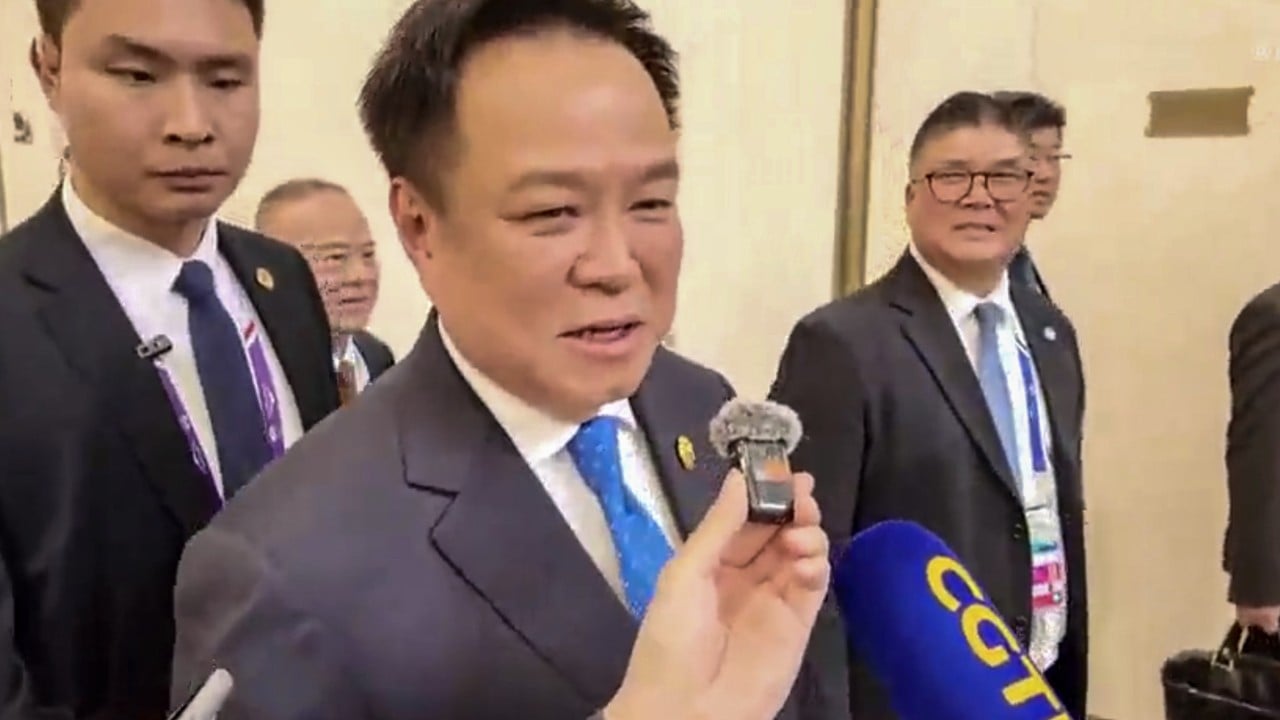
Access is not influence. Yes, a Thai prime minister can effortlessly navigate the social rituals of southern China, deploy a few phrases of Teochew, and generate overwhelmingly positive state media coverage in Xinhua and CGTN. That smooths protocol. It prevents diplomatic gaffes.
However, as veteran Southeast Asian diplomats like Bilahari Kausikan have repeatedly argued regarding ASEAN's dealings with major powers, Beijing views cultural affinity as a tool of influence over its neighbors, not a reason to defer to them. When Beijing emphasizes shared bloodlines and historical ties, it is subtly reminding smaller states of their place within a traditional regional hierarchy. Accepting the "home ground" label plays directly into that framing, signaling to Washington, Tokyo, and Brussels that Bangkok is comfortably inside Beijing’s orbit—a perception Thailand has spent a century of careful bamboo diplomacy trying to avoid.
Is Shenzhen’s tech ecosystem the blueprint for Thailand’s economic revival?
Bangkok desperately wants to escape the middle-income trap, and looking at Shenzhen’s transformation from manufacturing hub to innovation powerhouse is seductive. The problem is that Shenzhen’s model cannot simply be copied and pasted onto Thailand.
Shenzhen succeeded because of three brutal, specific conditions:
- Scale and Agglomeration: A domestic market of 1.4 billion people combined with a supply chain density in the Pearl River Delta where a hardware prototype can be sourced, machined, and assembled in 48 hours.
- State-Directed Capital: Massive, patient state subsidies and local government guidance funds willing to absorb catastrophic losses to capture global market share in strategic sectors.
- Hyper-Competitive Labor Culture: A relentless, high-churn talent pool drawn from every corner of mainland China.
Thailand possesses none of these structural inputs. Trying to replicate the Shenzhen model without Shenzhen’s scale or state-capitalist machinery results in expensive, underutilized special economic zones. Thailand’s actual competitive advantage lies in high-value wellness tourism, precision food processing, medical hubs, and serving as a neutral, multi-aligned manufacturing base for companies executing a "China Plus One" strategy—firms that specifically want to leave Shenzhen to avoid Western tariffs.
Will hosting APEC in Shenzhen accelerate regional trade integration?
APEC is a consensus-driven forum built on non-binding commitments. Its primary value is not the joint communiqués drafted by bureaucrats, which are routinely watered down to appease competing geopolitical blocs. Its real value lies in the bilateral side-meetings and the regulatory standard-setting that happens quietly in working groups.
In Shenzhen, the host nation sets the agenda. China will inevitably use the 2026 summit to push hard for leadership in digital trade governance, cross-border data flows, green supply chain standards, and the expansion of the Regional Comprehensive Economic Partnership (RCEP). For Thailand, the challenge is not celebrating the venue; it is defending its domestic digital economy and small businesses from being completely absorbed by Chinese platform monopolies while still attracting high-tech foreign direct investment.
The Trap of Asymmetric Interdependence
To navigate Shenzhen effectively, Bangkok has to confront what political scientists Robert Keohane and Joseph Nye termed asymmetric interdependence.
Both countries need each other, but they do not need each other equally. China is Thailand’s largest trading partner, its top source of foreign direct investment, and a critical driver of its tourism sector. Thailand, while vital to China as a mainland Southeast Asian logistics corridor and an agricultural supplier, represents a fraction of China’s overall global trade volume.
When you enter an asymmetric relationship pretending you are on equal footing because of shared ancestry, you disarm yourself. You stop asking hard questions about technology transfer requirements. You delay enforcing anti-dumping duties on subsidized imports. You hesitate to demand strict local-content rules for foreign factories operating on your soil.
Look at how Indonesia handled Chinese investment in its nickel processing sector. Jakarta did not rely on cultural warmth or historical friendship. President Joko Widodo’s administration slapped raw ore export bans on the table and forced Chinese firms to build smelters locally, transfer processing capabilities, and partner with domestic entities. Jakarta treated Beijing like a hard-nosed commercial counterparty, and as a result, Indonesia captured massive value up the supply chain.
Thailand, by contrast, has too often relied on goodwill, tax holidays, and warm rhetoric, hoping that investment alone will magically upgrade local capabilities.
How Bangkok Should Actually Play the Shenzhen Summit
If the Thai prime minister wants to turn APEC in Shenzhen into a genuine victory rather than a photo-op, the playbook needs to change immediately. Heritage belongs in the banquet speeches; hardball economics belongs in the bilateral meetings.
1. Enforce Strict Local Content and Joint Venture Mandates
Foreign direct investment without knowledge transfer is just land rental. Bangkok must tie future EV, battery, and electronics tax incentives in the Eastern Economic Corridor to verifiable, auditable local sourcing thresholds. If a Shenzhen tech giant wants to use Thailand as an export hub to bypass U.S. and European tariffs, it must be required to source a rising percentage of components from majority-Thai-owned suppliers and train local engineering talent.
2. Weaponize Neutrality
Thailand’s greatest geopolitical asset is that it is not a treaty ally of China, and despite its formal alliance with the United States, it maintains deep operational independence. In Shenzhen, Bangkok should make it unmistakably clear that Thailand is open for business with everyone—American hyperscalers building data centers, Japanese automakers transitioning to hybrids, European aerospace firms, and Chinese green-tech leaders. Leverage the competition between Washington and Beijing to extract better terms from both, rather than signaling emotional loyalty to one.
3. Demand Reciprocity on Digital and Agricultural Bottlenecks
While Chinese e-commerce platforms enjoy frictionless access to Thai consumers, Thai exporters still face sudden, arbitrary customs delays and sanitary inspections at Chinese border crossings whenever bilateral friction arises or domestic Chinese harvests peak. Bangkok needs to use the APEC platform to push for binding, transparent digital customs protocols and enforceable dispute-resolution mechanisms for perishable agricultural exports.
4. Protect the Domestic SME Ecosystem
You cannot sacrifice your domestic middle class on the altar of regional connectivity. Thailand needs to enforce value-added tax collection on low-value cross-border parcels immediately, crack down on illegal nominee businesses that allow foreign operators to bypass Thai ownership laws, and enforce strict industrial product standards (TISI) on imported goods. If Shenzhen’s factories have to meet rigorous safety and environmental certifications to sell in Europe, they should be forced to meet the exact same standards to sell in Bangkok.
The Downside of Taking a Hard Line
There is no free lunch in geopolitics, and abandoning the "cozy neighbor" approach carries real, immediate risks.
Pushing back against Chinese industrial dominance—through stricter local-content rules, aggressive anti-dumping enforcement, or tighter scrutiny of nominee businesses—will inevitably trigger friction. Beijing is not shy about using informal economic statecraft. A sudden slowdown in Chinese tour group approvals, unexpected quarantine holds on Thai durian shipments at Mohan border crossing, or a quiet redirection of corporate capital toward Vietnam or Malaysia are all tools in Beijing’s standard playbook.
Thailand’s tourism-dependent economy and export-heavy agricultural sector are deeply vulnerable to short-term retaliatory shocks. Any prime minister who takes a firmer stance in Shenzhen has to be prepared to absorb domestic political heat from local agribusinesses and hoteliers if Beijing decides to apply pressure.
Yet the alternative—continuing to pretend that cultural affinity will protect Thai industry while domestic manufacturing is steadily dismantled—is a slow-motion economic surrender. Short-term diplomatic friction is survivable; permanent industrial hollowing-out is not.
Stop Confusing Nostalgia With Strategy
The commentators calling Shenzhen "home ground" for Thailand’s leadership are writing for an audience that still views Asia through the lens of 1990s globalization—a simpler time when trade was purely additive and cultural ties guaranteed mutual prosperity.
That world no longer exists. APEC 2026 in Shenzhen is taking place in an era of weaponized supply chains, mercantilist industrial policy, and intense great-power rivalry. Shenzhen is a monument to what happens when a nation relentlessly prioritizes technological self-reliance, ruthless efficiency, and strategic dominance over sentimentality.
If Thailand’s prime minister steps onto that stage thinking they are among family, they will get outmaneuvered before the first plenary session ends. Treat Shenzhen for what it actually is: the toughest arena in global manufacturing, where respect is earned exclusively through leverage, reciprocity, and the willingness to say no.