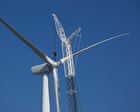
The collision between federal executive power and state-level climate goals just hit a massive legal wall. California and New York refuse to watch renewable energy infrastructure get dismantled without a fight.
When the federal government started aggressively pushing to stall and cancel wind energy projects—even buying back active leases to pivot back toward fossil fuels—state leaders drew a hard line in the sand. Attorneys general from coast to coast filed lawsuits to block these roadblocks. They argue that the federal push is not just short-sighted, but flat-out illegal. Discover more on a similar topic: this related article.
The Real Cost of Halting Clean Power
You can look at this purely as a political feud, but the stakes hit everyday electric bills. State officials point out that sabotaging ready-to-go renewable projects directly inflates consumer electricity costs. When power demand keeps climbing and cheap wind generation gets blocked by administrative fiat, grid reliability suffers.
Energy markets hate uncertainty. Developers spent years securing permits, mapping out transmission lines, and raising capital. Pulling the rug out from under them creates a chilling effect. Additional reporting by Reuters highlights related perspectives on the subject.
"We just want to get back to building," state representatives noted, summing up the sheer frustration of project developers who find themselves caught in partisan crossfire.
Even if these lawsuits succeed in court, the fundamental question remains: who is going to risk billions on long-term infrastructure if federal policy flips every four years?
A Multi-State Front Forms
This isn't just a two-state skirmish. New York's legal challenge drew coalition backing from a broad roster of states including Connecticut, Delaware, Maine, Massachusetts, New Jersey, Rhode Island, and Vermont. Meanwhile, California Attorney General Rob Bonta has taken aggressive independent steps to protect clean energy mandates from federal interference.
The strategy relies on holding federal agencies accountable to existing statutory authority. Congress originally authorized renewable energy leasing on the Outer Continental Shelf under specific guidelines. State legal teams argue that executive orders cannot simply bypass legislative intent to choke out an entire industry.
Where the Industry Goes From Here
Clean energy manufacturing lines have already absorbed major shocks from shifting political tides. Companies that invested heavily in turbine technology and offshore staging ports have had to pivot or freeze expansions.
Yet, state-level climate targets aren't going away. California and New York have legally binding decarbonization milestones to hit. Local leaders know that relying exclusively on a hostile federal administration means missing those targets entirely.
The courtroom battles playing out right now will define the limits of executive overreach for decades. If states can successfully block federal lease buybacks and stop-work orders, it preserves a blueprint for local energy independence. If the administration wins, the national transition to renewables faces a multi-year road block.
The legal papers are filed. The arguments are set. Now the courts decide whether national energy policy is dictated by long-term market realities or short-term political shifts.
How Trump's attack on wind power is impacting the energy industry
This video provides a helpful look at how the ongoing federal pushback against wind energy directly affects project timelines and the broader energy sector.