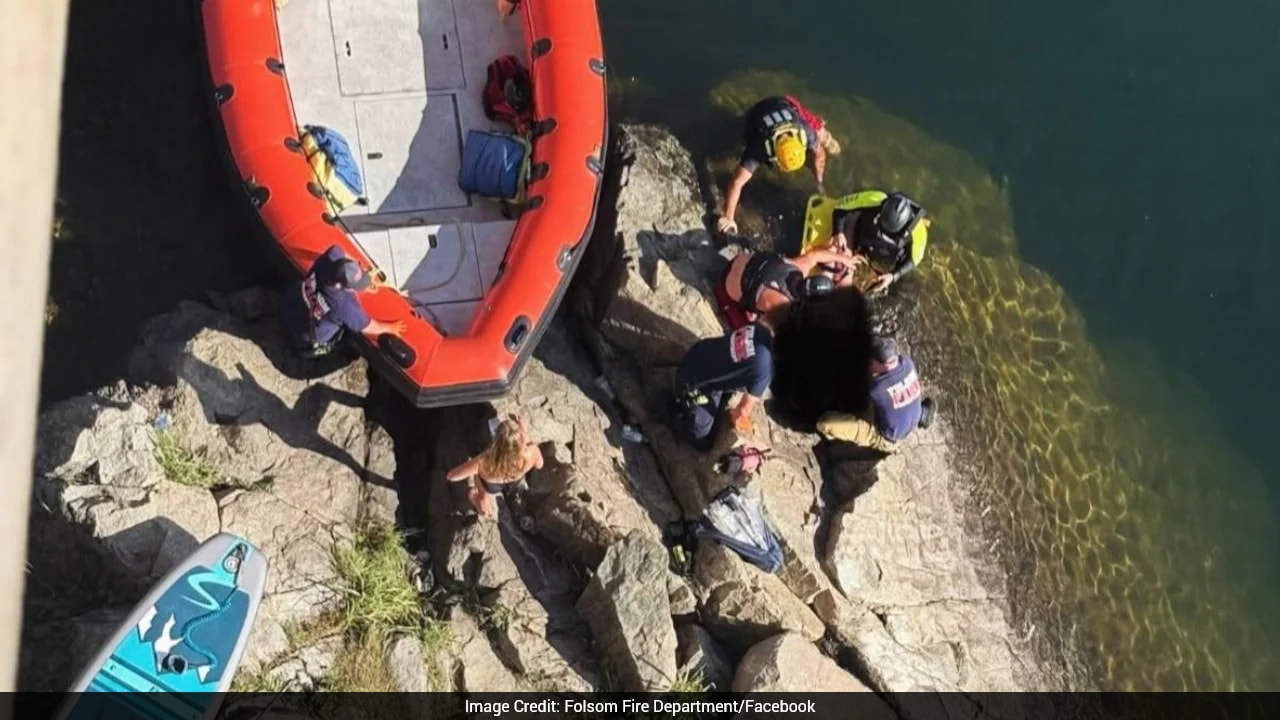
A nineteen-year-old girl learned a brutal lesson about viral online thrills when a casual bridge jump turned into a critical emergency. Plunging from the historic Rainbow Bridge into the American River near Folsom, California, she missed the deep water entirely. She landed squarely on her back against the jagged river rocks below.
Stranded, immobile, and in agony, she needed an emergency water rescue.
Emergency crews received the call around 4:50 p.m. on a Wednesday, rushing to the scene where the victim lay trapped on the north side of the river. Firefighters launched a rescue boat, navigating the swift current to reach the injured teenager before transferring her to a waiting ambulance. While she was conscious and talking to rescuers, her inability to move highlighted the terrifying reality of high-impact water stunts.
Local authorities closed Rainbow Bridge temporarily to manage the frantic operation, causing traffic delays while emergency responders fought to save her. Officials have kept details of her exact medical condition private, but the underlying danger of her actions remains glaringly public.
The Deadly Reality of Folsom Sells and Rainbow Bridge
People look at Rainbow Bridge and see an Instagram backdrop. First built in the early twentieth century, this iconic arch structure crosses the American River and Lake Natoma areas, drawing crowds of thrill-seekers every single summer.
They do not see the bone-shattering risks.
Battalion Chief Nick Lawlor of the Folsom Fire Department points out the harsh truth. People jumping off this landmark routinely hurt themselves. Some sustain life-altering trauma. Others never make it out alive.
Water levels shift constantly in California rivers. Submerged boulders hide just beneath a deceptive surface. What looks like a deep, inviting pool from the bridge deck can turn into a shallow death trap within a few feet. Hitting water from a high span feels like landing on concrete if you enter at the wrong angle. Add the bone-chilling temperature of the river water, and sudden cold-water shock can paralyze even a strong swimmer instantly.
Why Warning Signs and Fines Fail to Stop the Trend
You will find clear warning signs posted all over Rainbow Bridge. They tell visitors that jumping is strictly prohibited. They warn of severe legal consequences.
Ignored rules carry heavy price tags. Law enforcement treats unauthorized bridge and rock jumping in California state recreation areas as a major offense. Violators face thousands of dollars in steep fines and potential jail time.
Yet teenagers keep climbing over the railings.
Social media platforms glamorize these dangerous leaps. Algorithms reward shock value, views, and adrenaline rushes. Young people see a quick video clip of a successful stunt and assume safety is guaranteed. They forget that social media reels show the one lucky attempt, not the hundreds of disasters or close calls handled quietly by local emergency services.
Emergency responders are exhausted by these preventable incidents. They happen like clockwork every year as temperatures rise and crowds flock to the waterways. Every rescue diverts municipal resources away from legitimate medical emergencies, putting entire rescue crews at risk in treacherous river currents.
Think twice before chasing an online trend that could end your life or land you in a hospital bed. Respect the barriers, heed the warnings, and keep your feet firmly on solid ground.