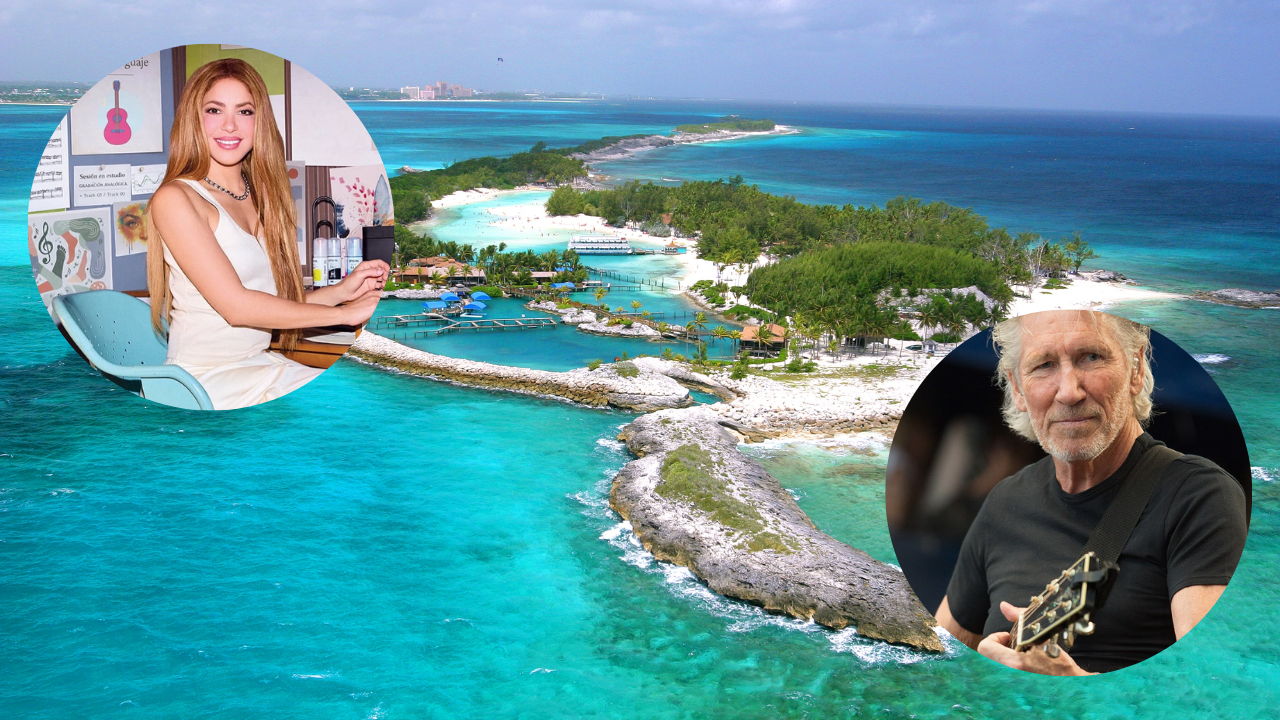
Buying a private island sounds romantic until the barge invoice shows up. Bonds Cay, a 650-acre stretch of sand and scrub in the Bahamas once tied to Shakira and Roger Waters, is back on the market with a $30 million asking price.
Most celebrity real estate stories stop at the headline number and a few dreamy beach photos. That leaves out the real story. Back in 2006, investors including Shakira and Pink Floyd co-founder Roger Waters were linked to ambitious plans for an artists' retreat, boutique hotels, and luxury residences on the island. Those grand plans never materialized, leaving Bonds Cay largely undeveloped and raising a blunt question for anyone eyeing the listing: what happens after you wire the deposit?
At 650 acres with roughly 13 miles of coastline in the Berry Islands, Bonds Cay has serious scale. It sits northwest of Nassau and within striking distance of South Florida—roughly 125 miles from Miami, depending on the route. Listing agent Gavin Christie of Corcoran C.A. Christie Bahamas has pointed to how rare it is to find an island of that size still in an untouched, pristine state. For a buyer with patience and deep pockets, that blank canvas is the whole point.
Why Bonds Cay Captures Attention in the Bahamas Island Market
Private islands trade on a mix of scarcity, geography, and ego. The Bahamas has around 700 islands and cays, English common law, and a currency pegged to the US dollar, which gives foreign buyers a familiar legal and monetary baseline compared to many other island nations. Even within that market, a 650-acre parcel is substantial. Many private islands on the market are tiny fractions of that size, where your house takes up half the footprint.
Public reporting has also noted that the property's asking price has climbed sharply compared with past listing figures around $16 million, though public reports do not clearly establish current ownership or every private transaction along the way. That gap between past asking prices and the $30 million tag isn't unusual in ultra-luxury real estate. Sellers price in scarcity, celebrity association, and long-term upside. Buyers have to decide whether that upside is real or mostly wishful thinking.
Having Shakira and Roger Waters attached to the island's backstory gives Bonds Cay a cultural hook you can't manufacture. Plenty of wealthy buyers love a good story. Yet a famous prior connection doesn't pour concrete, run power lines, or clear environmental reviews.
The Gap Between Celebrity Visions and Island Reality
Celebrities and investor groups dream big on islands. It's easy to picture musicians, painters, and writers gathering by the water away from cameras and tour buses. Turning a raw Bahamian cay into a functioning resort or creative compound is another beast entirely.
When a major island project stalls or never gets built, it usually tells you something practical. Everything on an undeveloped or lightly improved island is harder and slower than mainland construction. Every nail, generator, solar panel, water system, and piece of lumber has to be planned around marine logistics, weather windows, and local regulations.
Existing structures like beachside bungalows and a beachfront bar offer basic touchpoints, while the surrounding waters draw sport fishing fans. Still, a buyer looking at a 650-acre property isn't just buying a weekend cottage. They're buying an operating challenge.
What It Actually Takes to Buy and Run a Bahamas Island
Honestly, the sticker price is just the admission ticket. If you treat $30 million as your total budget for a project like Bonds Cay, you're going to run out of cash fast.
Anyone who has dealt with coastal or remote real estate knows the hidden ledger is where deals live or die. In the Bahamas, real estate transactions involve government stamp tax—commonly 10% on properties valued at $100,000 or more, typically split between buyer and seller unless negotiated otherwise—alongside Bahamian legal fees, real estate commissions, and Value Added Tax (VAT) on services and commissions. Real estate guides from brokerages like Berkshire Hathaway HomeServices Bahamas and Dunmore Realty lay out how transfer taxes, commissions, and annual property tax rules work, and foreign buyers also look at residency thresholds tied to property value.
Then comes the physical reality of the land. A private island doesn't plug into a municipal grid like a suburban lot. Unless you're tying into a neighboring island's infrastructure—which isn't a casual option on a remote cay—you're building your own micro-utility system.
- Power and energy: Solar arrays, battery storage, and backup diesel generators must be sized for heavy loads and corrosive salt air.
- Fresh water: You're looking at rainwater catchment, reverse osmosis desalination, or deep wells where geology allows, plus storage capacity for dry stretches.
- Transport and docks: Deep-water access, seawalls, boat lifts, and reliable marine or air connections matter every single week, not just when guests arrive.
- Staffing and provisioning: Housing for caretakers or staff, food and fuel runs, waste management, and storm readiness turn a hobby into a small business.
I've seen buyers fall in love with sunrise views and completely underestimate maintenance. Salt spray eats metal. Storms test every roof and dock. A house that sits empty for months without active upkeep deteriorates quickly in a tropical marine climate.
Resort Enclave vs. Private Family Compound
Listing commentary around Bonds Cay points to a few broad directions, from a luxury resort or residential enclave to a secluded family retreat. Those two paths feel completely different on paper and in practice.
A private family compound prioritizes total seclusion, low-density living, and personal taste. You answer mainly to yourself and Bahamian regulatory and environmental rules. You don't need commercial hospitality scale, though you still need dependable logistics and security.
A commercial resort or artists' retreat changes the math completely. Now you're thinking about guest arrivals, service staff, food supply chains, liability, branding, and whether guests actually want to travel to that specific spot. An artists' retreat sounds inspiring, yet creative residencies rarely pay for multimillion-dollar island infrastructure on their own without a serious commercial or philanthropic model behind them.
Surprising Details and Tradeoffs Most Buyers Miss
One big surprise for first-time island watchers is that total isolation isn't always convenient. Being close enough to Nassau and South Florida makes access much easier than chasing a far-flung speck of land. At the same time, proximity to boating traffic and neighboring cays means privacy comes from smart layout, shoreline buffers, and active management rather than sheer distance alone.
Another tradeoff is untouched versus turnkey. A pristine, largely unbuilt island lets you design everything from scratch without tearing down someone else's dated architecture. The catch is time. Permitting, environmental considerations, marine engineering, and construction in the Bahamas take patience. If you want to fly in next month with twenty friends and a full chef's kitchen, raw acreage tests your temper.
It's also worth staying clear-eyed about what public reports don't settle. Media coverage around the $30 million listing highlights the past connection to Shakira and Roger Waters and notes the lack of a completed development, while leaving exact current ownership and intermediate deal history less than fully transparent in public reporting. In high-value land deals, title verification, survey accuracy, crown or foreshore boundaries, and development approvals are non-negotiable checks—not formalities.
Practical Next Steps If You're Researching Bahamas Private Islands
If you're seriously studying Bonds Cay—or comparing it against smaller, more developed cays across the Bahamas—start with disciplined homework rather than glossy brochures:
- Map your true all-in budget: Separate the acquisition price from closing costs (stamp tax, legal fees, VAT, commissions), initial infrastructure, and annual carrying and maintenance costs.
- Compare raw scale against existing infrastructure: Decide whether you want untouched acreage with high development upside or an island that already has docks, power, and dwellings in place.
- Hire independent local counsel early: Work with a reputable Bahamian real estate attorney and qualified surveyors to review title, boundaries, and environmental or development rules before signing anything binding.
- Visit by boat and air in realistic conditions: Don't judge an island solely on a calm, sunny photo shoot—check approach channels, wind exposure, landing options, and transit times from major hubs.
An island doesn't care who used to own it or what was scribbled on a master plan twenty years ago. Out on the water, the only thing that counts is whether you have the capital, the patience, and the practical grit to make the place work.