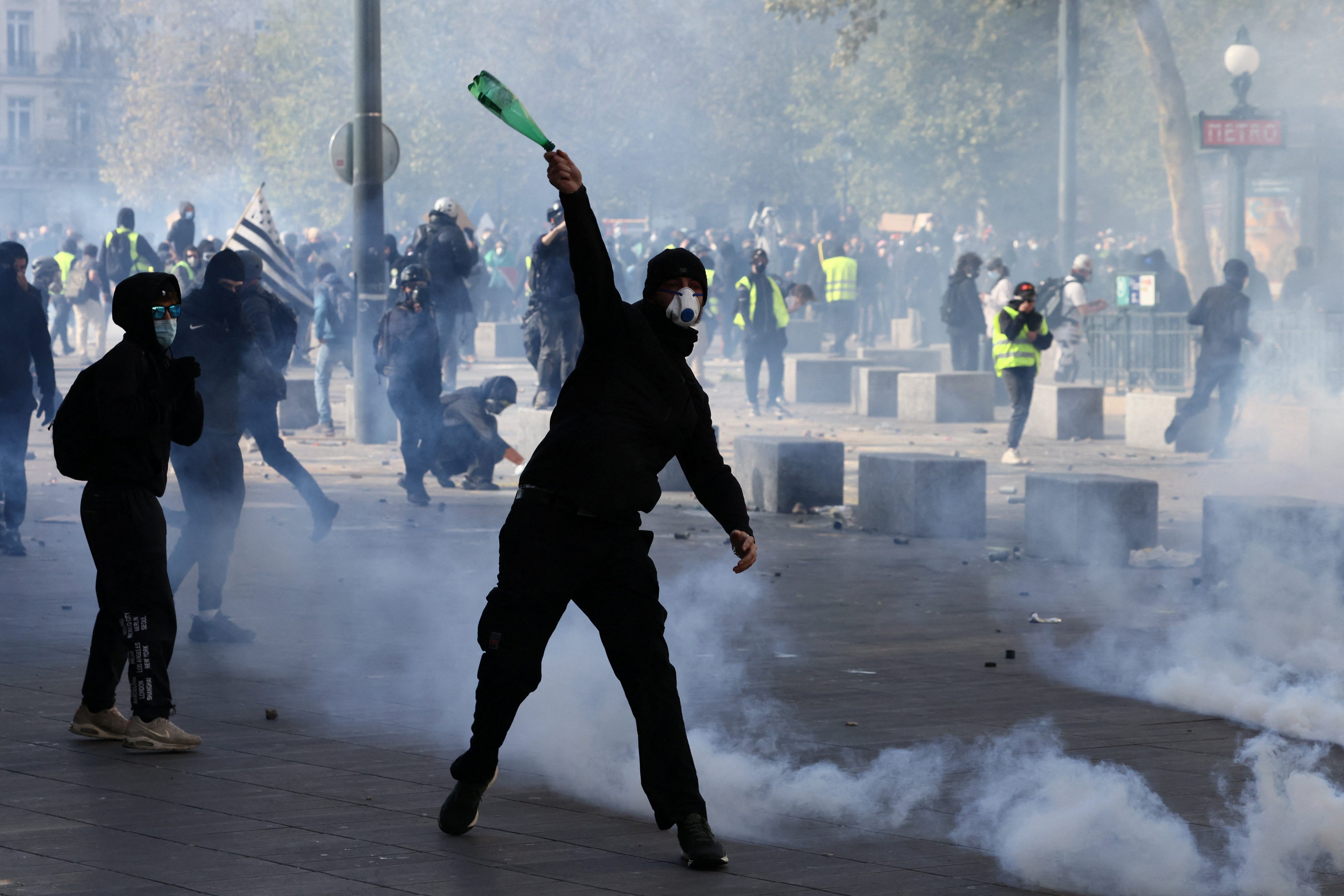
The media wants you to look at the smoke billowing from the historic municipal building in Limoges and weep for masonry. They clutch their pearls over the charred timber, the shattered glass, and the raw insurance tallies, framing the nationwide uprisings as a chaotic failure of public order. They tell you it is about cost-of-living pressures, high school funding, and angry youth running amok in a fit of directionless vandalism.
They are wrong. They are missing the entire mechanical reality of the French administrative state.
Limoges is not an aberration; it is a balance sheet correction. When an oligarchical governance model treats civil discontent as a background noise to be managed by bureaucratic white noise machines, peaceful assembly becomes an exercise in irrelevance. Paris does not hear petitions. It does not read economic white papers submitted by working-class unions. It responds exclusively to structural disruption that threatens the physical continuity of the apparatus itself.
The Myth of the Rational Bargain
Economists love to pretend that public policy operates on a neat feedback loop of voting, lobbying, and institutional reform. Having watched bureaucratic indifference crush regional industries across Europe for decades, I can tell you that model is broken.
Think about how the Parisian elite processes dissent. A peaceful march of half a million people through the boulevards is treated by the Ministry of Interior as a traffic management exercise. It is cordoned off, televised, neutralized, and forgotten by the evening news cycle. The political cost to the administration is zero. When the cost of ignoring the populace is zero, the populace will always be ignored.
The burning of the Limoges municipal headquarters shifted that equation violently. For the first time in months, the administrative cost of the status quo spiked instantly. Suddenly, politicians who spent years lecturing the provinces about austerity had to calculate the replacement value of civic infrastructure. That is not mindless destruction. It is a forced renegotiation of a contract that was signed entirely in bad faith.
The Convenience of the Ultra Left Label
Watch how quickly the state machine deploys its favorite semantic defense. Whenever property damage outpaces insurance thresholds, officials wheel out the catch-all bogeyman of the ultra-left, criminal fringes, and opportunistic looters.
This is a lazy narrative designed to atomize a collective movement into isolated criminal acts. It ignores the structural roots of the explosion. When inflation outpaces wage growth by orders of magnitude while corporate balance sheets in the capital post record margins, the social fabric does not fray gently. It snaps.
The thousands arrested and the hundreds of injured officers are symptoms of a political class that has insulated itself behind riot shields and technocratic jargon. Blaming the rioters while ignoring the systemic economic strangulation that drove them to the gates is like blaming the thermometer for a raging fever.
What Structural Change Actually Looks Like
If you want to understand why these uprisings recur with terrifying predictability in France, look at the historical precedent. The French institutional framework was literally forged in the fires of anti-authoritarian revolt. The state understands one language: the credible threat of systemic paralysis.
Reform never bubbles up from polite committee rooms. It is forced downward by the smoking ruins of old arrangements. When municipal buildings burn, it punctures the illusion of administrative invulnerability. It forces capital and governance to negotiate with the people they spent years treating as collateral damage.
Stop mourning the limestone. Start asking why it took an inferno to get Paris to look outside the ring road.
France Protests: Historic Limoges Town Hall Gutted By Fire As Masked Protesters Storm Building
This video provides on-the-ground footage and news reporting of the intense demonstrations and the fire that consumed the historic town hall in Limoges.