You hear the word Ebola and you probably picture the terrifying 2014 epidemic in West Africa. You think of a death sentence. But right now, a different kind of fight is playing out in the eastern Democratic Republic of the Congo, and the rules have completely changed.
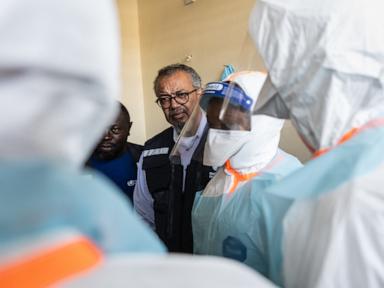
On May 31, 2026, World Health Organization Director-General Tedros Adhanom Ghebreyesus stood in Bunia, the capital of Congo's Ituri province, to open a new health center. He brought some rare good news. Five patients have recovered from the virus. One was discharged a couple of days ago, and four more walked out alive today.
It is a massive victory, but don't let the celebration fool you. This outbreak is dangerous. We are dealing with the Bundibugyo strain of the virus. Unlike the more common Zaire strain that hit the region in recent years, Bundibugyo has absolutely no approved vaccines. It has no approved treatments. When you have no silver bullet in your medical arsenal, every single recovery is a monumental triumph of basic, grueling bedside care.
http://googleusercontent.com/image_content/208
The Reality of Bundibugyo Ebola
The numbers are climbing fast. Right now, there are over 1,000 suspected cases and at least 246 deaths since the outbreak was declared on May 15. The infection has leaked across the border into Uganda, which already confirmed nine cases and a death in Kampala.
People think medical technology saves lives in a crisis, but when a rare variant hits, you are stripped back to the basics. Doctors at the Evangelical Medical Center in Bunia are relying entirely on symptomatic treatment. That means aggressive fluid replacement, managing pain, and balancing electrolytes.
"With the symptomatic treatment that we are currently providing, we are seeing patients recover," says Pierre Akilimali, Incident Manager at Congo’s National Institute of Public Health.
It sounds primitive because it is. But it works if you catch it early. The real problem isn't just the biology of the virus. It's the environment where the virus is spreading.
Why Guns and Rumors are Smothering the Medical Response
If you want to understand why Doctors Without Borders says the virus is outrunning the medical response, you have to look at a map of eastern Congo. This isn't just a health crisis. It's a war zone.
In Ituri, the Allied Democratic Forces—an armed group linked to the Islamic State—and local ethnic militias are constantly attacking villages. Further south in North and South Kivu, the M23 rebel group controls major cities. The rebels have even reported two cases of their own. You can't trace contacts when health workers are dodging bullets. You can't isolate patients when thousands of refugees are fleeing a militia advance.
Then there's the human friction. Health teams are facing intense local anger. When someone dies of Ebola, the body is highly contagious. International protocols demand secure, dignified burials that prevent anyone from touching the deceased. But these clinical rules rip right through traditional local burial rites, which require washing and honoring the body.
This clash has triggered real violence. Local residents have launched at least three attacks against health centers during this outbreak. If the community thinks you are stealing their dead or disrespecting their ancestors, they won't bring you their sick. They will hide them.
The Counterproductive Move of Closing Borders
When a deadly virus breaks out, the immediate gut reaction of neighboring countries is to slam the doors shut. Uganda already closed its border with Congo. It feels like common sense. It's actually a terrible strategy.
Tedros explicitly called out these border closures during his visit. When you shut a border, you don't stop desperate people from crossing. They just bypass official checkpoints and use unmonitored bush paths. You lose the ability to screen people, take temperatures, and track where the virus is moving.
Worse, border closures punish transparency. If a country gets economically choked every time it reports an outbreak, its leaders will think twice before sounding the alarm next time. Congo has been completely transparent about this crisis. Punishing that honesty with economic isolation is a great way to ensure the next outbreak stays hidden until it's too late.
What Needs to Happen Next
The WHO is currently scrambling to evaluate experimental options. They are looking at the antiviral remdesivir and monoclonal antibody cocktails like MBP134 to see if they can fight the Bundibugyo strain. They are also eyeing an oral antiviral called obeldesivir for people who have been exposed.
But trials take time we don't have. If you want to help curb the spread right now or understand how these crises actually resolve, the focus must shift to the ground level.
- Support localized aid groups: Organizations operating inside Ituri need immediate funding for basic medical supplies, clean water, and protective gear.
- Prioritize community-led communication: Health agencies must hire trusted local leaders, elders, and religious figures to explain the virus, rather than relying on foreign faces in hazmat suits.
- Fund cross-border health screenings: Resources should go toward equipping legal border crossings with isolation tents and rapid testing tools rather than relying on military closures.
The five recoveries in Bunia prove that Ebola isn't an automatic death sentence, even without a vaccine. But survival depends entirely on getting patients into a clinic before their organs start to fail. If we can't fix the trust gap and navigate the conflict zones, the new treatment centers will just sit empty while the virus keeps moving.