The global oil market has abandoned its role as a stable utility provider and transformed into a high-stakes casino where geopolitical bloodshed is the primary currency. While headlines focus on the humanitarian tragedies and the potential for closed shipping lanes, a shadow economy of speculators, "dark fleet" operators, and algorithmic traders is actively harvesting billions from the instability. This is not just a reaction to supply chain disruptions. It is a calculated exploitation of a "Far West" regulatory environment where volatility is more profitable than actual energy production.
To understand the current surge in oil prices, you have to look past the physical barrels. For every one barrel of crude oil that actually moves through a pipeline or onto a tanker, hundreds of "paper barrels" are traded in the futures markets. When a missile is fired in the Middle East, the physical supply of oil rarely changes instantly. Yet, the price screams upward because the financial instruments tied to that oil are programmed to react to fear. We are living in an era where the perception of risk is more valuable than the commodity itself.
The Architecture of Manufactured Chaos
The traditional logic of supply and demand has been replaced by a feedback loop of anxiety. In the past, a conflict in the Levant might lead to a measured risk premium. Today, that premium is amplified by high-frequency trading (HFT) systems that scan news wires for keywords like "escalation" or "retaliation." These bots trigger massive buy orders in milliseconds, forcing human traders to follow suit or get crushed.
This creates a self-fulfilling prophecy. The price goes up because the machines say it should, which in turn puts pressure on physical buyers to lock in prices before they rise further. It is a cycle that rewards those with the fastest fiber-optic cables and the least skin in the game. The "chaos" people talk about is actually a highly organized transfer of wealth from energy consumers to the financial sector.
The Rise of the Dark Fleet and Shadow Arbitrage
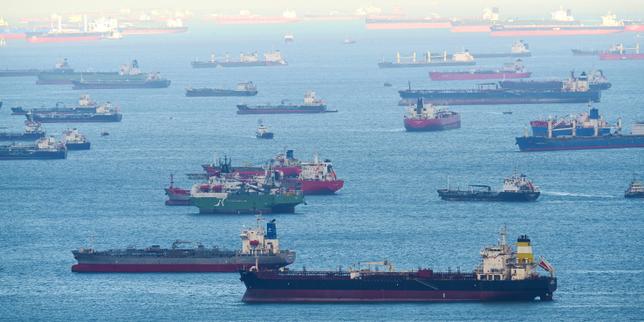
One of the most overlooked factors in this volatility is the emergence of a massive, unregulated maritime underworld. Sanctions on various Middle Eastern and Eurasian regimes have not stopped the flow of oil; they have simply moved it off the books.
- Ship-to-ship transfers: Tankers turn off their transponders in the middle of the ocean to swap oil, hiding its origin.
- Aging infrastructure: Many of these "dark" vessels are decades old, poorly maintained, and uninsured, creating a massive environmental risk that the market ignores in favor of quick margins.
- Shell company layering: A single cargo might change "ownership" five times while at sea, with each flip adding a layer of speculative profit.
When war breaks out, these shadow operators thrive. They provide the "leakage" that allows sanctioned states to keep funding their war chests while the official market prices stay high for everyone else. It is a double-sided win for the middleman. They buy discounted "blood oil" and sell it into the global pool at a premium, pocketing the spread created by the very conflict they are helping to sustain.
Why the Petrodollar Stability is a Myth
The idea that the oil market is a "free market" is perhaps the greatest fiction in modern economics. It is a cartel-driven, state-subsidized, and speculator-heavy machine. For decades, the world relied on the "petrodollar" system to provide a floor for prices. That floor is rotting.
Middle Eastern powers are increasingly willing to use their energy exports as a direct tool of foreign policy, moving away from the predictable production quotas of the late 20th century. When these nations realize they can make more money selling less oil at higher prices during a crisis, their incentive to restore peace vanishes. Low production plus high tension equals maximum revenue. It is a simple equation that leaves the Western consumer holding the bill.
The math is devastating for the average person. If the price of Brent crude jumps by $10 a barrel due to a weekend of skirmishes, that cost is passed down to every plastic product, every grocery delivery, and every heating bill within weeks. Yet, if the tension eases, the prices at the pump rarely drop with the same speed. This "asymmetric pricing" is a feature, not a bug.
The Speculator Defense
Defenders of the current system argue that speculators provide necessary liquidity. They claim that without these bettors, oil companies wouldn't be able to hedge their risks. That argument is showing its age.
When speculation accounts for the vast majority of daily trading volume, it no longer provides liquidity; it provides noise. This noise drowns out the actual needs of refineries and manufacturers. We are seeing a "decoupling" where the price of oil has less to do with how much is in the ground and more to do with the "fear index" on a trading floor in Chicago or London.
The reality is that we have built a system that incentivizes war. If you are a hedge fund manager holding long positions on crude, a peaceful resolution in the Middle East is a financial disaster. This creates a lobbying and media environment where the drumbeat of war is profitable.
The Technological Weaponization of Energy
Beyond the physical and financial, there is a third layer to this "Far West" market: digital sabotage. As energy grids become more integrated and oil infrastructure more automated, the threat of cyber-attacks adds another layer of "invisible" volatility.
A "glitch" in a pipeline's software can cause a price spike just as effectively as a drone strike. These digital threats are often used by state actors to manipulate markets without firing a single shot. By creating the illusion of a supply threat, they can move the price of oil and generate the capital needed to fund their regional ambitions. It is a form of economic warfare that is almost impossible to regulate.
The current state of the oil market isn't a failure of capitalism; it's the logical conclusion of it when applied to a finite, essential resource during a time of global instability. We have allowed the lifeblood of the global economy to become a speculative plaything.
As long as the "risk of war" pays better than the "maintenance of peace," the volatility will continue. The winners are already counting their profits in high-rise offices far from the front lines. The losers are everyone else. To fix this, the transparency of the "dark fleet" must be addressed and the leverage allowed in energy futures must be drastically curtailed.
Stop looking at the maps of the Middle East to find the cause of high oil prices. Look at the ledger sheets of the firms that profit when those maps turn red. You need to demand a total decoupling of essential energy commodities from high-frequency speculative gambling before the next "expected" crisis drains what is left of the global middle class.