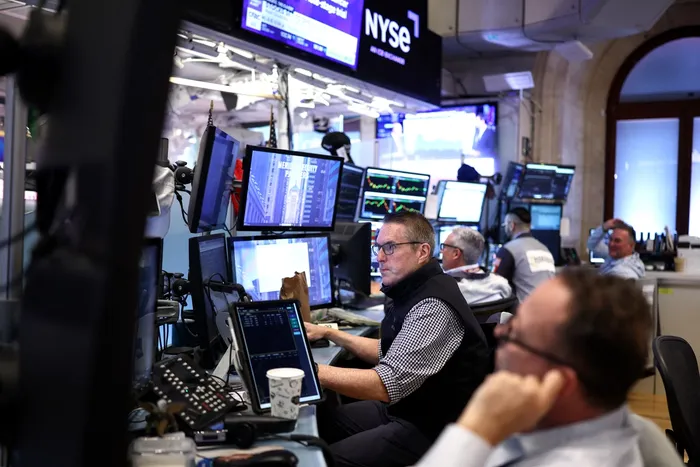
Wall Street is betting that the smoke rising from the Persian Gulf is finally clearing, or at least that the man in the Oval Office is ready to stop fanning the flames. Following months of direct military engagement, President Donald Trump has signaled a dramatic shift in his campaign against Tehran, declaring the war is "very close to over." The announcement acted as a massive adrenaline shot to global equity markets, which have spent much of 2026 reeling from a geopolitical shock that choked the Strait of Hormuz and sent Brent crude screaming toward $120 a barrel. Traders are buying the peace narrative, but the underlying reality suggests this isn't a victory lap so much as a strategic retreat forced by the harsh arithmetic of the global energy market.
The rally on Wednesday saw the S&P 500 gain 0.72%, while the Nasdaq jumped 1.17%, driven by a sense that the administration has reached its "pain threshold." For weeks, the market has operated under the "TACO" theory—the idea that Trump Always Chickens Out when financial indicators flash red long enough. With inflation forecasts for 2026 being revised upward by the European Central Bank and domestic gasoline prices ticking up daily, the economic cost of a prolonged "short-term excursion" into Iran has become a liability that the White House can no longer ignore.
The Hormuz Chokepoint and the Price of De-escalation
The core of the conflict has never been just about nuclear silos or regional hegemony. It has been about the world’s most critical maritime artery. When Iran effectively closed the Strait of Hormuz on March 4, 2026, it triggered the largest supply disruption in history. About one-fifth of the world’s oil and liquefied natural gas (LNG) was suddenly stranded.
Wall Street's optimism is based on Trump's claim that the U.S. is "out of Iran pretty quickly" and moving toward a deal. However, the physical reality on the water tells a different story. Maritime intelligence firms like Windward report that despite the White House’s rhetoric, tanker traffic remains stagnant. Ships attempting to transit the strait are reportedly being forced to pay "tolls" to Iranian authorities—often demanded in cryptocurrency—amounting to as much as $1 per barrel. For a supertanker carrying 3 million barrels, that is a $3 million extortion fee that the "defeated" Iranian regime is still able to collect.
The disconnect between the President’s "total military victory" and the actual state of the shipping lanes is where the risk lies. The market is pricing in a return to normalcy, but the infrastructure of the conflict remains largely intact. Iran’s leadership, despite the strikes on its military facilities, knows that its ability to disrupt the energy market is its most potent card. They are not negotiating from a position of total collapse; they are negotiating with a knife to the throat of the global economy.
The Inflation Trap and the Fed's Dilemma
Beyond the immediate theater of war, the economic damage has already been baked into the 2026 forecasts. The "energy-supply shock" has echoed the 1970s, creating a period of stagflation that threatens to derail any post-war recovery. In the United States, households have initially cushioned the blow by dipping into savings, but that buffer is thinning.
Historical precedent shows that real consumption usually begins to decline two to three months after a price shock. We are entering that window now. Even if Brent crude stays below $100, the "war premium" remains. The Federal Reserve, which had been looking to normalize rates, is now staring at a nightmare scenario where energy-driven inflation forces them to keep rates high even as GDP growth projections are slashed.
The "boom" Trump is promising for the stock market ignores the bond market's skepticism. Defense and aerospace stocks have certainly benefited, with companies like Rolls-Royce reporting earnings jumps of 40% year-on-year. But for the rest of the S&P 500, the cost of capital and the cost of energy are twin weights that a few reassuring headlines might not be enough to lift.
The Pivot as a Trading Game
Institutional investors are not necessarily believing the peace deal is permanent; they are trading the pivot. The pattern is familiar: aggressive threats, a spike in volatility, a period of economic pain, and then a televised de-escalation that stabilizes the markets. It happened with the trade tariffs of 2025 and is repeating now in the Middle East.
Traders are wagering that the administration prioritizes the "Big Board" over the "Big One." When equities falter, the rhetoric softens. This creates a dangerous feedback loop where geopolitical strategy is dictated by the 10-year Treasury yield and the price at the pump. The risk is that Tehran understands this dynamic as well as the traders in Lower Manhattan do. If Iran knows that Trump is tethered to the S&P 500, they can use tactical escalations to force further concessions.
The ceasefire remains precarious. Already, reports indicate the Strait of Hormuz was briefly closed again in response to regional flare-ups in Lebanon. The euphoria of the Wednesday rally is fragile because it is built on words, not a signed treaty or a cleared waterway.
Investors looking for a safe harbor are increasingly rotating into "Ex-America" trades, favoring European and emerging markets that are trading at significant discounts. While the Dow and Nasdaq have seen relief rallies, the S&P 500 is still trading below its pre-war levels. The market is not celebrating a victory; it is celebrating a pause in the bleeding.
The hard truth is that military strikes are easy, but exiting a war without surrendering the very leverage you fought for is difficult. The President has signaled he wants out. Wall Street has signaled it wants a "boom." Neither of those desires changes the fact that the Strait of Hormuz remains a hostage to a regime that, despite being "beaten," still holds the world's energy supply in its grip.
Watch the oil tankers, not the teleprompters. If the ships don't move, the rally won't last.