The federal indictment of a former FBI Director over a photo of beach debris is the kind of surreal political theater that would have been rejected by a paperback thriller novelist for being too on the nose. Yet, this is the current reality of the American justice system in 2026. The Department of Justice, led by Acting Attorney General Todd Blanche, has officially charged James Comey with making threats against the life of the President. The evidence? A year-old Instagram photo of seashells arranged to spell "86 47."
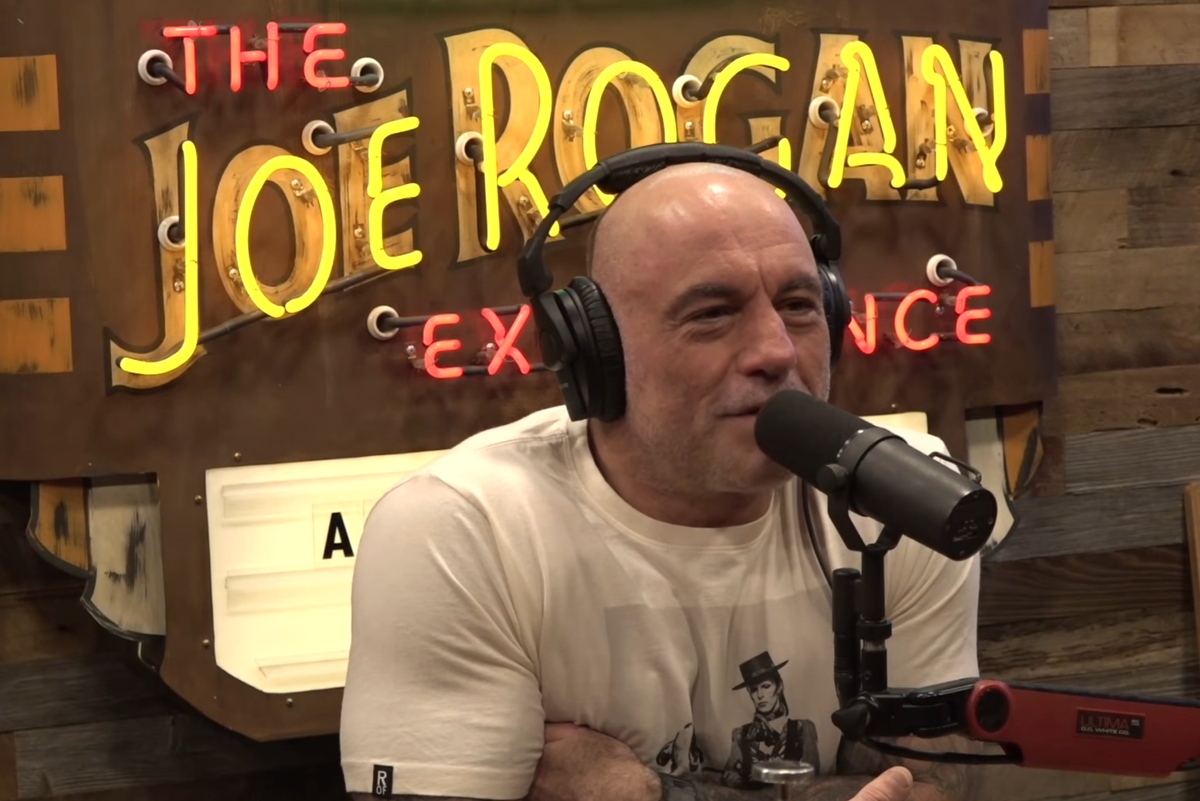
Federal prosecutors are betting their credibility on a linguistic interpretation. In their filing, they argue that "86" is mob-speak for assassination and "47" refers to Donald Trump, the 47th President. On a recent episode of the Joe Rogan Experience, the titular host summarized the collective whiplash of the nation's legal observers in four words. "That is just nuts," Rogan told his audience, leaning into the microphone with the weary disbelief of a man watching a simulation glitch in real-time. Rogan’s reaction reflects a broader skepticism: is this a legitimate pursuit of a "true threat," or is it the ultimate evolution of the political vendetta?
The Mechanics of a Shell Game
The indictment rests on two counts: 18 U.S.C. § 871 (threatening the President) and 18 U.S.C. § 875(c) (transmitting a threat in interstate commerce). To secure a conviction, the government must prove more than just a distasteful social media post. They must prove intent. Specifically, they must show that Comey either intended the image to be a threat or consciously disregarded a substantial risk that it would be viewed as one.
James Comey, for his part, claims he found the arrangement while walking on a North Carolina beach in May 2025. He says he interpreted the numbers as a political statement—a call to "86" or remove the 47th president from office through the democratic process. When the internet began swirling with darker interpretations, he deleted the post.
The DOJ isn’t buying the "found art" defense. Acting Attorney General Todd Blanche, Trump’s former personal attorney, defended the move by stating that threatening the life of the President will not be tolerated. He dismissed the idea that this is a selective prosecution, claiming the conduct is identical to cases brought against less famous defendants every day. However, seasoned analysts see a glaring discrepancy. Usually, threat cases involve explicit manifestos or direct communications of violence. Here, the "threat" is buried under layers of restaurant slang and numerical shorthand.
Joe Rogan and the Death of Nuance
During his broadcast, Rogan poked holes in the government's logic by focusing on the absurdity of the medium. He questioned how a man of Comey’s experience—a former prosecutor and FBI head—would choose a seashell arrangement on a public beach as his primary vehicle for a death threat. Rogan’s argument wasn't necessarily a defense of Comey’s character, but a critique of the government’s reach.
"If you can get indicted for seashells," Rogan said, "the bar for what constitutes a crime has moved to a place where nobody is safe."
The podcast host also touched on the President's own commentary. Donald Trump told reporters in the Oval Office that "86" is a "mob term for kill 'em." This public declaration by the victim of the alleged threat puts immense pressure on the prosecutors. If the President has already defined the term for the public, the jury pool in the Eastern District of North Carolina is already swimming in a predetermined narrative.
The Constitutional Collision Course
Legal experts are already pointing toward Counterman v. Colorado, a 2023 Supreme Court ruling that raised the bar for "true threat" prosecutions. The court held that the government must prove a defendant had a "subjective understanding" of the threatening nature of their words.
The Comey indictment is remarkably sparse on evidence of this subjective intent. It asserts he acted "knowingly and willfully" but provides no internal emails, witness statements, or diary entries to back it up. Instead, it relies on the "reasonable recipient" standard—the idea that any normal person would see those shells and fear for the President’s life.
The Problem of Ambiguity
- Merriam-Webster’s Definition: The dictionary defines "86" primarily as "to get rid of" or "refuse service to." While a secondary, more recent sense includes "to kill," the dictionary notes this usage is sparse.
- Political Context: In a hyper-polarized environment, "86" is frequently used by activists to mean "vote out" or "fire."
- The Burden of Proof: Prosecutors must prove that Comey meant the rare, violent definition rather than the common, political one.
A Pattern of Prosecution
This is not Comey’s first brush with the current administration's DOJ. A previous, unrelated indictment was dismissed late last year after a judge ruled the appointment of the special prosecutor was unlawful. This second bite at the apple, coming just as the statute of limitations was tightening on other matters, suggests a relentless pursuit.
When the state uses its resources to prosecute a former high-ranking official over a social media post of beach shells, it signals a shift in the "rules of engagement." For decades, the unwritten rule of American politics was that losers went into the private sector to write memoirs and join boards. That era ended. We are now in a period where every social media post is a potential piece of evidence and every metaphor is a potential felony.
The trial is set to be a media circus. It will feature debates over linguistics, the psychology of social media, and the definition of "true threats" in a digital age. But beneath the spectacle lies a more chilling question about the limits of government power. If the DOJ can successfully argue that a symbolic arrangement of calcium carbonate constitutes a federal crime, the line between political dissent and criminal incitement has not just been blurred—it has been erased.
James Comey now finds himself in the crosshairs of the very machine he once commanded. Whether he created the shell arrangement or merely photographed it, the outcome of this case will set a precedent for how every American uses symbols, numbers, and slang online. The legal battle ahead isn't just about one man and his Instagram feed; it's about whether the government can claim a monopoly on the meaning of a seashell.
The case moves to discovery next, where we will see if the government has the "smoking gun" emails they lack in the indictment. Until then, the public is left with a former FBI director facing ten years in prison for a beach photo, and a podcast kingpin wondering when the world stopped making sense.