The illusion of Russian economic resilience is finally fracturing under the weight of an unyielding war of attrition. For over four years, the Kremlin pointed to surging gross domestic product figures and bustling factories as proof that its economy could successfully weather Western sanctions while simultaneously funding a massive invasion force. This superficial narrative misled casual observers. But the structural reality has caught up with Moscow, driven by a profound shift in Ukrainian strategic capabilities and structural exhaustion inside the Russian domestic market.
What looked like economic strength was actually a temporary sugar high fueled by aggressive deficit spending and historic oil revenues. Now, those lifelines are failing simultaneously. The Russian state has maxed out its productive capacity. Growth reversed in the first quarter of 2026, and the cost of maintaining the war machine is rapidly cannibalizing the nation's civilian industry. Time is no longer on Vladimir Putin's side. In other updates, take a look at: The Six Hundred Dollar Bridge.
The Burning Engine of Military Keynesianism
Moscow did not survive initial Western sanctions through financial genius. It survived by converting its entire civilian economy into a massive arms factory, a phenomenon economists call military Keynesianism. By pumping trillions of rubles into defense manufacturing, the state artificially inflated domestic production data and triggered a temporary boom in regional employment.
This strategy inherently contains the seeds of its own destruction. When an economy runs at over 100% capacity for years, severe distortions emerge that cannot be papered over with central bank propaganda. The Economist has analyzed this critical topic in great detail.
The most acute crisis is a desperate shortage of labor. Millions of working-age men have been removed from the workforce via military mobilization, casualties on the front lines, or mass emigration to escape conscription. At the same time, defense factories have poached hundreds of thousands of workers from the private sector by offering bloated, state-subsidized wages.
As a result, non-military industries are starved of manpower. Companies manufacturing agricultural equipment, consumer goods, and textiles cannot find employees to keep production lines running. To attract workers, they must raise wages, which drives up production costs and fuels a vicious inflationary spiral. Official state inflation figures hide the deeper truth, but the skyrocketing cost of basic goods reveals that domestic supply cannot match artificially inflated demand.
The Squeezed Lifeline of Hydrocarbon Revenue
For a long time, the Kremlin relied on an enormous cushion of oil and gas money to fund its ballooning budget deficits. Even when European markets shut their doors, Moscow successfully redirected crude shipments to buyers in Asia, leveraging a massive shadow fleet of uninsured, untraceable tankers to bypass the Group of Seven price caps.
That strategy has hit a hard ceiling. The European Union and its allies recently implemented a aggressive crackdown on this shadow fleet, blacklisting specific vessels and restricting the maritime services that allow them to operate safely.
Concurrently, oil and gas revenues dropped by roughly 30 percent. A temporary price spike caused by maritime disruptions in the Middle East gave Moscow a brief reprieve, but global energy prices stabilized quickly. Russian Urals crude has leveled out near the 58 dollar mark, falling short of the optimistic projections baked into the Kremlin's budget.
The financial damage is visible in the state balance sheets. Over 56 Russian regions are currently running steep budget deficits. To fill these massive gaps, the Russian finance ministry is forcing regional governments and domestic private banks to absorb high-interest domestic debt. Because the country is completely cut off from Western international credit markets, the state must borrow at increasingly exorbitant rates at home, starving the domestic private sector of liquidity.
The Drone Campaign Against Industrial Capacity
While sanctions have restricted Russian revenues from the outside, a relentless Ukrainian campaign of long-range drone strikes has torn into Russia's industrial core from the inside.
Kyiv has systematically targeted oil refineries, fuel depots, and transport infrastructure deep inside the Russian Federation, extending well past Moscow. These strikes are not designed merely for psychological disruption. They are calculated economic interventions that degrade Russia’s primary export engine.
When a drone successfully hits a critical distillation column at a Russian refinery, the facility cannot simply order a replacement part from a domestic supplier. These complex systems rely heavily on sophisticated Western components that were installed before the 2022 invasion. Procuring these specialized parts through illicit third-party networks takes months and costs a premium.
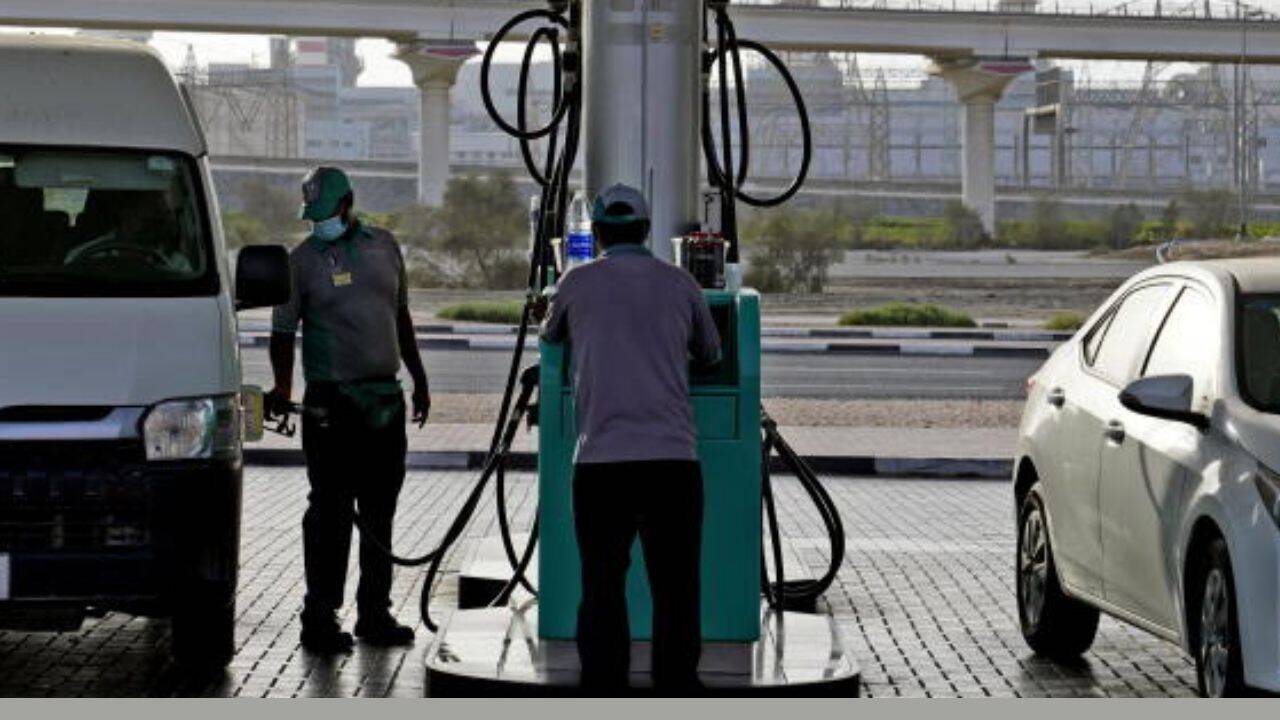
Consequently, domestic fuel shortages have begun to manifest. Dozens of Russian regions have implemented fuel rationing, and occupied territories like Crimea have cut off civilian fuel sales entirely to preserve dwindling supplies for the military. The state is forced into an impossible trade-off: export crude oil to generate foreign currency, or refine it at home to keep the army moving. It cannot do both efficiently anymore.
The Chinese Pipeline Friction
With traditional Western trade ties severed, Russia transformed into an economic dependency of Beijing. Roughly three-quarters of Russia’s imported dual-use technology and consumer goods now flow directly through Chinese supply networks.
Yet, this vital lifeline is experiencing severe friction. The United States and Europe have steadily escalated the threat of secondary sanctions against Chinese financial institutions that facilitate transactions with the Russian military-industrial complex.
Major Chinese banks, highly sensitive to their access to global clearing systems, have quietly restricted or outright paused ruble-denominated transactions. Russian importers now report extensive delays and massive transaction fees just to settle payments for basic industrial components.
Furthermore, Beijing’s support is transactional, not charitable. Chinese companies are buying Russian raw materials at deep discounts while selling finished machinery and automobiles at a premium. This asymmetric relationship drains capital out of Russia, leaving the country with plenty of Chinese yuan but very little financial autonomy.
The Institutional Collapse of Private Credit
The final phase of this economic contraction is unfolding in the domestic banking sector. To combat rampant inflation, the Russian Central Bank has been forced to maintain punishingly high interest rates. While this policy was intended to stabilize the ruble, it has effectively killed legitimate private commercial activity.
Small and medium-sized enterprises cannot afford to borrow money at current market rates. The only entities secure enough to borrow are state-owned defense conglomerates whose debts are guaranteed by the Kremlin. This is creating a dangerous concentration of financial risk within a handful of state institutions.
Consider a hypothetical example: a regional commercial bank allocates 80 percent of its corporate loan portfolio to local subcontractors producing components for military vehicles. If the state delays its procurement payouts due to widening federal deficits, those subcontractors immediately default on their loans. The regional bank collapses, triggering a chain-reaction liquidity crisis across the entire province. This scenario is no longer a theoretical risk; it is actively threatening the stability of Russia's regional financial architecture.
By contrast, the Ukrainian economy has demonstrated remarkable adaptability. Despite absorbing catastrophic infrastructure damage, Ukraine's gross domestic product has clawed back a portion of its initial losses, supported by consistent international financial assistance and rapidly expanding domestic military production. As European and American funds are converted into long-range strike capabilities, the economic pressure on Moscow will intensify.
The Kremlin can no longer rely on a limitless pool of resources. The war is being financed exclusively by burning through sovereign reserves and systematically destroying the civilian industrial base. When an economy is forced to devour itself just to keep its military engine running, a hard stop is inevitable. Moscow is running out of road, and no amount of state-controlled economic data can hide the oncoming structural collapse.