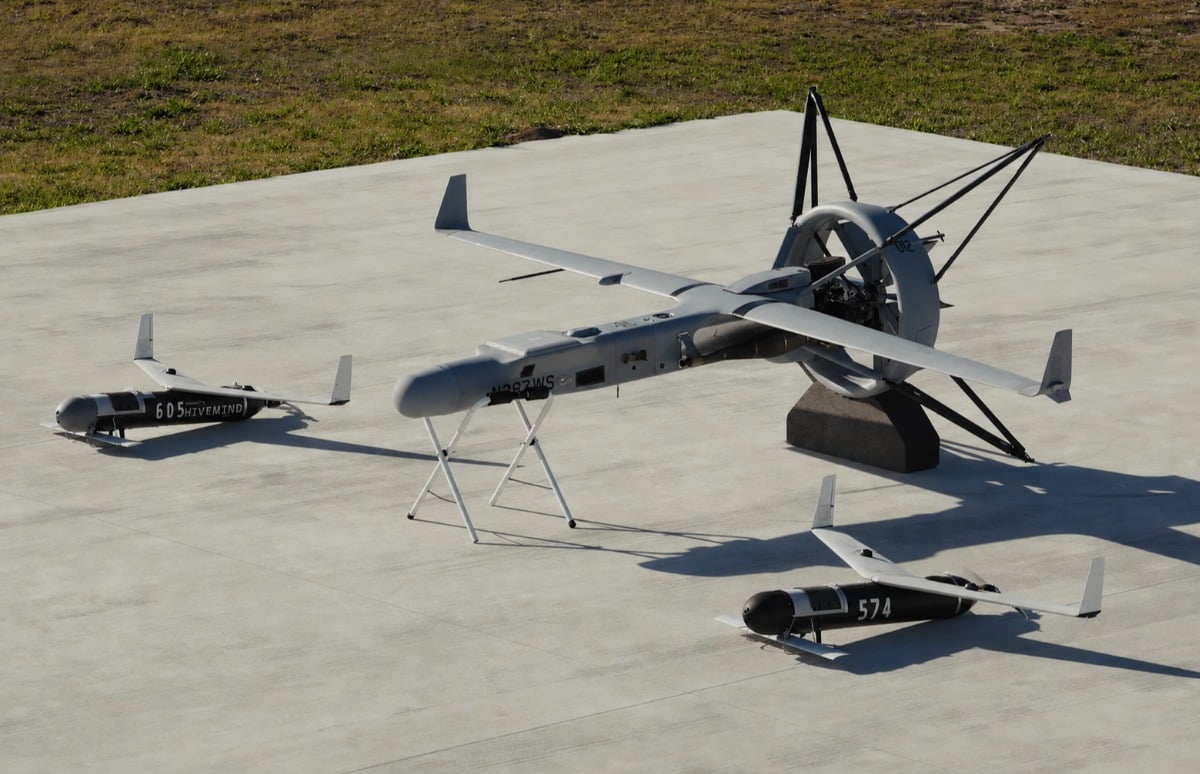
The American military is facing an inventory crisis that traditional defense contractors cannot fix. Decades of procuring multi-million-dollar exquisite hardware platforms have left the Pentagon ill-prepared for the brutal reality of modern attritional warfare. Cheap, mass-produced drones are dominating current battlefields, rendering traditional, centralized command structures dangerously obsolete.
To bridge this gap, the Department of Defense is shifting its focus from hardware to software. The recent selection of Shield AI to integrate its Hivemind autonomy suite into the Pentagon’s Low-Cost Uncrewed Combat Attack System (LUCAS) program marks a major pivot in how the U.S. military intends to wage electronic warfare. By testing autonomous swarm teaming, the military is attempting to solve a glaring vulnerability: what happens when radio communications and GPS signals are completely wiped out by adversary jamming.
While a recent demonstration in Oklahoma proved that a single operator can supervise an entire cluster of uncrewed platforms, the exercise exposes a deeper, more uncomfortable reality. The tech sector is moving faster than military doctrine can absorb it, and the race to operationalize true, unassisted machine autonomy is running straight into a wall of logistical, bureaucratic, and ethical friction.
Moving Past the Tether of Remote Piloting
To understand why the Oklahoma trials matter, one must first look at how military drones actually operate in high-threat environments. Popular culture envisions an operator sitting in a trailer half a world away, precisely steering a drone via satellite link.
In a near-peer conflict, that satellite link is the first thing that disappears.
Russian and Chinese electronic warfare units can saturate entire geographic sectors with localized jamming, severing the radio frequency tethers that remote pilots rely on. When a standard military drone loses its connection to the ground control station, it either enters a predictable, pre-programmed loop or crashes.
The LUCAS program relies on a one-way attack platform derived from an Iranian design captured and reverse-engineered by the U.S. military. These are not reusable assets; they are meant to provide "affordable mass"—dozens of cheap kinetic systems launched simultaneously to overwhelm enemy air defenses. But mass without coordination is just a flock of targets. If fifty drones fly in a straight, uncoordinated line, a modern surface-to-air missile battery will systematically pick them off.
The Hivemind software attempts to replace the remote pilot entirely. Rather than relying on a continuous stream of data from a human controller, the software acts as an onboard AI pilot. It processes data directly on the edge, using localized computing power to make navigation, routing, and evasive decisions in real time.
During the Oklahoma testing, the software demonstrated its ability to handle dynamic rerouting. When a simulated threat or obstacle blockaded a pre-planned flight path, the drones did not stall or drop out of the sky. They communicated with one another locally, recalculated the safest trajectory, and executed the mission without human intervention.
The Reality of Multi-Agent Autonomy
Achieving true collaborative autonomy requires solving a massive mathematical problem. When human pilots fly in formation, they rely on visual cues, radio chatter, and years of shared training to avoid collisions and split up mission objectives. For an AI swarm, that coordination must happen via algorithmic consensus.
Shield AI approaches this through a modular stack:
- EdgeOS: The lightweight operating system running directly on the drone's internal processor, executing commands with zero latency.
- Pilot Engine: The decision-making software that uses reinforcement learning to determine tactical maneuvers, dodge obstacles, and identify targets.
- Commander Toolkit: The human-machine interface that distills the complex movements of dozens of aircraft into a single, manageable dashboard for one operator.
Consider a hypothetical scenario where a swarm of twenty LUCAS drones crosses into contested territory. Under a traditional setup, managing twenty assets would require twenty individual pilots, plus a small army of intelligence analysts to watch the video feeds.
With autonomous swarming, a single human operator acts like a battlefield commander rather than a stick-and-throttle pilot. The operator sets the objective—for instance, neutralizing a specific radar installation—and validates the general boundary constraints. Once launched, the drones use an optical and algorithmic radar system to map the terrain, detect changes in the environment, and assign roles among themselves. If three drones in the swarm are shot down, the remaining seventeen instantly redistribute the mission tasks, adjusting their spacing and approach vectors to fill the gap.
This decentralized approach shifts the burden of adaptation from the human to the software. The human remains the sole authority for lethal execution, but the machine manages the physics of getting to the target.
The Friction points of the Autonomous Battlefield
Despite the successful benchmarks achieved in the Oklahoma skies, scaling this technology to actual combat deployment presents massive engineering and regulatory hurdles. The transition from controlled testing environments to chaotic combat zones is rarely smooth.
The first major hurdle is airworthiness and safety certification. Traditional military aircraft are certified based on predictable, deterministic software code. If a pilot moves a control stick three inches to the left, the ailerons move a precise number of degrees every single time.
Autonomous swarms built on reinforcement learning do not operate on deterministic logic. They learn optimal behaviors by running through billions of simulated flights in digital environments, meaning the software determines the best path based on probabilistic outcomes. Proving to a military airworthiness board that a non-deterministic AI pilot will always behave safely when flying near civilian infrastructure or manned friendly aircraft is an ongoing regulatory nightmare. The defense industry is currently forced to implement rigid runtime assurance components—essentially digital guardrails that instantly shut down the AI and revert the aircraft to basic autopilot if it attempts an unapproved maneuver.
The second bottleneck is logistical hardware limitations. Software can be infinitely replicated, but it still must run on physical airframes.
While Shield AI’s software is being tested on the Pentagon's LUCAS systems, the company’s own hardware platforms—like the V-BAT, a vertical takeoff and landing drone currently being utilized in Ukraine—showcase how difficult physical deployment can be. The V-BAT lands on its tail like a miniature SpaceX rocket, allowing it to operate from the back of a pickup truck or a moving ship deck without a runway.
However, scaling production of these specialized composite airframes, heavy-fuel engines, and edge-computing chips to match the demand for "affordable mass" is a massive industrial challenge. The American defense industrial base is set up to build a handful of highly complex F-35s per month, not thousands of autonomous attritional drones.
The Ethical Red Line
As the Pentagon prepares for a full operational demonstration of this swarming capability, the conversation inevitably turns toward the ethics of autonomous warfare. The Department of Defense maintains a strict policy under Directive 3000.09, which requires human supervision over any system utilizing force.
The current software architecture honors this by keeping a human in the loop for the actual weapon release. The AI pilot can find the target, outmaneuver electronic jamming, and position the platform for an optimal strike, but it must wait for an encrypted confirmation from the single human supervisor before executing a lethal attack.
But this setup introduces a tactical paradox. If the primary reason for developing autonomous swarms is to operate in environments where communications are jammed, what happens when the drone is ready to strike but the communication link to the human operator is broken?
If the drone holds fire to wait for a signal that never arrives, the entire mission fails, and an expensive asset is wasted. If the policy is loosened to allow the machine to make lethal choices when disconnected, the military crosses a profound moral boundary.
The Oklahoma tests prove that the software can handle the mechanics of flying, adapting, and swarming under intense pressure. But as these systems move from the testing grounds to active deployment, the Pentagon will have to decide exactly how much trust they are willing to place in an un-tethered machine.