The 2026 FIFA World Cup is projected to generate $9 billion in economic impact, but history suggests most host cities will barely break even. While FIFA cleans up on broadcast rights, ticket sales, and top-tier sponsorships, local taxpayers are left holding the bag for massive infrastructure upgrades, security operations, and stadium retrofits. The promised tourism boom frequently fails to materialize as regular business travelers flee the chaos, leaving local economies with fleeting gains and long-term debt.
The math behind mega-events rarely adds up for the cities that host them.
The Mirage of Mega Event Economics
Every four years, a familiar narrative emerges. Consultants produce glossy reports filled with staggering projections, promising billions in economic activity, thousands of jobs, and a permanent boost to the local hospitality sector. The 2026 tournament, spread across the United States, Canada, and Mexico, is no exception. The headline figure of $9 billion has been repeated by tourism boards and local politicians as justification for massive public expenditures.
The reality is far messier. Economic impact studies commissioned by event proponents routinely rely on flawed methodology. They measure gross spending rather than net economic gain. When a soccer fan spends $300 on a hotel room during the tournament, that money does not magically multiply within the local community. A significant portion of it immediately leaves the city, flowing directly to the corporate headquarters of major hotel chains or international booking platforms.
Furthermore, these studies ignore the crowding-out effect.
During a major sporting event, regular business travelers, convention-goers, and traditional tourists stay away. They want to avoid the spiked hotel rates, packed restaurants, and gridlocked transportation networks. A city's hospitality infrastructure simply swaps high-spending corporate travelers for jersey-clad sports fans. In many cases, total visitor spending during an event month is barely higher than normal, and occasionally, it dips below seasonal averages.
FIFA Takes the Cash While Cities Take the Risk
To understand why the $9 billion figure is misleading, one must look at the structural flow of money in modern international sports. FIFA operates as a financial juggernaut that internalizes profits and externalizes costs.
The organization retains virtually all the core revenue streams from the tournament. Television broadcast rights, global corporate sponsorships, and direct ticket sales go straight into the governing body's coffers. FIFA even demands extensive tax exemptions from host governments, ensuring that the revenue generated within the host countries is shielded from local taxation.
What do the host cities get? They get the bills.
- Stadium Retrofits: Even world-class NFL venues require millions of dollars in modifications to accommodate international soccer standards, such as ripping out rows of seats to widen the pitch or replacing artificial turf with temporary natural grass.
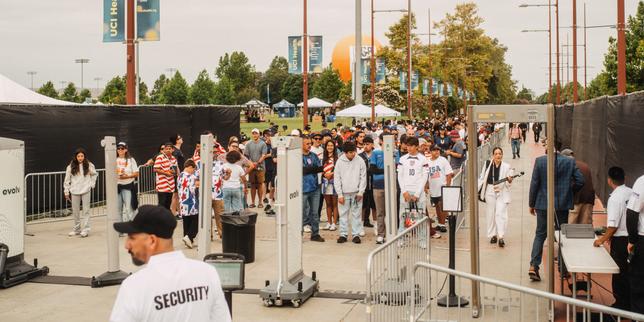
- Security Infrastructure: Local law enforcement and municipal governments bear the financial burden of securing massive fan zones, training facilities, and transit hubs for over a month.
- Transit Strain: Cities must run extra trains, busses, and shuttle services, accelerating the wear and tear on municipal infrastructure without receiving direct compensation from the tournament's central revenues.
Consider a hypothetical example: City A spends $100 million in public funds to upgrade transit and secure a stadium for four match days. Local businesses see a $120 million bump in gross sales. On paper, it looks like a win. However, once corporate leakages are factored in, only $40 million of that spending actually stays in the local economy via wages and local supplier contracts. The city has spent $100 million to generate $40 million in local economic value—a net loss for the taxpayer.
The White Elephant Legacy
The true cost of hosting does not vanish when the final whistle blows. For decades, host nations have been plagued by white elephants—massive, specialized stadiums built at exorbitant cost that sit empty and decay once the circus leaves town.
While the 2026 tournament wisely relies on existing venues rather than building new stadiums from scratch, the legacy trap still exists. The investments made to temporarily upgrade these venues and surrounding areas rarely align with long-term civic needs. Money spent on temporary media centers, VIP hospitality villages, and specialized security equipment represents capital that cannot be spent on permanent housing, school repairs, or daily transit improvements.
South Africa, Brazil, and Qatar each spent billions on infrastructure that now serves little to no public utility. While North American cities face a less severe version of this problem due to their existing sports infrastructure, the opportunity cost remains incredibly high. Public funds are finite. Every dollar funneled into making a stadium compliant with strict international specifications is a dollar diverted from basic municipal services that benefit residents year-round.
Who Actually Wins the World Cup Business Game
The financial spoils of the tournament are concentrated in a surprisingly small number of hands. The local economy is not a monolithic entity; it is divided between entrenched corporate interests and small, independent operators.
The Corporate Hospitality Monopolies
Major international hotel chains, rental car conglomerates, and established stadium concession partners reap the primary rewards. Because they possess the scale to handle massive volume and hold existing contracts with venues and event organizers, they capture the lion's share of visitor spending. These businesses are highly adept at dynamic pricing, raising rates by 300% or more during match weeks, ensuring maximum extraction of fan capital.
The Local Small Business Struggle
For the neighborhood coffee shop, the independent boutique, or the suburban restaurant, the tournament is often a non-event, or worse, a disruption.
Fan movement is tightly controlled. Organizers guide ticket holders along specific corridors from airports to hotels, and directly into stadium properties or cordoned-off fan zones. Inside these secure perimeters, only official corporate sponsors can sell food, beverages, and merchandise. A fan might travel thousands of miles to a host city, yet never spend a single dollar at a truly local, independent business. Regular local customers stay home to avoid traffic, causing neighborhood businesses outside the immediate stadium zone to experience a drop in weekly revenue.
Rewriting the Host City Playbook
If cities want to stop being exploited by international sports entities, the entire framework of these hosting agreements must change. The current model is unsustainable for municipal budgets, relying on civic pride to justify fiscal irresponsibility.
Cities must demand a direct cut of ticket sales and global sponsorship revenue to offset their operational expenditures. Until municipalities form a unified front and refuse to accept one-sided bidding terms, the narrative of the multi-billion dollar economic windfall will remain an expensive illusion. The true economic impact of the tournament is not what a city brings in, but what it gets to keep. Present projections show that what cities get to keep will not cover the cost of the ticket.