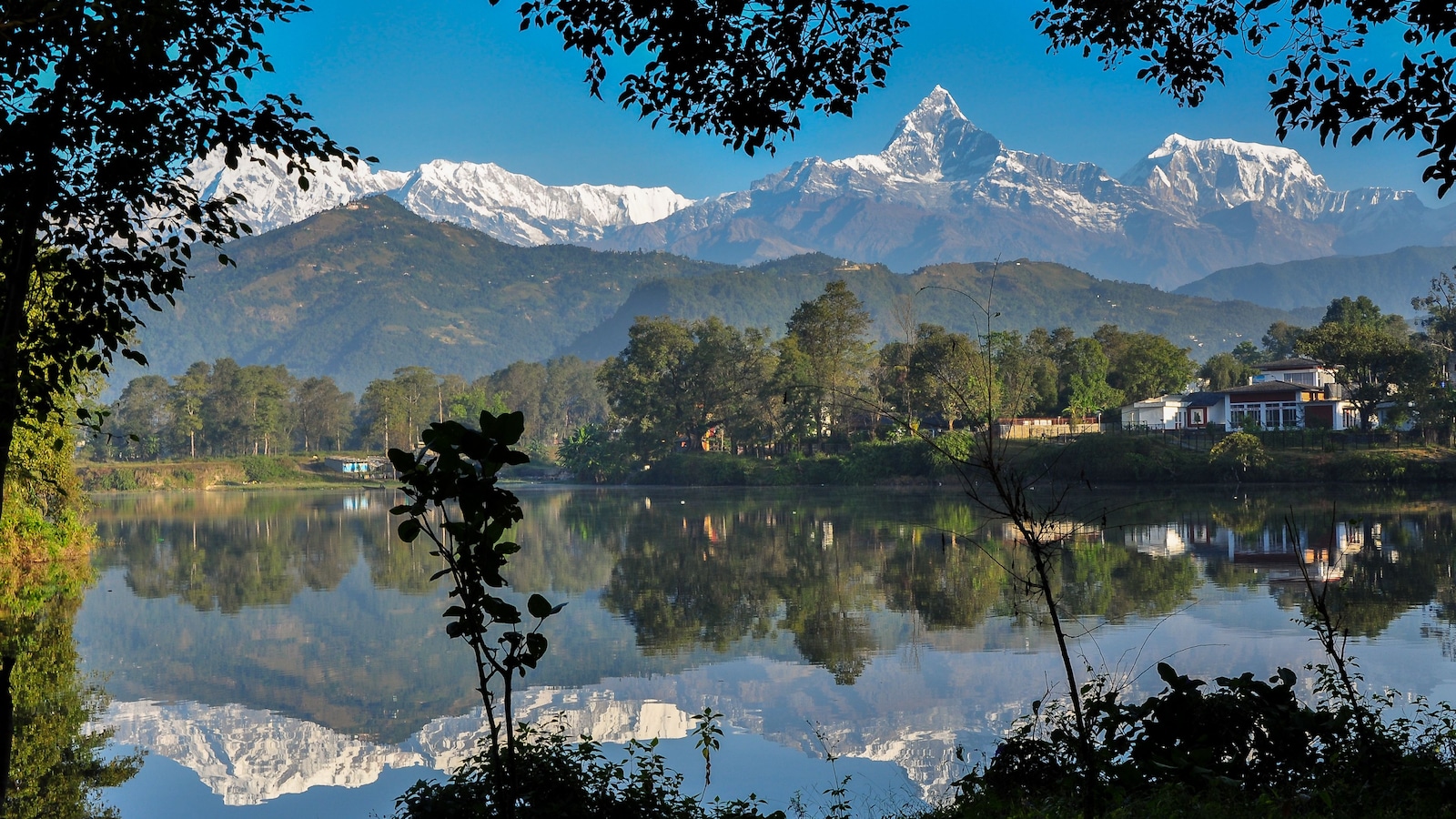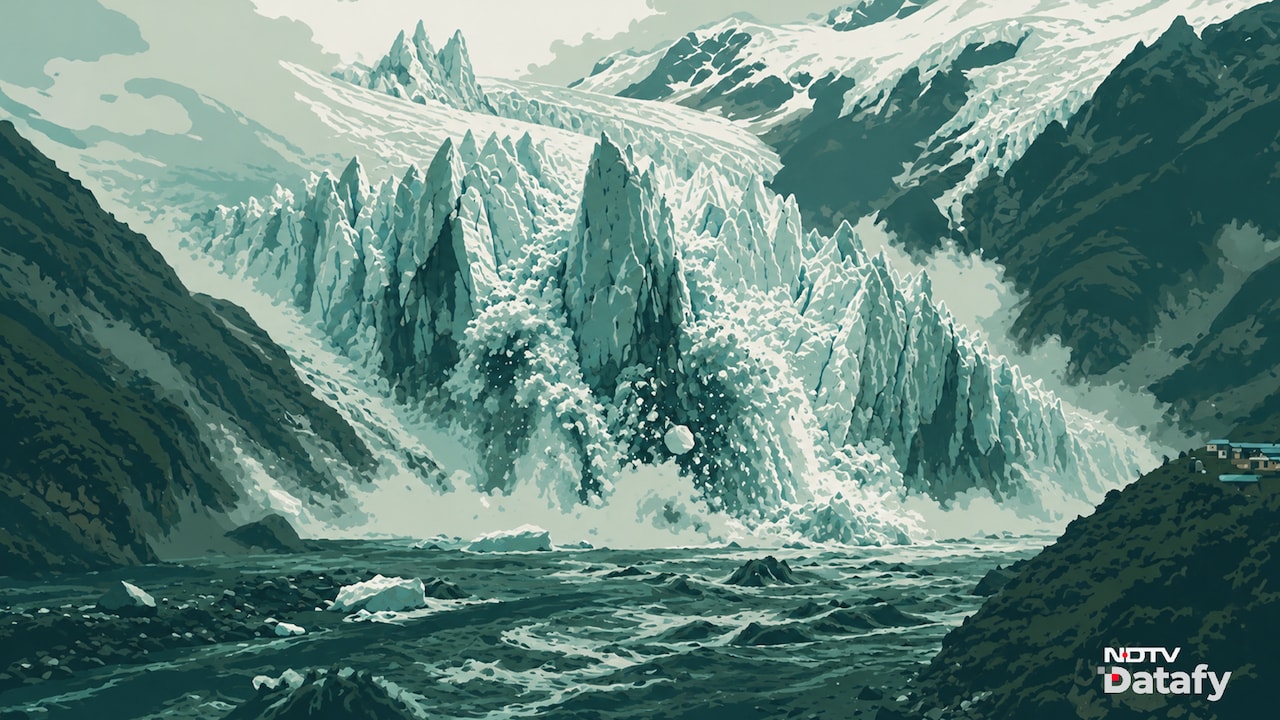
The physical mechanics of a mountain collapse are deceptively quiet before they turn deafening. High in the Himalayan expanse, where the Indian tectonic plate grinds relentlessly beneath Eurasia, rising atmospheric temperatures thaw ancient permafrost and strip structural integrity from sheer rock walls. When a massive wall of ice and rock breaks loose, it transforms into a devastating debris torrent within minutes, racing down river valleys and obliterating downstream settlements, bridges, and multi-million-dollar hydropower installations.
Nepal stands at the epicenter of this planetary breakdown. As successive disasters tear through its fragile transboundary river basins, the government in Kathmandu has fundamentally shifted its international posture. Diplomats have stopped asking for charitable development aid. Instead, they are demanding absolute financial accountability and legal liability from the world’s major industrial greenhouse gas emitters. For a more detailed analysis into this area, we suggest: this related article.
This is not a rhetorical exercise in diplomatic posturing. It is a desperate sovereign struggle for fiscal survival against a backdrop of systemic institutional failure.
The Arithmetic of Catastrophe
To understand why Nepal's climate justice push carries such weight, one must examine the raw economics of the damage. Recent catastrophic flash floods and rock-ice avalanches along major river corridors have left the country facing a reconstruction bill scaling toward five billion dollars. For a nation with an annual economic output of that general magnitude, the upper estimates of these disaster losses consume roughly a tenth of the entire domestic economy. To get more details on this development, in-depth analysis can be read at Al Jazeera.
This is an asymmetric shock. Nepal contributes a negligible fraction of historical global greenhouse gas emissions, yet its mountainous topography amplifies global warming trends, causing high elevations to warm at roughly twice the global average. Glaciers across the Hindu Kush Himalaya are receding at an unprecedented pace, swelling high-altitude glacial lakes and threatening the water security of more than two billion people downstream.
When a single extreme event threatens to wipe out ten percent of a nation's GDP, traditional disaster relief mechanisms fail completely. Domestic tax revenues plummet while emergency borrowing costs skyrocket, trapping developing economies in cycles of debt-financed rehabilitation for climate harms they did nothing to generate.
The Empty Vaults of International Compensation
Enter the much-heralded global financial architecture, specifically the Fund for Responding to Loss and Damage. Established after decades of bruising negotiations, this mechanism was meant to serve as the ultimate safety net for vulnerable countries confronting unavoidable climate impacts.
The reality on the ground exposes a profound structural illusion. Total international pledges to the fund hover around eight hundred million dollars. Nepal's reconstruction bill from a single seasonal catastrophe exceeds that entire global pool by a factor of six.
A global fund designed to handle planetary crises cannot absorb the localized financial shocks of individual nations when capital commitments remain microscopic fractions of actual need. Wealthy industrial powers prefer voluntary donations and bilateral loans over mandatory compensation schemes because binding liability opens the floodgates to trillions of dollars in historical claims. Consequently, frontline states are handed bureaucratic hurdles while their infrastructure crumbles into riverbeds.
The Hydropower Paradox
Nepal’s internal economic strategy compounds this vulnerability. For years, planners treated roaring Himalayan rivers as an infinite asset, investing heavily in hydropower generation to supply domestic needs and export clean energy across South Asia.
That green transition strategy now carries a terrifying physical penalty. More than ten percent of the nation's electricity-generating capacity can be crippled in a single morning when flash floods smash turbine houses, silt up reservoirs, and shear transmission lines.
Investors who previously viewed Himalayan rivers as stable green assets are confronting the reality of high-altitude climate volatility. When energy infrastructure is uniquely exposed to glacial retreat and destabilized slopes, standard risk-assessment models break down. Insurance premiums spike or coverage vanishes altogether, leaving state utilities to shoulder the burden of rebuilding shattered assets.
The Limits of Early Warning
International partners frequently point to early-warning systems as the primary defense against mountain hazards. Sensors, satellite monitoring, and automated siren networks save lives by providing minutes or hours of advance notice before a flood wave crests.
Yet technology encounters hard physical limits when hazards originate above five thousand meters. High-altitude slope failures and sudden sub-glacial lake outbursts develop too rapidly for downstream populations to escape with heavy assets, even when automated sensors function precisely as engineered.
An early-warning system tells a village that a wall of water is arriving in fourteen minutes; it does not stop the water from destroying the village's agricultural base, school buildings, and drinking water supply. Mitigation and adaptation cannot substitute for compensation when the physical changes to the cryosphere are already irreversible.
A Reckoning Without a Safety Net
The diplomatic offensive launched by Kathmandu exposes the deep hypocrisy governing international climate negotiations. Major emitters trade rhetorical commitments to sustainability in air-conditioned conference halls while developing mountain states manage the physical decay of the Earth's cryosphere with empty treasuries.
Until the international community bridges the chasm between voluntary charity and enforceable financial liability, slogans about global solidarity remain hollow. Nepal's struggle is a preview of the fiscal reckoning awaiting every vulnerable border on the planet as historical emitters stall, funds stay undercapitalized, and the high mountains continue to melt away into the rivers below.