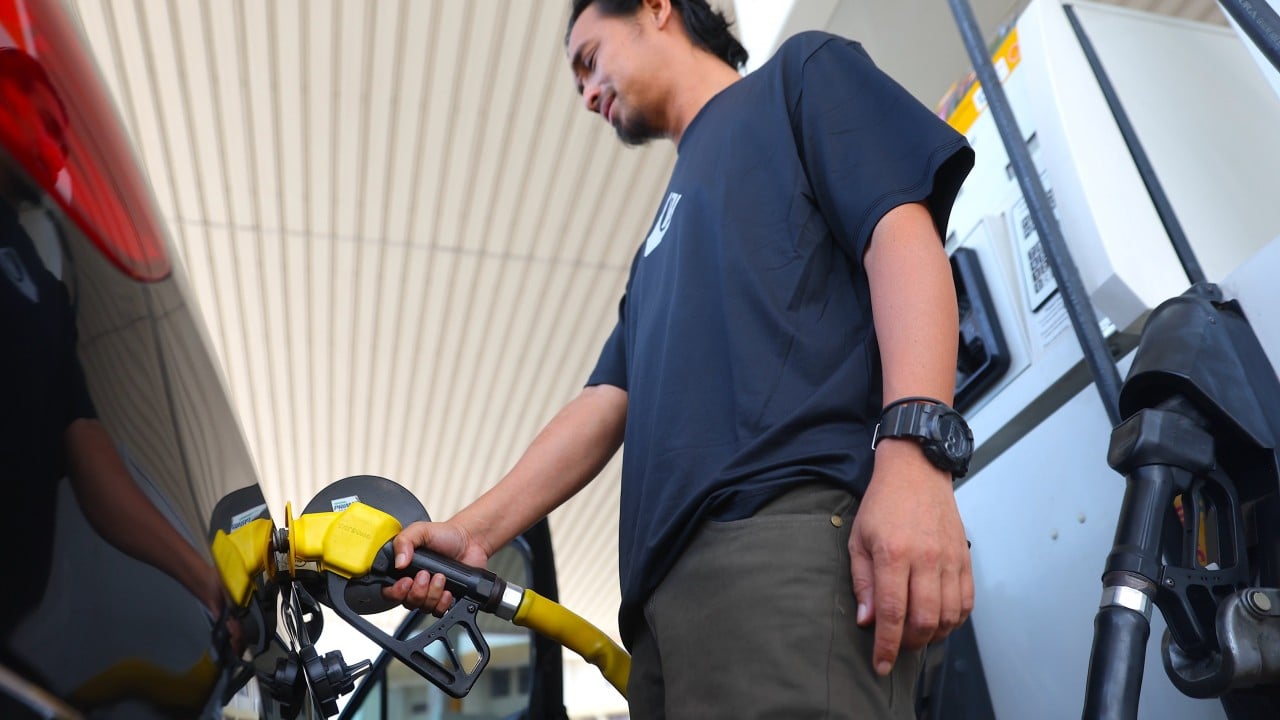
A stark warning from the Malaysian government that the nation has entered a full-blown energy crisis mode has exposed a harsh reality. Decades of structural paralysis and a heavily subsidized fossil fuel addiction have left the country dangerously exposed to external shocks. Government officials are now frantically urging citizens to adopt drastic fuel-saving measures, work from home, and brace for disruptions.
The immediate catalyst is the escalating conflict in West Asia, which has choked critical maritime corridors like the Strait of Hormuz and sent global energy prices skyrocketing. But blaming the crisis entirely on foreign wars is a convenient cop-out. The uncomfortable truth is that Malaysia has been sleepwalking into this trap for years. You might also find this connected article useful: The $2 Billion Pause and the High Stakes of Silence.
The Myth of the Resource Rich Shield
Malaysia is a net exporter of liquefied natural gas and a modest producer of crude oil. For years, this status created a false sense of security. The common assumption was that rising global oil prices would translate into a windfall for the national treasury, shielding the domestic economy from pain.
Observable reality has shattered that assumption. As extensively documented in latest coverage by The Guardian, the results are notable.
While state-owned Petronas does reap higher revenues from expensive exports, the cost of keeping domestic fuel artificially cheap has become an unbearable fiscal nightmare. The government must pay the difference between the soaring international market price and the fixed rate Malaysians pay at the pump. Central bank data reveals that the nation’s monthly combined petrol and diesel subsidy bill has aggressively ballooned to a staggering RM3.2 billion. That is up from a mere RM700 million just a few months prior.
This is an unsustainable bleeding of public funds. The money being funneled into these burning pits of consumption is capital that should have been spent upgrading the national power grid or expanding public transport networks.
By subsidizing fossil fuels so heavily for so long, the state effectively disincentivized efficiency. It created a society built around private vehicle ownership and high-energy industrial operations. Now, with supply chains fractured and prices disconnected from reality, the bill is coming due.
Gridlock and the Green Illusion
Transitioning to renewable energy is the obvious answer. On paper, the government recognizes this, pushing out updated regulatory frameworks like the Corporate Renewable Energy Supply Scheme and the Solar Accelerated Transition Action Program.
These policies look excellent in a press release. The execution is another story entirely.
The core of the problem is not a lack of sunlight or corporate willingness to build solar farms. The bottleneck is the aging, rigid infrastructure controlled by the national utility monopoly.
Renewable energy is inherently variable. Solar panels do not produce power at night. To safely integrate massive amounts of clean energy without crashing the system, a grid requires advanced battery storage systems and digitized, flexible distribution networks. Malaysia simply does not have them at the required scale.
Recent policy tweaks mandated that solar installations exceeding 1 megawatt must include battery storage. While logically sound to protect grid stability, this requirement dumps massive upfront capital costs onto developers. In a high-interest-rate environment, these added costs are killing project economics before the first shovel hits the dirt.
We are witnessing a classic execution gap. Ambitious climate targets are announced to appease international observers, while the actual physical infrastructure remains anchored in the twentieth century.
The Subsidy Reform Trap
To survive this crisis, the government has no choice but to dismantle its blanket subsidy regime. It must shift to targeted assistance, where only low-income households receive fuel aid while the wealthy pay market rates.
But attempting to pull this lever during an active global energy spike is political and economic suicide.
If the government removes diesel and petrol subsidies today, pump prices will double overnight. Because diesel powers the trucks that deliver food and the machinery that runs factories, hyperinflation would instantly ripple through the entire economy. A standard logistics operation that spent RM10,000 a month on fuel would suddenly face a RM20,000 bill. They will not absorb that loss. They will pass it on to the consumer.
Yet, if the government maintains the subsidies, the fiscal deficit will widen to catastrophic levels, threatening the country's sovereign credit rating and driving away foreign investors.
It is a brutal catch-22 born of procrastination. Had these reforms been implemented gradually over the last decade when energy markets were calm, the economy would have had time to adapt. Doing it now is like performing open-heart surgery in the middle of a marathon.
Active Neutrality is No Longer Enough
For decades, Malaysia’s foreign policy operated on a principle of passive neutrality. Talk to everyone, take a side with no one, and keep the trade flowing.
That era is over.
When global shipping lanes are weaponized or shut down by regional warfare, sitting on the fence offers no protection. Energy security in a fractured world requires aggressive, proactive diplomacy and strategic supply chain engineering.
Relying on spot market purchases of fuel or assuming ships will always make it through the Strait of Hormuz is negligence. The nation needs to rapidly build out its strategic petroleum reserves, lock in long-term supply contracts with diverse allies outside of volatile zones, and fast-track grid interconnection with neighboring ASEAN countries.
True resilience requires more than just telling the public to drive less or turn down the air conditioning. It requires admitting that the old economic model is broken.
The current panic should not be treated as a temporary storm to be weathered with band-aid policies and optimistic rhetoric. It must be utilized as the ultimate justification to force through painful, long-overdue structural overhauls.
The government must immediately stop prioritizing political comfort over infrastructure reality. Diverting a fixed percentage of oil export revenues directly into grid modernization and municipal public transit is no longer a radical idea; it is a baseline survival strategy. This crisis has proven that energy security cannot be bought with subsidies. It must be built.