The multi-billion-dollar outdoor gear industry wants you to believe that surviving a night in the woods requires a trunk full of carbon-fiber gadgets and a 12-step survival blueprint. It does not. Every year, thousands of first-time campers venture into the backcountry loaded down with expensive gear, only to return home miserable, exhausted, and swearing off the outdoors forever. They did not fail because they forgot a specialized widget from a listicle. They failed because mainstream outdoor advice focuses entirely on consumerism rather than environmental reality. The secret to a successful first camping trip isn't what you buy; it is understanding how to manage your body’s microclimate and respecting the limits of your own psychological comfort.
The Complicity of the Twelve Step Checklist
Outdoor retail marketing has created a myth. This myth dictates that a novice camper can substitute lack of experience with an abundance of premium nylon. If you read standard beginner guides, you will find a predictable catalog of consumption: buy this tent, procure this specific multi-tool, and invest in a pressurized stove that looks like a piece of space debris.
This approach shifts the focus away from basic situational awareness. It creates a false sense of security. When a sudden thunderstorm rolls in at 2:00 AM, a $400 titanium coffee press will not keep your sleeping bag dry.
The checklist industry profits off your anxiety. By framing the wilderness as an adversarial arena that requires an expensive barrier of entry, they actively discourage people from discovering that camping is, at its core, remarkably simple. The truth is harsher: no piece of gear will save a weekend if you choose the wrong location or fail to understand how your own body sheds heat.
The Microclimate Lie
Most beginners buy a sleeping bag based entirely on the survival rating printed on the tag. This is a dangerous mistake that leads to shivering sleepless nights.
A bag rated for 20 degrees Fahrenheit ($20^\circ\text{F}$) does not mean you will sleep comfortably at that temperature. It means you will survive. In reality, the comfort rating for most commercial gear is often 10 to 15 degrees higher than the advertised survival metric.
Furthermore, a sleeping bag does not generate heat. It merely retains the heat your body produces. If you compress the insulation underneath you by lying directly on the tent floor, the cold ground will sap your warmth through conduction. This is basic thermodynamics.
Heat Loss = (Thermal Conductivity × Area × Temperature Difference) / Thickness
Without a sleeping pad featuring a sufficient insulation rating—known in the industry as an R-value—your expensive goose-down bag is useless. For a first-time camper, an insulative barrier between your body and the earth is vastly more critical than the tent over your head. You can survive a rainstorm under a cheap tarp, but you cannot sleep if the frozen earth is draining your core temperature all night.
The Geographic Illusion
Novices routinely overreach on their first destination. They see photos of remote alpine ridges on social media and assume that isolation equals authenticity. They pack up the car and drive four hours into a national forest with zero cell service, only to realize they do not know how to pitch their new shelter or light a campfire with damp wood.
Hubris in the woods is punished quickly.
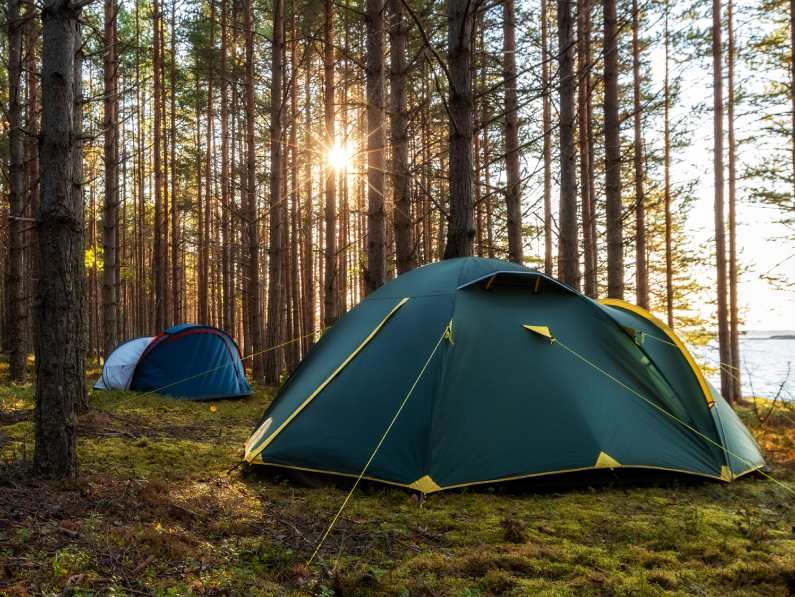
Your first camping trip should feel slightly boring from a logistical standpoint. Choose a state park or a developed campground with running water and a flush toilet within a 45-minute drive of your house. If everything goes completely wrong—if the tent leaks, the food spoils, or the temperature drops below freezing—you can simply throw everything into the trunk and sleep in your own bed.
There is no shame in a test run. Backyard camping or utilizing a campsite with a visible ranger station builds the muscle memory required for deeper excursions later. You need to learn how to operate your stove and manage your camp kitchen in a low-stakes environment before attempting to do so in the backcountry during a downpour.
The Myth of the Campfire Feast
First-time campers almost always overcomplicate their menu. They envision cooking elaborate steak dinners or complex stews over an open flame, replicating the curated lifestyle videos they watch online.
Cooking over a campfire is an art form that requires precise coal management and immense patience. It is entirely different from cooking on a kitchen stove.
Wood fires provide inconsistent, volatile heat. One side of your pan will be scorching at $500^\circ\text{F}$ while the other is lukewarm. The smoke will sting your eyes, and soot will coat your cookware permanently.
For your initial outing, eat food that only requires boiling water or minimal assembly. Dehydrated meals, pre-made sandwiches, or simple pasta dishes remove a massive layer of stress from your evening. You are there to adjust to the rhythm of darkness and nature, not to audition for a culinary television show. If you must have a hot meal, use a simple, single-burner propane stove. It offers a predictable flame and works instantly, regardless of how damp the surrounding firewood happens to be.
The Cotton Trap
The old adage among search and rescue teams is grim: cotton kills. Yet, the average beginner packs jeans, cotton hoodies, and canvas sneakers for their first weekend in the woods.
Cotton is a hydrophilic material. It absorbs water like a sponge and holds it against your skin. When you sweat during a afternoon hike or get caught in a light mist, cotton fibers retain that moisture, dropping your body temperature rapidly as soon as the sun goes down.
Synthetic materials like polyester and nylon, or natural fibers like merino wool, are hydrophobic. They wick moisture away from your skin and dry quickly. You do not need to purchase top-tier mountaineering apparel, but you must audit your closet before you leave. Leave the denim at home. Pack gym clothes, fleece jackets, and synthetic socks. Staying dry is the absolute baseline for staying warm and maintaining your morale when the weather turns sour.
The Hidden Logistics of Human Waste
No one likes to discuss sanitation, so beginner guides gloss over it with vague references to leaving no trace. This silence leaves novices completely unprepared for the reality of campsite hygiene.
If you are staying at a developed campground, the infrastructure is there, but it is rarely pristine. Bring your own toilet paper and hand sanitizer. Do not assume the vault toilet will be stocked at midnight.
If you venture into primitive areas, the rules change entirely. You cannot simply dig a shallow scrape behind a bush. You must learn to dig a proper cathole—six to eight inches deep, precisely in the organic soil layer where microbes can decompose the waste.
Furthermore, you must be prepared to pack out your used hygiene products. It is unpleasant to think about, but ignoring these logistics leads to contaminated water sources and ruined campsites for everyone else. If the thought of managing your own waste in a small plastic bag makes you deeply uncomfortable, you belong in an established campground with running water, and there is absolutely nothing wrong with that limitation.
Nature is Destructively Indifferent
The ultimate shock for a first-time camper is the sensory assault of a true night outdoors. The wilderness is not a quiet sanctuary; it is incredibly loud. Leaves rustle, small rodents sound like black bears moving through the brush, and wind hitting a tent fly can sound like gunfire.
Your brain, conditioned by quiet bedrooms and predictable ambient noise, will amplify every sound into a threat.
Pack earplugs. This is the single cheapest, most overlooked piece of gear that can save a trip. Accepting that the woods are active at night—and that you are not the center of attention for every nocturnal predator—is a mental hurdle every successful camper must clear. The environment does not care about your comfort, your expectations, or your expensive gear list. It simply exists. Success lies entirely in your willingness to adapt your mindset to that indifference, rather than trying to force the wilderness to conform to your desires.