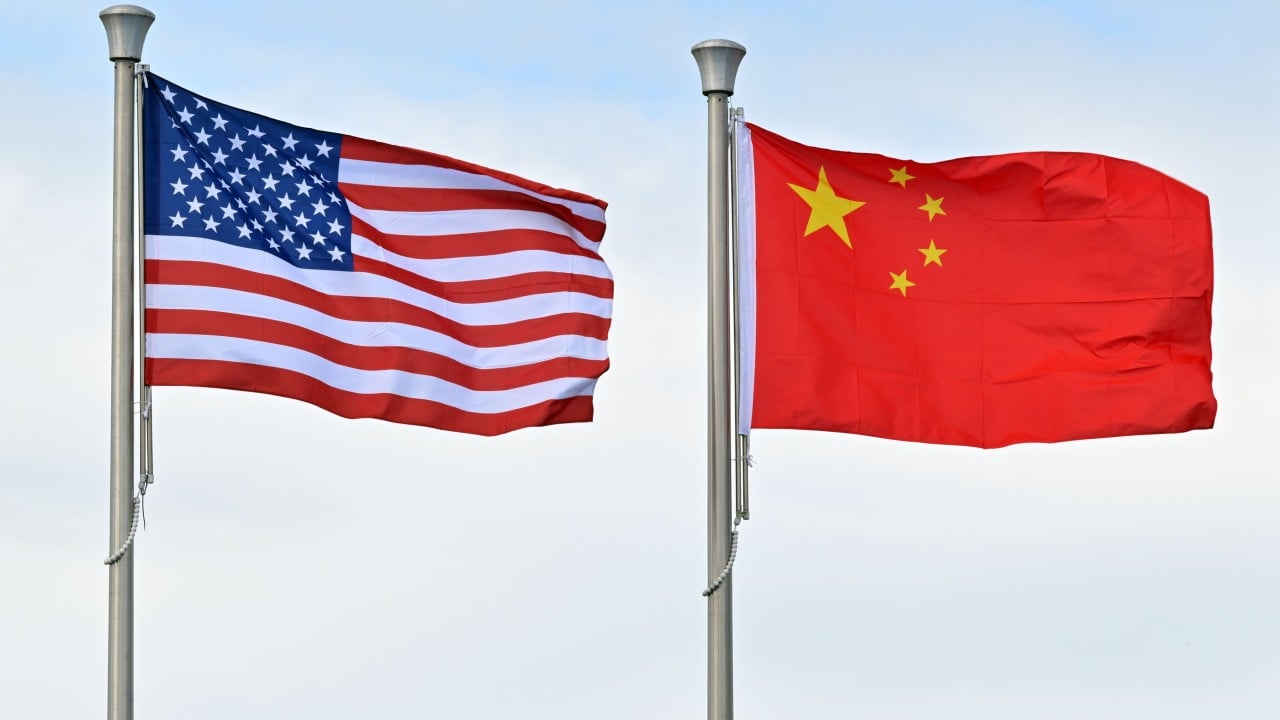
For the first time in more than two decades of global polling, the international community has delivered a stunning vote of no confidence to Washington. According to the landmark July 2026 survey by the Pew Research Center, China is now viewed more favorably than the United States in 25 of the 36 nations polled, marking a historic geopolitical inversion. This is not a temporary statistical aberration. It is a fundamental realignment of global soft power, driven by a series of aggressive, unilateral American foreign policy actions that have alienated even its closest allies and left a massive diplomatic vacuum for Beijing to fill.
The data paints an unforgiving picture of an empire in retreat. While Washington has spent the last two years locked in escalating trade disputes, regional warfare, and erratic territorial threats, Beijing has quietly played the long game. The result is a dramatic psychological shift across six continents, fundamentally changing how the world perceives stability, reliability, and leadership.
The Day the American Brand Flipped
For generations, the United States maintained an almost unassailable lead in global public opinion. Even during periods of high tension, such as the invasion of Iraq, the underlying promise of the American model retained a certain allure.
That allure has vanished.
The most jarring aspect of the Pew data is not that Beijing is winning over the global south, but that it has successfully breached the fortress of Western alliances. Longtime U.S. partners have effectively switched sides in the court of public opinion.
Take Canada, for example. In 2023, 57% of Canadians held a favorable view of the United States, compared to a meager 14% for China. By mid-2026, those numbers completely inverted: Canadian favorability toward the U.S. plummeted to 33%, while positive views of China rose to 44%. This represents a staggering loss of neighborly goodwill.
The catalyst for this collapse was not a sudden burst of Canadian affection for Chinese authoritarianism. Instead, it was a direct reaction to Washington's aggressive trade policies—including a barrage of tariffs on Canadian goods—and erratic rhetoric suggesting Canada could be absorbed as the 51st American state.
A similar story has unfolded across Europe. In the United Kingdom, where the U.S. enjoyed a comfortable 32-percentage-point advantage over China just three years ago, the two powers are now viewed on roughly equal terms. Major European powers like France, Germany, Spain, and Italy have all seen their public majorities tilt away from Washington and toward Beijing.
These shifts are not happening in isolation. They are the direct consequence of a hyper-nationalist American foreign policy that treats allies as adversaries and international agreements as expendable.
Why the Soft Power Machine Ran Out of Gas
To understand how Washington lost its grip, one must look at the specific policy decisions that dismantled its reputation. Global public opinion does not change overnight; it reacts to tangible actions.
The second Trump administration’s foreign policy has been characterized by high-stakes brinkmanship and unilateral interventions. Key events have severely damaged the U.S. image abroad:
- The War with Iran: The joint military campaign launched by the United States and Israel against Iran triggered widespread international alarm, cementing the perception that Washington is a driver of global instability rather than a keeper of peace.
- Territorial Threats: Bizarre and aggressive proposals, such as threats to annex Greenland and parts of Canada, turned diplomatic relationships into late-night comedy fodder and serious security concerns.
- Unilateral Interventions: High-profile operations, including the military raid that captured Venezuela’s leader, signaled to the rest of the world that Washington no longer respects international borders or sovereignty.
- Global Tariffs: Imposing sweeping tariffs on virtually every major economy in the world successfully united both friends and foes in their economic resentment of the U.S..
While Washington was actively burning bridges, Beijing was rebuilding theirs. After hitting a reputational low point during the early years of the pandemic, China has steadily rehabilitated its image.
Chinese President Xi Jinping has positioned his country as the stable, predictable alternative to an unpredictable and volatile United States. In Pew’s confidence ratings for world leaders, Xi now outpolls U.S. President Donald Trump, with 31% of respondents expressing confidence in Xi compared to just 21% for Trump.
Beijing did not achieve this through ideological persuasion. It achieved it through transactional reliability. In middle-income countries, China is increasingly seen as a partner that delivers infrastructure, respects local priorities, and refrains from lecturing sovereign nations about their internal governance.
The Freedom Gap Is Evaporating
Historically, the ultimate defense of American global hegemony was its moral high ground. Even when U.S. foreign policy was destructive, Washington could always point to its domestic freedoms and democratic values as a model for the world.
That defense has crumbled.
While Pew’s data shows the United States still holds a technical lead over China regarding respect for personal freedoms, that gap is closing at an alarming rate. This narrowing is not because China has suddenly embraced civil liberties. It is because global perceptions of American domestic freedom have precipitously declined.
Since 2021, the share of people who believe the U.S. government respects the personal freedoms of its own citizens has dropped in almost every single country surveyed. Political polarization, civil unrest, and highly publicized domestic policy battles in the U.S. have been broadcast to a global audience. The world no longer looks at American democracy and sees a shining city on a hill. They see dysfunction.
In several countries, including Bangladesh, Indonesia, Malaysia, Thailand, and parts of the Middle East, respondents actually rated the Chinese government as more respectful of personal freedoms than the American government.
Furthermore, the very concept of Western-style democracy is losing its luster in the developing world. Extensive Chinese state media campaigns, facilitated by a massive expansion of diplomatic posts and the global dissemination of the Xinhua news agency, have successfully pushed a powerful counter-narrative: that American-style democracy leads directly to polarization, economic instability, and social chaos, while China’s model offers order and prosperity.
For many developing nations, the promise of stable economic growth is far more attractive than the chaotic reality of contemporary American democracy.
Where the Empire Still Holds Ground
Despite the massive shift in global sentiment, Washington's influence has not been completely eradicated. The collapse is uneven, and the U.S. still retains crucial geopolitical redoubts.
The United States maintains a positive margin over China in just six of the surveyed nations. Unsurprisingly, these are countries that face direct, existential security threats from Beijing's aggressive regional posturing.
| Country | U.S. Favorability | China Favorability | Key Geopolitical Factor |
|---|---|---|---|
| Israel | ~80% | 19% | Deep reliance on U.S. military and diplomatic backing. |
| Japan | Strong Lead | 11% | Direct territorial disputes in the East China Sea. |
| Philippines | Strong Lead | Low | South China Sea territorial conflicts. |
| South Korea | Strong Lead | Low | Regional security alliance against North Korea and China. |
| India | Strong Lead | Low | Active border disputes and geopolitical rivalry with Beijing. |
| Poland | Strong Lead | Low | Reliance on NATO and the U.S. to deter Russian aggression. |
In the Indo-Pacific, Beijing's heavy-handed naval maneuvers, weaponized coast guard patrols, and aggressive territorial assertions have kept its neighbors firmly in the American orbit. For Japan, the Philippines, and South Korea, the United States remains an indispensable security partner, regardless of how unpopular the current American president might be.
Similarly, Israel remains the ultimate outlier, with roughly eight in ten citizens holding a positive view of the U.S., a direct reflection of Washington's unwavering military support during recent regional conflicts.
Yet, outside of these critical strategic outposts, the trend line is clear. In Africa, Latin America, and Western Europe, the narrative of American leadership is actively dying.
Beijing Plays the Long Game While Washington Plays the Feud
The fundamental error of American foreign policy over the past decade has been the assumption that global dominance is a permanent state of affairs. Washington has operated under the belief that it can insult allies, ignore international norms, and weaponize the global financial system without facing long-term reputational consequences.
The Pew survey is a sharp warning that the world is moving on.
China’s rise in global popularity is not built on a foundation of shared democratic values or ideological affinity. It is built on the pragmatism of a superpower that shows up, builds roads, buys resources, and remains consistent.
As the United States continues to retreat into domestic political warfare and unpredictable foreign adventures, the rest of the world is adjusting to a new reality. They are choosing the partner that appears stable, even if that partner operates under an authoritarian banner. Washington can no longer rely on the prestige of its history to maintain its global position. If the United States cannot prove to the world that it is a reliable, peaceful, and constructive partner, it will find itself increasingly isolated in a world that has decided it no longer needs American leadership.