The myth of the unstoppable Chinese electric vehicle market finally shattered in January 2026. For years, the global narrative portrayed a relentless march of battery-powered progress, but the reality on the ground in Shanghai and Hangzhou has shifted from expansion to a desperate struggle for survival. In the first eleven days of the year, retail sales of new energy vehicles (NEVs) plummeted 38 percent compared to the previous year. This was not a minor correction. It was a structural breakdown that saw the sector lose nearly half its market share almost overnight, dropping from a dominant 60 percent to just 35.5 percent of total vehicle sales.
While the Western world watches Tesla’s stock price, the real story is being written by Geely. The automotive giant, led by the calculated ambition of Eric Li, has managed to do what once seemed impossible: outmaneuver both Tesla and BYD in the middle of a "suicide-style" price war. By the end of February 2026, Geely had effectively dethroned BYD as the top domestic seller for two consecutive months, a feat not seen since 2022. This shift reveals a grim new reality for the industry. Low-cost models are no longer just an entry point; they are the only reason anyone is still buying cars.
The Death of Brand Loyalty
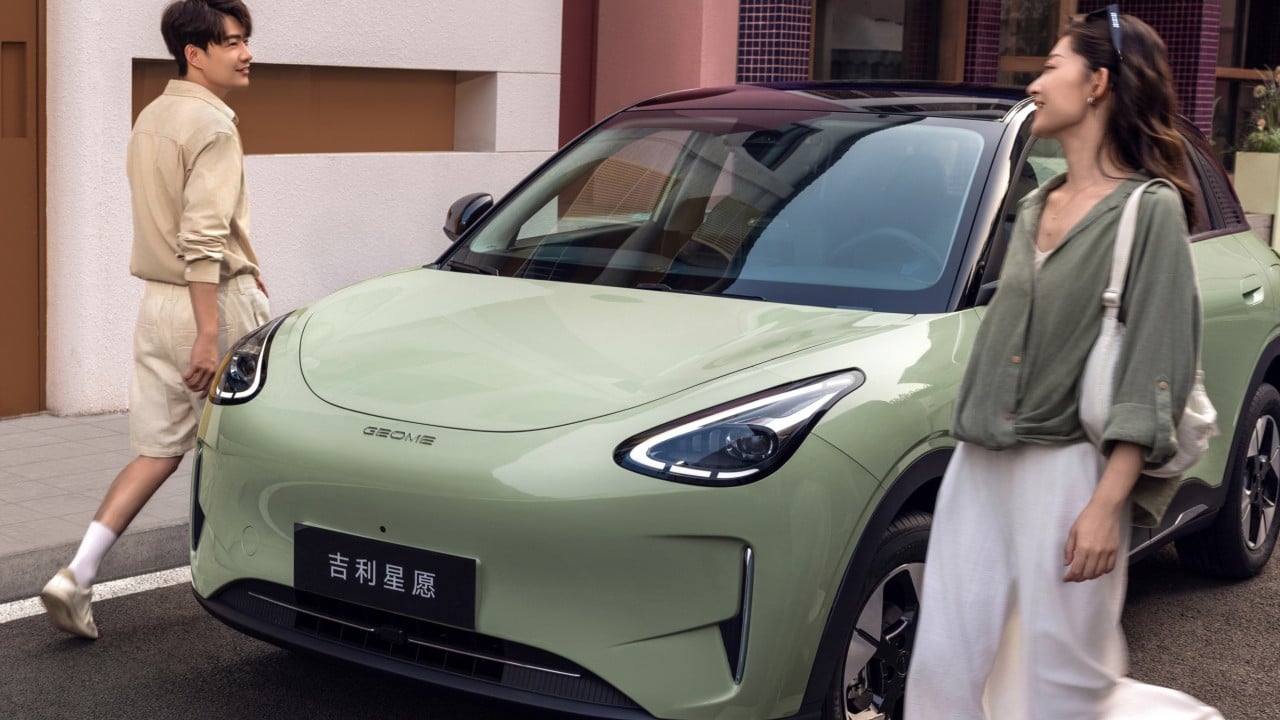
The Chinese consumer has become colder and more transactional than at any point in the last decade. Tesla, once the undisputed symbol of aspirational tech, is watching its crown slip. The Model Y, formerly the best-selling car in the world, was unseated in 2025 by the Geely Galaxy Xingyuan. This is a compact hatchback that starts at roughly $9,700. When a car that costs less than a high-end Swiss watch can match the utility of a premium SUV for a daily commute, the "status" of the Tesla badge begins to evaporate.
The price war has entered a phase industry insiders call "involution"—a race to the bottom where companies add premium features like lidar and massage seats while simultaneously slashing prices. It is a value-destroying spiral. In this environment, loyalty is a luxury no one can afford. BYD, despite its massive scale, saw its domestic sales collapse by 65 percent in February 2026. The company that was supposed to be the "Tesla Killer" is now being hunted by its own domestic rivals who have closed the gap on battery technology and software.
Geely’s Vertical Defenses
Geely’s ascent during this deep winter is not an accident of pricing alone. It is the result of a ruthless, decades-long strategy of vertical integration that goes far beyond what even Elon Musk has attempted. While others are struggling with thin margins, Geely is leveraging its "One Geely" reform to consolidate its sprawling empire of brands, which includes Volvo, Zeekr, and Lynk & Co.
The company is no longer just a car manufacturer; it is a space and software power. By March 2026, Geespace—Geely’s satellite arm—had 41 satellites in low Earth orbit. This network provides high-precision positioning and satellite-to-car connectivity that domestic rivals simply cannot match. This isn't just about GPS. It is about a unified vehicle-wide AI architecture, dubbed Full-Domain AI 2.0, which allows the car’s chassis, safety systems, and cockpit to communicate through a central "super brain." By owning the satellites, the chips, and the software, Geely can squeeze costs in ways that traditional manufacturers find impossible.
The Margin Squeeze Paradox
The tragedy of the current market is that lower prices are not creating new demand. Instead, they are simply cannibalizing the profits of the remaining players. Estimates suggest the Chinese EV industry has burned through approximately $68 billion in economic value over the last three years of price warfare. For the 50-plus unprofitable EV makers still operating in China, 2026 is the end of the road.
Government intervention has finally arrived, but it may be too little, too late. Regulators are now attempting to impose price floors to stop "below-cost" sales that threaten to bankrupt the entire supply chain. These new rules favor mid-to-high-end products priced above ¥200,000, yet the market demand remains stubbornly fixed on the low end. It is a fundamental mismatch between state ambition and consumer exhaustion. Household debt in China is high, and confidence is fragile. The average buyer isn't looking for a "computer on wheels" anymore; they are looking for the cheapest possible way to get from point A to point B without paying for gasoline.
The Export Lifeline
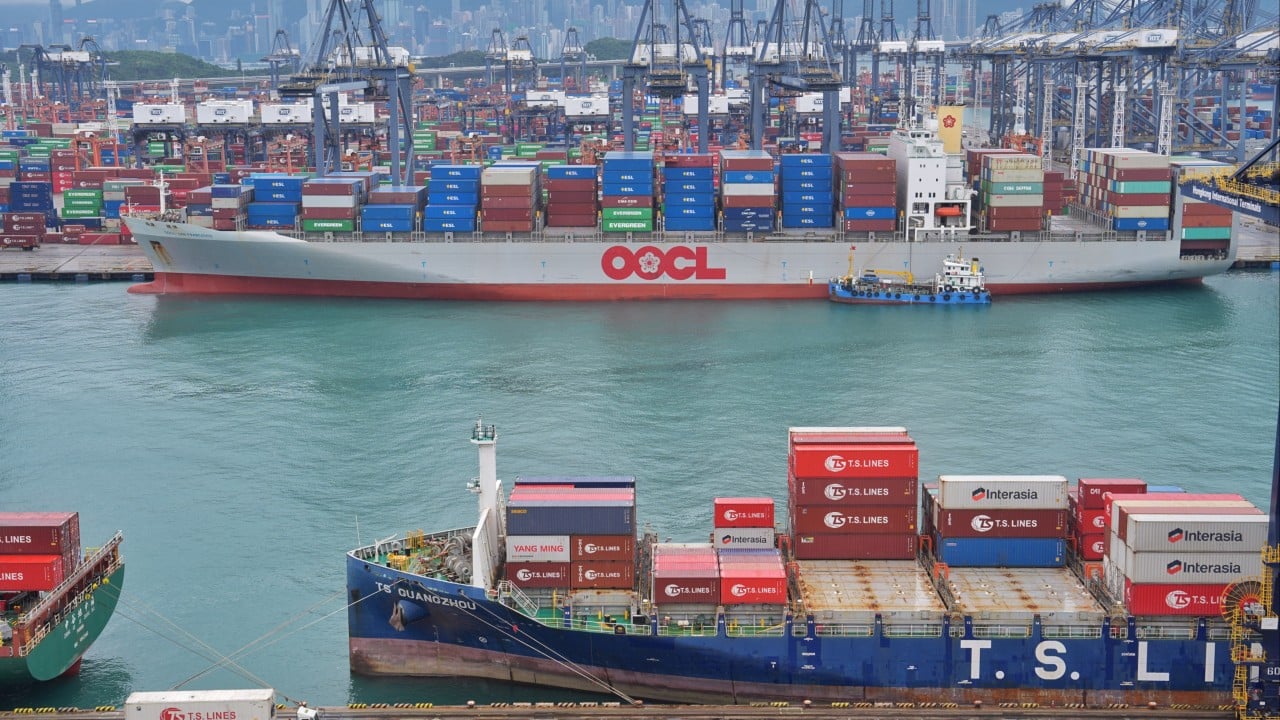
With the domestic market in "deep winter," Chinese automakers are turning to exports with a ferocity that has terrified global regulators. Exports jumped nearly 90 percent year-over-year at the start of 2026. This isn't a sign of strength, but a sign of desperation. The domestic market is so overcrowded that overseas sales have become the only way to keep factory lines moving.
Geely and BYD are currently in a bidding war for manufacturing plants in Mexico, a strategic move to sidestep North American tariffs. They are also pivoting aggressively to plug-in hybrids (PHEVs). While the West focused on pure electrics, the Chinese market realized that PHEVs offer the best of both worlds in a cooling economy: lower upfront costs and zero range anxiety. Exports of these vehicles to Europe soared sixfold in 2025, proving that Chinese brands are more than willing to change their entire product philosophy to survive a trade wall.
The Tech Gap Closes
For years, Tesla’s "moat" was its Full Self-Driving (FSD) software and its Supercharger network. That moat is now a puddle. In recent head-to-head tests, the Zeekr 7X—Geely’s premium electric SUV—has been rated by independent reviewers as superior to the Tesla Model Y in ride quality, interior luxury, and charging speed. The 7X utilizes an 800V architecture that makes Tesla’s 400V systems look antiquated.
Wait-and-see behavior has become the norm among buyers. Why buy a Model Y today when a cheaper, faster-charging rival with a better interior might launch next month? This rapid innovation cycle is a double-edged sword. It keeps Chinese brands at the forefront of technology, but it also destroys the resale value of their vehicles, further spooking consumers who see their "investment" lose 40 percent of its value in a single year.
The industry has moved beyond the era of "disruption." We are now in the era of consolidation by attrition. Only those with the deepest pockets and the most integrated supply chains will be standing by December. Geely has shown it can survive the frost by building its own sun, but for the rest of the pack, the winter is just beginning.
Would you like me to analyze the specific patent filings for Geely's satellite-to-vehicle communication systems to see how they compare to Starlink’s potential automotive applications?