The British energy system is currently screaming, though the sound is muffled by government press releases designed to project calm. As of March 9, 2026, Great Britain is operating with roughly two days of natural gas in storage. While the Department for Energy Security and Net Zero insists there is no cause for alarm, the reality on the water tells a different story. The escalating conflict between the United States, Israel, and Iran has effectively choked the Strait of Hormuz, a maritime juggernaut that handles 20% of the world’s liquefied natural gas (LNG). For a nation that shuttered its primary storage facilities years ago in a fit of free-market optimism, "two days" isn't a statistic. It’s a gamble.
To understand why the UK is sweating while its European neighbors sit on weeks of reserves, you have to look past the current missiles over Tehran. Britain’s energy insecurity is a self-inflicted wound, the result of a decade-long bet that the global market would always be liquid, always be cheap, and always be accessible. That bet just went bust.
The Just in Time Delusion
For years, UK energy policy operated on a "just-in-time" delivery model, much like a supermarket stocking milk. The logic was simple: why pay to maintain massive, expensive underground storage tanks when you can simply buy gas from Norway via a pipe or from Qatar via a ship whenever you need it?
This lean-inventory strategy worked until the world stopped being predictable. In 2017, the closure of the Rough storage facility off the coast of Yorkshire stripped the UK of 70% of its storage capacity. Although it was partially reopened in 2022, it currently operates at a fraction of its former glory. Consequently, the UK can store about 12 days of gas at absolute maximum capacity. Today, we are sitting at less than 7,000 gigawatt hours—enough to keep the lights on and the boilers humming for about 48 hours if every single import pipe and tanker suddenly vanished.
The government’s defense is that we don’t need storage because we have "diverse supply routes." They point to the North Sea and the pipelines from Norway. But Norway is already pumping at near-limit, and North Sea production is in a terminal decline. When the global price spikes because a tanker is diverted from the Atlantic to a higher-paying buyer in Tokyo, the "diversity" of your supply doesn't matter. The price does.
When Tankers Turn Around
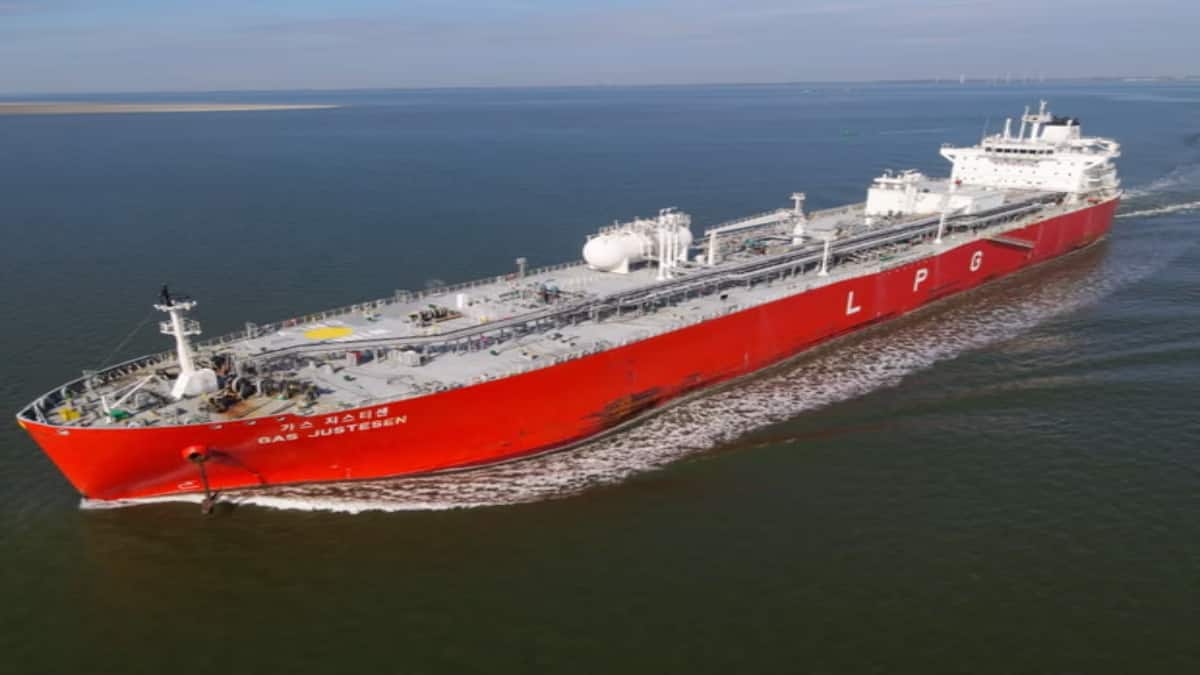
The most immediate threat isn't a physical shortage—yet. It is a price-driven exodus. In the last 72 hours, at least two massive LNG tankers originally destined for European terminals have pulled a U-turn in the mid-Atlantic, redirected toward Asia.
Why? Because the Iran conflict has caused Asian spot prices to skyrocket to over $24 per MMBtu. Market traders are cold-blooded. They will pay the diversion penalty and send that gas to the highest bidder every single time. Britain, as a "price-taker," must now outbid the world to keep those ships coming to the Isle of Grain or South Hook.
The numbers are staggering. Before the US-Israeli strikes on Iran began, UK month-ahead gas prices sat at roughly 78p per therm. Today, they are hovering near 137p. That is a 75% increase in a week.
The Storage Gap
Comparing Britain to its neighbors reveals the sheer scale of the vulnerability. While Westminster officials talk about "resilience," the data from Gas Infrastructure Europe paints a grim picture of the continent's safety nets:
| Country | Days of Storage (Average) |
|---|---|
| Netherlands | 123 days |
| France | 103 days |
| Germany | 89 days |
| Great Britain | 2 to 12 days |
The UK's lack of a buffer means that every geopolitical tremor in the Middle East is felt instantly in the City of London and, eventually, on the smart meters of every household in the country. We have swapped physical security for market flexibility, and the market is currently in a state of high-octane panic.
The Qatar Factor
A significant portion of the current anxiety stems from QatarEnergy. As the world’s second-largest LNG exporter, Qatar is the lynchpin of the UK’s winter supply strategy. Last week, Qatar officially declared force majeure at two major facilities following drone activity and the effective closure of the Strait of Hormuz.
While the UK only gets about 1% of its total gas directly from Qatar, the loss of that volume from the global pool creates a vacuum. When Qatar goes offline, everyone else scrambles for the remaining supply from the US and West Africa. This creates a bidding war that the UK, already struggling with high inflation and a shaky post-budget economy, is ill-equipped to win.
The Policy Failure Nobody Wants to Admit
The current crisis has exposed a fundamental flaw in the UK's "Transitional Energy" plan. Energy Secretary Ed Miliband has doubled down on the argument that the only way to escape this volatility is to move faster toward renewables. He is technically correct. Wind and solar don't depend on the Strait of Hormuz.
However, you cannot heat a home in a March cold snap with a wind farm that hasn't been built yet. The transition period—the "bridge" between fossil fuels and a clean grid—requires a stable supply of gas. By allowing the nation's storage infrastructure to rot, successive governments have burned the bridge while we were still standing in the middle of it.
Industry analysts are now calling for a radical shift. Jon Butterworth, CEO of National Gas, has been blunt: the UK needs either three new major gas storage facilities or a fleet of six massive floating LNG barges to act as a permanent buffer. Without them, the UK remains a hostage to fortune.
The Coming Price Cap Whiplash
For the average consumer, this isn't just a story about pipes and tankers. It’s a story about the July energy price cap. While a small reduction is expected in April, Cornwall Insight is already warning that the July cap could jump by 10% or more if the Middle East conflict persists.
The government’s current strategy is to wait and pray for a de-escalation. But hope is not a strategy for national energy security. As long as the UK’s gas reserve is measured in hours rather than months, every headline out of Tehran will continue to dictate the cost of living in Birmingham.
The UK is currently the only major economy in Europe that treats its energy supply like a "Deal of the Day" on an app. We are running a G7 economy on the equivalent of a "low fuel" light that has been blinking for a week.
Fixing this will require billions in infrastructure investment that no politician wants to admit is necessary. Until that happens, we are just one blocked shipping lane away from a cold, dark reality.
Would you like me to analyze the specific impact of the 137p/therm spike on the projected July 2026 Ofgem price cap for UK households?