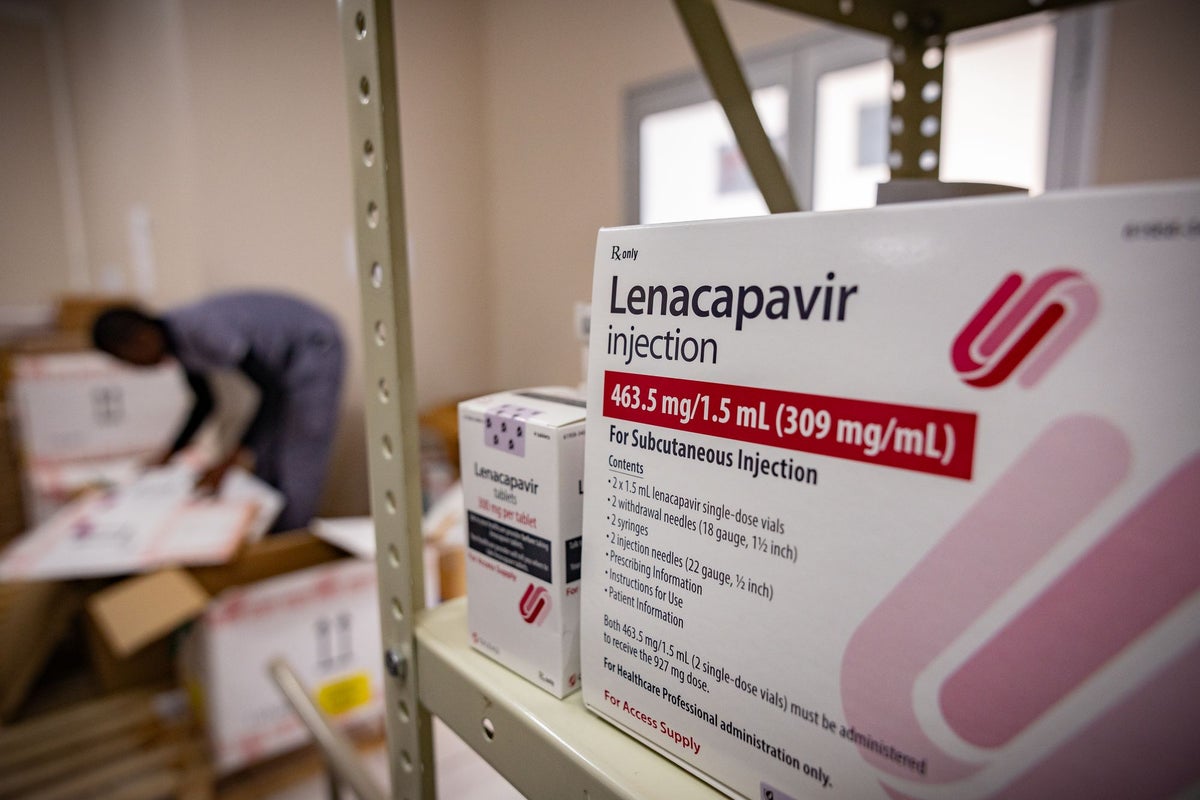
The recent decision by NHS England to provide lenacapavir to patients with drug-resistant HIV is a genuine medical victory for the hundreds of people in the United Kingdom who have run out of options. By targeting the viral capsid—the protective outer shell of the virus—rather than the standard enzymes that traditional therapies attack, this drug offers a second chance at life. However, while headlines celebrate this as a breakthrough, a far more uncomfortable reality persists outside the borders of wealthy nations. The gap between those who can access this treatment and those who are left waiting is widening into an ethical abyss.
In the United Kingdom, the rollout is designed to treat approximately 300 eligible patients over the next three years. These individuals will move from a regimen of daily pills, which their bodies can no longer process effectively, to a schedule involving tablets followed by bi-annual injections. This is an incredible improvement in quality of life for a specific, suffering group. It is a win for the NHS and the clinicians who advocated for it. But when we look at the global trajectory of HIV care, the local success highlights a systemic failure.
Pharmaceutical corporations often frame their access strategies around voluntary licensing and tiered pricing. The narrative is that these methods balance the need for corporate survival with the moral imperative to save lives. In practice, this often functions as a gatekeeping mechanism. Gilead Sciences, the manufacturer of lenacapavir, has engaged in licensing agreements that theoretically allow for generic production in lower-income countries. Yet, the fine print of these agreements consistently excludes middle-income nations where a quarter of new HIV infections occur. Countries such as Brazil, Argentina, and Mexico, which possess the manufacturing infrastructure to produce these drugs at scale, remain outside the tent.
The cost disparity is staggering. While the drug can command prices upward of $28,000 per patient annually in the United States, independent analysts suggest it could be produced for less than $40 per person if generic manufacturing were permitted to operate without these artificial restrictions. We are seeing a repetition of history. During the early 2000s, the fight for access to antiretroviral therapy was defined by similar corporate reluctance to allow generic competition. It took years of intense public pressure to force the industry to recognize that the right to profit does not outweigh the right to exist.
Access to medicine should not be determined by a country's gross domestic product. When a drug is hailed as a major advancement, the measurement of its success should not be how many wealthy patients are stabilized, but how quickly it can be distributed to the highest-burden populations. Currently, we are seeing a drip-feed approach. Donations and limited supplies channeled through global funds are stopgaps, not solutions. They allow manufacturers to maintain control over the supply chain while offering a veneer of humanitarianism.
True innovation is not merely a molecule that stops a virus; it is the infrastructure that puts that molecule into the arm of a person living in a remote district in Eswatini or a marginalized neighborhood in Peru. The technical challenge of producing lenacapavir is manageable. The political and economic friction is the real barrier. As long as generic companies are blocked from manufacturing the drug with full freedom of distribution, the global epidemic will continue to outpace the tools we have to fight it.
We also have to question the reliance on public-private partnerships that lack transparency. Without clear mandates that require companies to provide their technology to all regions in need, we are essentially asking for permission to save lives. This arrangement leaves the most vulnerable populations at the mercy of corporate goodwill. Goodwill is fickle. Public health is supposed to be a non-negotiable priority.
The NHS model serves as a proof of concept. It demonstrates that when a healthcare system prioritizes the clinical needs of its people, it can integrate expensive, highly effective drugs into the standard of care. It proves the science works. If the objective is truly to end HIV transmission by 2030, the strategy must change from regional containment to global mass production.
The medicine works. The supply exists. The only thing missing is the will to treat the entire world, rather than just the parts that can afford the ticket. The next time a headline calls a drug a miracle, ask yourself whose life it is actually protecting, and who is being told to wait.