The concept of a "Golden Dome" over Taiwan or a satellite-cluttered orbital shell isn't just a matter of military procurement. It is the physical manifestation of a cold war that has moved past rhetoric and into the hard physics of kinetic interception and orbital mechanics. While diplomats exchange pleasantries in neutral capitals, the industrial bases of the United States and China are locked in a sprint to dominate the two theaters that will define the next century: the low-earth orbit (LEO) and the electromagnetic spectrum.
This isn't a speculative future. It is happening now. For a more detailed analysis into this area, we recommend: this related article.
The immediate friction point centers on the "Golden Dome," a multi-layered integrated air and missile defense system intended to make the cost of cross-strait aggression prohibitively expensive. But the hardware is only half the story. The true battle is over the data links that tie these systems together. If you cannot see the threat, you cannot hit it. If you cannot communicate with the battery, the launcher is just an expensive heap of metal. As China scales its Long March launch cadence to rival SpaceX, the vacuum of space is becoming the most crowded—and most dangerous—front in human history.
The Myth of the Unimpenetrable Shield
Defense contractors love the term "shield." It implies a static, reliable barrier. The reality of the Golden Dome—a term often applied to Taiwan’s evolving defense architecture—is far more chaotic. It is a desperate, shifting mosaic of Patriot PAC-3 units, indigenous Tien Kung (Sky Bow) interceptors, and decentralized radar nodes. For additional details on this issue, extensive reporting can also be found on Wired.
The fundamental problem is math.
In any saturation strike, the attacker holds the advantage of cost. An interceptor missile often costs five to ten times more than the one-way attack drone or the ballistic missile it is designed to destroy. China has spent the last decade perfecting the "quantity has a quality of its own" strategy. By utilizing massive swarms of low-cost munitions, they aim to bleed the Golden Dome dry of its limited magazine capacity.
To counter this, the focus has shifted from bigger missiles to smarter software. The U.S. is pushing for an "All-Domain" approach, where a sensor on a F-35 fighter jet can hand off targeting data to a naval destroyer or a land-based battery instantly. It sounds efficient on paper. In practice, it creates a massive, vulnerable surface area for cyber warfare. If a competitor can't blow up the dome, they will simply turn off the lights.
The Orbital Land Grab
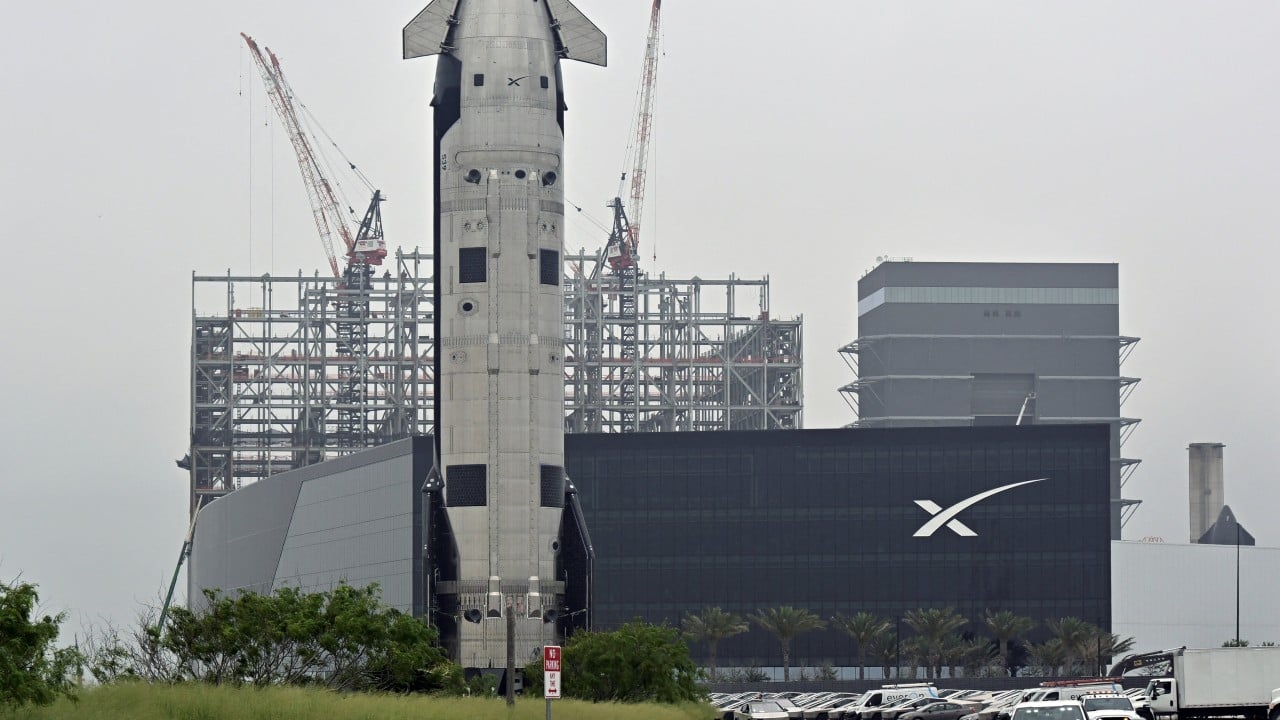
While the world watches the South China Sea, the real territory is being staked out 550 kilometers above our heads. The era of the monolithic, billion-dollar spy satellite is over. We have entered the age of the "proliferated" constellation.
The U.S. Space Force and private entities like SpaceX have proven that thousands of small satellites are better than five big ones. You can’t easily take out a network of 5,000 nodes. China has watched this development with simmering anxiety. Their response, the "G60 Starlink" and the "Guowang" constellation projects, represents a massive state-funded effort to occupy the remaining "prime real estate" in LEO.
This is a race for orbital slots and frequency spectrum.
Orbits are not infinite. There are specific "sweet spots" that offer the best coverage for telecommunications and surveillance. By launching thousands of satellites, China isn't just building a network; they are engaging in a form of orbital squatting. Once a satellite occupies a slot and uses a specific frequency, it becomes diplomatically and technically difficult to dislodge.
The danger here isn't just military. It’s debris. The "Kessler Syndrome"—a theoretical scenario where a single collision creates a cloud of debris that destroys everything else in orbit—is no longer a fringe theory. It is a genuine risk that neither side seems willing to blink first to avoid.
The Silicon Chokehold
You cannot build a Golden Dome or a satellite constellation without high-end semiconductors. This is the bedrock of the entire conflict. The U.S. export controls on advanced chips and the machinery to make them are not merely trade hurdles; they are acts of industrial sabotage designed to freeze China’s military-technological complex in time.
Beijing is currently pouring hundreds of billions into "de-Americanizing" its supply chain. They are focused on mature-node chips—the kind used in cars, washing machines, and, crucially, most military hardware. While they struggle to produce the 3-nanometer chips required for the latest AI, they are cornering the market on the "legacy" chips that keep the world running.
This creates a dangerous dependency.
If the West loses access to Chinese-made legacy chips, the defense industrial base stalls. We find ourselves in a paradoxical situation where the missiles designed to deter China require components that are increasingly influenced by Chinese supply chains.
The Hypersonic Gap and the End of Reaction Time
For decades, the U.S. relied on the fact that its carrier strike groups were essentially untouchable. Hypersonic glide vehicles (HGVs) have erased that certainty. These weapons travel at speeds exceeding Mach 5 and, unlike traditional ballistic missiles, they can maneuver.
This makes them nearly impossible to track with traditional radar.
The "Golden Dome" was built to stop things that move in predictable arcs. A hypersonic missile skips off the atmosphere like a stone on a pond. By the time a ground-based radar detects it, the window for interception is measured in seconds, not minutes. This has forced a radical shift in American naval doctrine. The carrier is no longer the predator; in many scenarios, it is the prey.
To adapt, the U.S. is pivoting toward "distributed lethality"—spreading its firepower across many smaller, unmanned vessels rather than concentrating it in one massive, vulnerable target. It is a move from the "big ship" era to the "swarm" era.
The Quiet War for the Deep Sea
While the skies and space capture the headlines, a much darker game is being played on the ocean floor. The global economy runs on subsea cables. Nearly all transcontinental internet traffic passes through these vulnerable strands of fiber-optic glass.
China’s "Digital Silk Road" includes a massive push to lay its own subsea cables, bypassing Western-controlled chokepoints. This isn't just about speed; it's about intelligence. He who owns the cable owns the data. We are seeing a bifurcation of the internet, where the physical infrastructure of the web is being split into two distinct, mutually exclusive spheres of influence.
If a conflict breaks out, these cables will be the first targets. Cutting a cable is easier than shooting down a satellite, and the economic impact is instantaneous. A localized conflict in the Pacific could effectively "darken" entire nations within minutes, crashing financial markets and severing command-and-control structures.
The Industrial Base Problem
The most uncomfortable truth for Western policymakers is the state of their own factories. Decades of offshoring and "just-in-time" manufacturing have left the U.S. defense industrial base brittle. During the Cold War, the U.S. could out-produce anyone. Today, it struggles to replenish stockpiles of basic artillery shells and short-range missiles.
China, conversely, has the world’s largest shipbuilding capacity and a manufacturing sector that can pivot to wartime footing with the stroke of a pen.
Building a Golden Dome requires a massive, sustained output of high-tech components. If the U.S. cannot scale its production to match the attrition rates of a modern, high-intensity conflict, all the technological superiority in the world won't matter. You cannot win a war of attrition with boutique, hand-crafted weapons systems.
The False Promise of Deterrence
We have long operated under the assumption that economic interdependence makes war impossible. That theory is dead. Russia’s invasion of Ukraine proved that political and nationalistic goals can easily override economic logic.
Beijing has watched the Western response to Russia with clinical intensity. They are actively "sanction-proofing" their economy, stockpiling gold, and diversifying their energy sources away from Western-controlled routes like the Strait of Malacca. They are preparing for a world where they are disconnected from the dollar-based financial system.
This makes the "Golden Dome" and the space race even more critical. When economic deterrence fails, only physical deterrence remains.
The New Rules of Engagement
We are entering a period where the line between "peace" and "conflict" is permanently blurred. Gray-zone tactics—cyber-attacks, maritime militia harassment, and orbital interference—are the new normal. These actions are designed to stay just below the threshold of open war while slowly eroding the opponent's position.
The U.S. and its allies are forced to play a defensive game, reacting to provocations rather than setting the agenda. The Golden Dome is a defensive concept; the space race is a reactive one. To regain the initiative, the West has to do more than just build better shields. It has to rethink the entire architecture of global influence, from the seabed to the stars.
The hardware is impressive, and the cost is staggering. But the ultimate deciding factor won't be a specific missile or a satellite. It will be the ability to endure a prolonged, systemic shock to the global order.
Stop looking for a single "game-changing" technology. In this struggle, there are no shortcuts. There is only the relentless, grinding application of industrial capacity and the cold math of the high frontier. The side that realizes this first—and acts on it with the most ruthlessness—will be the one that dictates the terms of the next century.