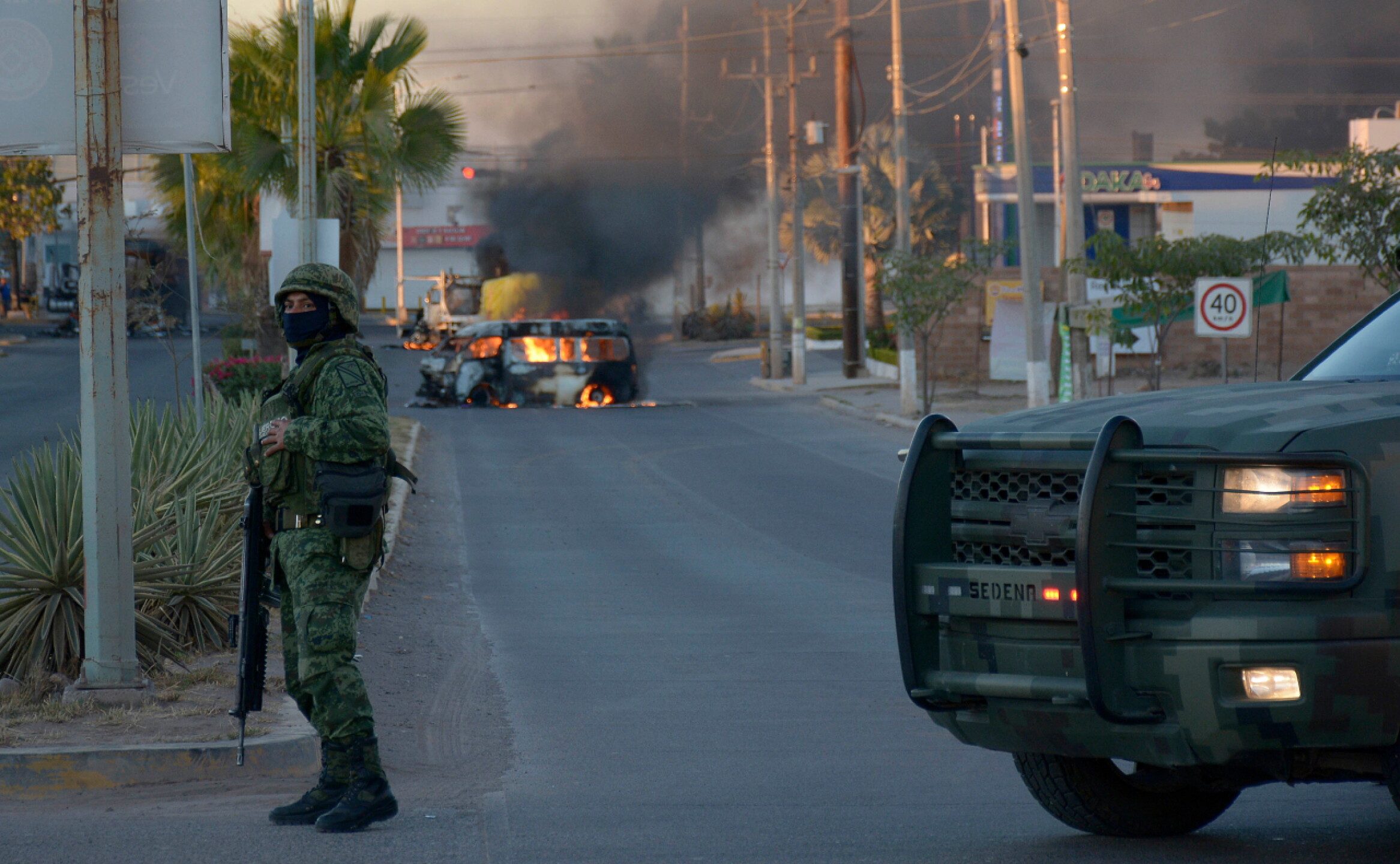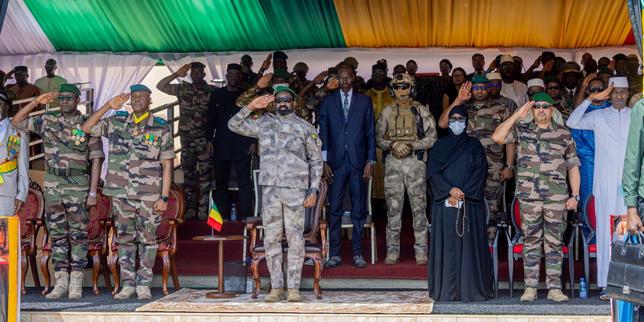
The partnership between Mali’s military government and Russian state-linked forces is no longer a temporary marriage of convenience. It has become a permanent structural reality. While Bamako frames this alliance as a sovereign choice to reclaim territory from jihadist insurgencies, the actual cost is being paid in gold, autonomy, and civilian blood. The transition from Western security architecture to a total reliance on the Kremlin’s mercenaries represents the most significant geopolitical shift in West Africa since the end of the Cold War.
Mali’s leadership, headed by Colonel Assimi Goïta, effectively bet the nation’s future on the promise of "unrestricted" military support. They traded the bureaucratic, often moralizing oversight of the French-led Operation Barkhane and the UN’s MINUSMA for the ruthless efficiency of the Wagner Group—now rebranded and reorganized as the Africa Corps under the direct control of the Russian Ministry of Defense. This wasn't just a change in uniforms. It was a complete overhaul of how the state exercises power.
The Mirage of Sovereignty
The central narrative pushed by the transition government involves "Kidal," the northern stronghold that had long eluded central control. When Malian forces, flanked by Russian operatives, entered the city in late 2023, it was presented as a definitive victory. It looked like the gambit had paid off. However, holding territory is fundamentally different from seizing it. The capture of Kidal served as a powerful propaganda tool, yet the security situation in the surrounding regions has since entered a volatile downward spiral.
Sovereignty is a hollow word when the state cannot pay its own security bills. Russia does not provide "aid" in the traditional sense. It provides services. These services are financed through a combination of direct cash payments and the granting of mining concessions. In the gold-rich regions of southern and western Mali, Russian interests have expanded their footprint, often operating with little to no oversight from the Malian Ministry of Mines. We are witnessing the outsourcing of national resources to pay for a security apparatus that primarily protects the capital and the regime's longevity.
A New Doctrine of Violence
The arrival of Russian instructors changed the rules of engagement on the ground. The Western model, for all its flaws and systemic failures, operated under a framework of international humanitarian law that—at least on paper—mandated civilian protection. The Russian doctrine is different. It is built on the principle of "attrition through terror."
Reports from human rights monitors and local witnesses describe a pattern of operations where the distinction between combatant and civilian is intentionally blurred. In villages across central Mali, the "neutralization" of terrorists often includes the summary execution of local pastoralists and the destruction of vital infrastructure. This isn't collateral damage. It is a deliberate strategy to break the social base of the insurgency.
The strategy is failing. History shows that heavy-handed military repression without a corresponding political solution acts as a recruitment poster for extremist groups. Organizations like the JNIM (Group for the Support of Islam and Muslims) have capitalized on these abuses, presenting themselves as the only viable protectors for marginalized communities. By leaning into the Russian model, the Malian state is burning the very bridges it needs to build a lasting peace.
The Economic Black Hole
Mali’s economy is suffocating under the weight of its security choices. The departure of Western donors and the cooling of relations with the World Bank and IMF have left a massive hole in the national budget. Russia provides guns, but it does not provide schools, hospitals, or bridge repairs.
The military budget now consumes a disproportionate share of the GDP. In Bamako, the cost of living is skyrocketing. Power outages have become a daily reality, crippling small businesses and fueling quiet resentment among the urban population that once cheered the expulsion of the French. The government’s response to this economic strain has been to tighten its grip on dissent. Journalists are silenced. Activists are "disappeared." The "Russian way" includes the adoption of Moscow’s playbook for domestic control, where any criticism of the military is equated with national treason.
The Wagner Evolution
Following the death of Yevgeny Prigozhin, many analysts expected the Russian presence in Mali to wither. The opposite happened. The Kremlin integrated Wagner’s assets into the "Africa Corps," bringing the operation under the formal umbrella of the GRU (Russian military intelligence).
This shift makes the alliance even more dangerous for Malian autonomy. Previously, Goïta could theoretically negotiate with a private contractor. Now, he is dealing directly with the Russian state. Mali has become a piece on a global chessboard, a tool for Moscow to exert pressure on the southern flank of NATO and distract European powers from the conflict in Ukraine. Bamako is no longer the driver of this vehicle; it is a passenger in a car headed toward a destination chosen in Moscow.
The Regional Contagion
Mali does not exist in a vacuum. Its shift toward Russia has triggered a domino effect in the Sahel, leading to the formation of the Alliance of Sahel States (AES) with Burkina Faso and Niger. This bloc has effectively turned its back on ECOWAS, the regional economic powerhouse, further isolating Mali from its traditional trading partners.
This isolation is a strategic gift to the Kremlin. A fragmented West Africa is easier to manipulate than a unified one. By encouraging Mali to sever ties with its neighbors, Russia ensures that Bamako has no other options. It is a classic predatory relationship disguised as a brotherhood of arms. The "multi-polar world" that the Malian junta speaks of so fondly is, in reality, a world where they have traded one master for another—one that is far less concerned with the long-term stability of the Malian people.
The Intelligence Gap
One of the most immediate and devastating consequences of the pivot to Russia has been the collapse of intelligence sharing with Western and regional partners. For years, Malian forces relied on high-altitude surveillance, signal intelligence, and data pipelines from French and American assets to track insurgent movements.
Russian capabilities in the Sahel are largely ground-based and tactical. They excel at direct-action raids but lack the sophisticated "eye in the sky" infrastructure required to monitor the vast, porous borders of the Sahara. Consequently, the Malian army is often flying blind. This was lethally demonstrated in recent ambushes where Malian convoys were decimated because they lacked the early warning systems they once took for granted. The bravery of the Malian soldier is being squandered by a leadership that prioritizes political optics over tactical reality.
The Weaponization of Information
To maintain public support, the state has built a sophisticated propaganda machine, heavily influenced by Russian "information specialists." Social media in Mali is flooded with pro-Kremlin narratives and coordinated attacks against anyone questioning the alliance. This digital ecosystem creates a feedback loop that reinforces the government's isolation.
When the state media reports "total victory" while entire districts fall under the shadow of jihadist tax collectors, the credibility of the institutions begins to erode. You can only hide the bodies for so long. The disconnect between the official narrative and the lived experience of the Malian citizen is a ticking time bomb.
The Inevitable Reckoning
The current trajectory is unsustainable. Russia’s primary interest in Mali is strategic leverage and resource extraction. If the cost of maintaining the Africa Corps exceeds the value of the gold and the geopolitical influence gained, Moscow will not hesitate to scale back its commitment. They have no "exit strategy" for Mali because they have no stake in Mali’s survival as a democratic or prosperous state.
For the Malian military, the path back to a balanced foreign policy is narrowing. Each civilian killed in a joint operation and each mining contract signed with a Russian shell company makes a return to the international fold more difficult. They are becoming "un-partnerable" for the very institutions that could actually help stabilize the economy.
The hard truth is that you cannot kill your way out of a social and political insurgency. By adopting a scorched-earth military strategy and an extractive economic model, the Malian state is hollowing itself out from the inside. The Russian alliance hasn't solved the crisis; it has merely changed the nature of the catastrophe.
The real measure of the alliance will not be found in the speeches given in Bamako or the parades in Kidal. It will be found in the thousands of families fleeing their homes, the empty state coffers, and the growing influence of the very terrorists the Russians were supposed to defeat. The bill for this partnership is coming due, and the Malian people are the ones who will have to pay it in full.
Mali must immediately diversify its security partnerships and re-establish the broken channels of communication with its regional neighbors before the state's dependence on a single, predatory actor becomes irreversible.