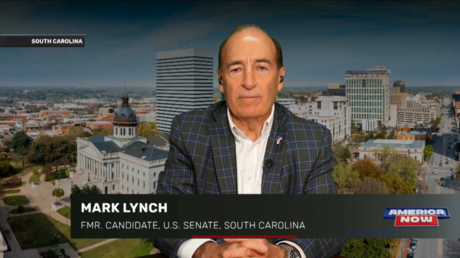
Mark Lynch did not wait for the funeral arrangements to clear before launching his new campaign for the United States Senate. Hours after South Carolina political titan Lindsey Graham died from a sudden aortic tear, Lynch positioned himself to seize the ballot line. A special primary election scheduled for August 11 has thrown the state's Republican machine into utter chaos, triggering a mad scramble for power. This is no ordinary election cycle. It is a raw, transactional fight to claim the mantle of a man who dominated the Palmetto State for nearly a quarter of a century. While the public mourns an institution, the political class is already drawing knives for his seat.
The underlying reality of modern campaigns dictates this lack of sentimentality. Power hates a vacuum. In the wake of Graham's sudden passing, the state's election laws triggered a condensed timeline that forces candidates to act instantly or get left behind completely. Lynch, an Upstate businessman who secured nearly twenty-nine percent of the vote against Graham in the June primary, understands that early movement dictates the field. By moving first, he forces every other ambitious Republican in the state to react to his timeline rather than their own.
The Race to Replace an Unreplaceable Figure
Lindsey Graham was an extraordinary survivor of the political arena. He transitioned from an outspoken neoconservative critic of the populist movement into one of its most ardent, trusted defenders. That transformation kept him in office, but it left a complex legacy that no single successor can easily inherit. Lynch campaigned heavily from the right during the regular primary, calling Graham a flip-flopper and painting him as an establishment relic who failed his constituency.
The calculations have changed overnight. Defeating an entrenched incumbent requires tearing down their reputation, but running for an open seat requires building a viable coalition. Lynch faces an electorate that is deeply shaken by the sudden loss of a national figurehead. His immediate declaration demonstrates an aggressive confidence, yet it carries immense risk. Voters often punish candidates who appear to treat tragedy as a career advancement strategy.
South Carolina law leaves no room for hesitation. The state election commission established a one-week qualifying window beginning July 21. That leaves potential contenders less than ten days to assemble campaign staff, secure high-dollar donors, and construct a statewide media presence. For individuals starting from scratch, the task is virtually impossible. Lynch possesses a significant advantage because his campaign infrastructure remains warm from the June primary effort.
Money Machinery and the Endorsement Void
Money drives everything in South Carolina elections. During his final run, Graham raised tens of millions of dollars to secure his position, leveraging his status as a senior committee chairman to draw national donors. Lynch funded his previous primary challenge largely out of his own pocket, loaning his campaign five million dollars to stay competitive. Self-funding can launch a campaign, but it rarely sustains a long-term political career against institutional power.
The true question hanging over the August special primary is the direction of the national party leadership. Graham enjoyed a direct line to the highest levels of the conservative movement. His endorsement from the top of the ticket was a primary shield that Lynch could not pierce in June. With Graham gone, that endorsement is suddenly back on the table. Every major political figure in the state is quietly lobbying for that singular nod, knowing it carries enough weight to dictate the primary outcome entirely.
Other contenders are circling the race. Members of the state’s congressional delegation are actively weighing their options, calculating whether to abandon safe House seats for a chaotic, high-stakes Senate run. Representatives with established name recognition pose an immediate threat to Lynch’s outsider campaign. They possess ready-made fundraising networks and existing relationships with the local party activists who turn out for low-volume August primary votes.
The Short Window That Changes Everything
Turnout will decide this election. August primaries are notoriously unpredictable, drawing only the most dedicated partisans and ideologues. In a regular June election, moderate voters and establishment fixtures help balance the extremes. In the sweltering heat of late summer, the campaign that possesses the most passionate, radical ground game holds the advantage. Lynch is banking on the idea that his anti-establishment rhetoric will resonate deeply with the faction of voters who bother to show up.
The institutional wing of the state party is terrified of this dynamic. They prefer orderly successions, predictable candidates, and stable fundraising patterns. An unpredictable outsider seizing a Senate seat threatens the delicate balance of power in Washington, where the majority margin remains razor-thin. National strategists are already looking at South Carolina with deep anxiety, desperate to prevent a chaotic primary from bleeding into the November general election.
The winner of this August sprint will face pediatrician Annie Andrews, the Democratic nominee who secured her position cleanly in June. While Republicans tear each other apart over Graham's ghost, Andrews can spend the next month raising money and appealing to independents who are exhausted by the internal warfare of the majority party. The Republican nominee will emerge from the August primary bruised, financially drained, and forced to immediately pivot to a general election campaign with zero transition time.
This is the brutal truth of the current situation. The legacy of a political giant is being dismantled in real-time by the harsh requirements of the election calendar. Mark Lynch has made his move, betting everything that speed and aggression will override the institutional machinery of his state. Whether that gamble pays off depends entirely on how quickly his rivals can mobilize to stop him.
For more details on how this primary rivalry took shape before the sudden vacancy, check out this Mark Lynch Town Hall Report detailing his early platform and explicit critiques of the incumbent senator's record.

