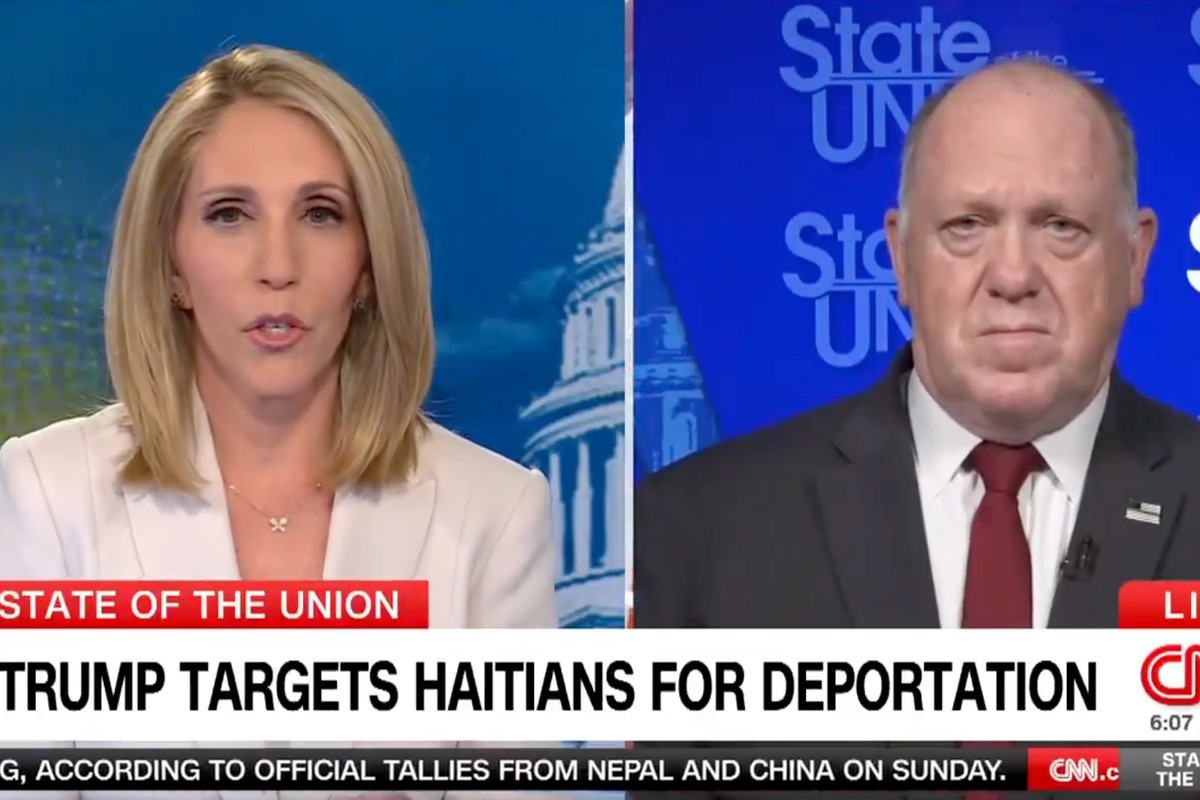
When White House border official Tom Homan admitted on national television that he did not know the security conditions in Haiti while defending the expulsion of hundreds of migrants, he wasn't simply displaying administrative ignorance. He was stating the operating philosophy of the current deportation machinery. Lawful removal orders supersede foreign realities on the ground. Temporary Protected Status, originally enacted by Congress in 1990 to shield foreign nationals from returning to active conflict zones or environmental catastrophes, has crashed against an uncompromising executive mandate.
The mechanics of this policy shift reveal a stark bureaucratic detachment. Federal immigration enforcement operates on legal designations, not humanitarian field reports. When the courts clear the termination of protections for roughly 350,000 Haitians, Immigration and Customs Enforcement executes the docket. Ignorance of localized gang blockades, hospital closures, or mass displacements in Port-au-Prince is not a disqualifier for an official tasked with removal; it is the administrative boundary where enforcement begins.
The Structural Failure of Temporary Status
Congress designed Temporary Protected Status as a functional bridge, not a permanent immigration category. Yet consecutive administrations repeatedly kicked the expiration date down the road. Decades passed. Countries like Haiti suffered compounding disasters—earthquakes, political assassinations, cholera epidemics, and total state collapse under militant coalitions.
That multi-decade extension pattern created an implicit social contract. Hundreds of thousands of individuals built lives, bought homes, paid taxes, and raised children who hold American citizenship. They integrated into local workforces across South Florida and other major hubs. Treating decades of integrated residency as a temporary visa violation ignores the structural reality of institutional dependency. When the state lets a temporary policy run for twenty-five years, the transition back to emergency status ceases to be an enforcement action. It becomes mass displacement.
Inside the Enforcement Pipeline
The logistical pipeline moving deportees from American detention centers back to tarmac arrivals in a capital city controlled by armed factions relies on absolute administrative compartmentalization. Field agents do not evaluate foreign policy directives. They process warrants.
[Legal Termination of TPS]
       │
       ▼
[Federal Removal Order Issued]
       │
       ▼
[ICE Detention & Flight Logistics]
       │
       ▼
[Arrival in Unstable Zone]
This compartmentalization shields decision-makers from moral hazard. The official setting the target quotas remains insulated from the reality faced by deportees stepping off charter flights in white clothing, trying to blend into a landscape governed by neighborhood gangs. By reducing human survival to a binary question of legal status, the apparatus sidesteps the contradiction of enforcing removal to a nation where the State Department simultaneously warns American citizens against travel for any reason.
The Geopolitical Fallout of Expedited Returns
Pushing hundreds of individuals back into a collapsed state strains an already fractured infrastructure. Haiti currently features millions of internally displaced persons alongside widespread food insecurity and systemic violence. Returning hundreds of productive adults without local economic footing or physical security accelerates the very instability that generated the migration waves initially.
Other nations watching these expulsions note the rigid signaling. The primary objective of the current administration remains deterrence, projected globally to prove that domestic legal orders override foreign humanitarian appeals. Every flight leaving American soil carries a dual payload. It removes an individual whose legal status has expired, and it broadcasts an unyielding message to every other migrant population currently holding precarious residency.
The system no longer attempts to reconcile domestic legal mandates with foreign humanitarian crises. It simply severs the connection entirely. Law dictates motion, motion requires execution, and the destination's current capacity to sustain human life remains entirely outside the jurisdiction of the border czar.