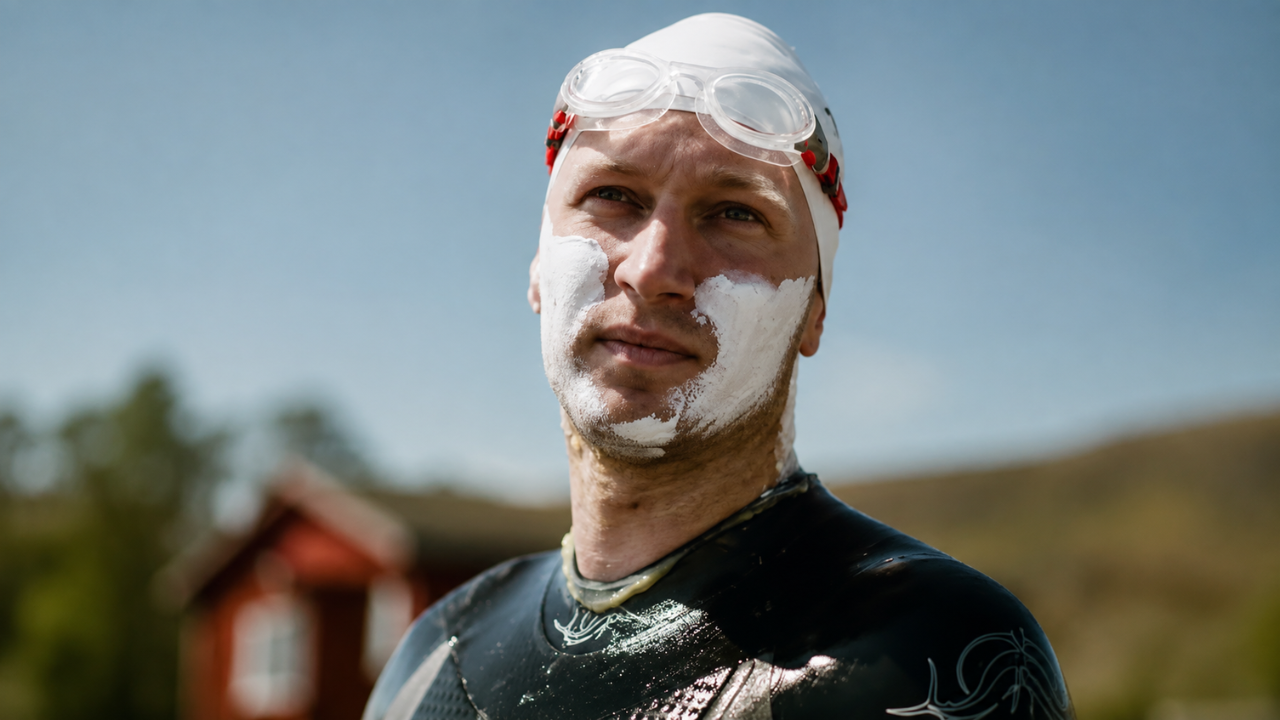
South African swimming legend Chad le Clos secured his status as the most decorated athlete in Commonwealth Games history on July 30, 2026, capturing his 21st career medal in Glasgow. Yet, within hours of that historic milestone, a devastating high-rise fire tore through his Sea Point apartment building in Cape Town, reducing his home of over a decade to ash and taking the life of a long-time neighbor.
The juxtaposition is stark. Elite sports journalism often focuses on the silver lining of athletic achievement, treating records as shields against personal adversity. But reality operates with far less sentimentality. While le Clos was standing in a media scrum thousands of miles away fielding questions about his historic relay bronze, his private sanctuary was being gutted by flames that left ninety percent of his personal belongings entirely unsalvageable.
The Weight of Twenty-One Medals
Milestones in swimming usually arrive with predictable fanfare. At thirty-four years old, le Clos is an outlier in a sport obsessed with youth. His career spans multiple Olympic cycles, most famously his 2012 shock victory over Michael Phelps in London, transforming him into a permanent fixture of South African national pride.
Breaking the all-time Commonwealth record—surpassing Australian swimmer Emma McKeon’s previous benchmark—should have been the definitive headline of his late-career arc. Instead, the historic triumph was immediately eclipsed by a domestic catastrophe.
Excellence does not exempt anyone from misfortune. Le Clos learned of the disaster through a casual comment during post-race media obligations when a reporter expressed condolences about a fire back home. Imagine the disorientation. One moment represents the absolute peak of a twenty-year professional trajectory; the next strips away every physical anchor of an individual's personal life.
When Material History Vanishes
Medals can be replaced by administrative request, but the microscopic fragments of a life accumulated over ten years cannot. Le Clos noted that ninety percent of his possessions vanished in the blaze, stressing that the irreplaceable memorabilia suffered the worst fate.
Athletes live in transient spaces. Hotels, training camps, and airport terminals consume the majority of an elite competitor's calendar. For le Clos, his Sea Point flat was the rare constant—a physical manifestation of stability amid the endless turbulence of global travel and grueling training blocks.
When a home burns down, the loss extends far beyond structural damage or luxury items. It erases the quiet, unrecorded moments that sustain an athlete through chronic physical pain and mental burnout. Training for international competition requires a psychological fortress, and the destruction of a domestic base strips away the recovery environment necessary to sustain high performance.
Beyond the Athlete Persona
Public figures face a peculiar burden during personal crises. The immediate reaction of sports media is to pivot toward resilience, framing property loss as a minor obstacle for a seasoned champion to overcome. This narrative flattens human tragedy into an inspirational trope.
Le Clos avoided this trap by shifting focus outward. Rather than wallowing in personal grief or launching a campaign for his own recovery, his foundation established a relief fund directed entirely toward his displaced neighbors. The fire claimed the life of a ninety-three-year-old resident who had lived in the block for years, turning a material disaster into an irreplaceable community loss.
By anchoring his response in communal solidarity rather than solo survival, le Clos exposed the limits of athletic individualism. Trophies and records hold no defensive power against structural fires or urban decay.
The smoke over Sea Point cleared to reveal a harsh truth about the shelf life of legacy. History books will record that Chad le Clos claimed twenty-one Commonwealth medals. They will not record the charred medals, the lost photographs, or the empty space where a home used to stand. Excellence remains a lonely summit, and sometimes, the descent begins in ash.