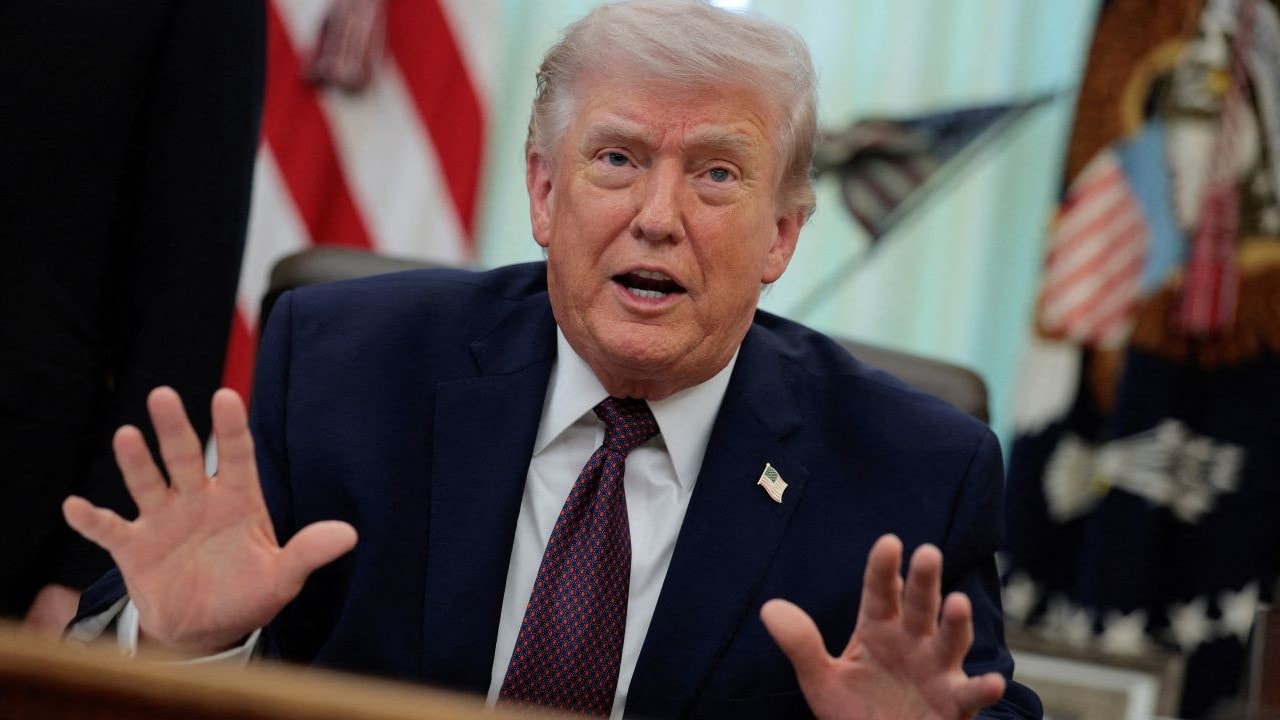
Donald Trump just reminded the Republican establishment that he does not forgive, and he certainly does not forget. In the primary battles across Indiana and Ohio this week, the former president moved beyond mere kingmaking and into the territory of a scorched-earth purge. By funding and endorsing primary challengers against sitting Republican state senators who dared to block his redistricting agenda, Trump turned quiet local contests into a high-stakes demonstration of raw political power. The results were a bloodbath for the old guard, proving that in the current Republican party, personal loyalty to one man outweighs years of legislative service.
The Indiana Execution
The most striking display of this power dynamic played out in the Indiana statehouse races. Seven Republican state senators had committed the cardinal sin of rejecting a Trump-backed redistricting plan in December—a plan designed to redraw congressional boundaries to ensure more GOP seats in the U.S. House. For these seven, the primary was not about policy or local issues. It was a trial. You might also find this similar story interesting: The El Niño Scare Is a Meteorological Ghost Story.
Trump, working in tandem with Governor Mike Braun, directed an unprecedented $8.3 million into these typically low-budget races. For context, these seats usually see spending well under $1 million. The result was a wave of attack ads that framed long-standing conservative incumbents as "Republicans in name only."
By the time the polls closed on Tuesday, five of those seven senators had been unseated. Travis Holdman, an 18-year veteran of the Indiana Senate and a representative of the Fort Wayne area, was one of the casualties. His defeat serves as a warning to any Republican who believes their local popularity or conservative record can protect them from a Mar-a-Lago directed strike. As extensively documented in recent reports by NPR, the results are widespread.
The Industrialization of Revenge
What we saw in Indiana was the industrialization of political revenge. It was not just a series of endorsements; it was a coordinated financial assault. The involvement of Governor Mike Braun and Senator Jim Banks in funding these challengers signals a total alignment of the state's top leadership with Trump’s personal grievances.
Incumbents like Holdman argued they were simply doing what their constituents asked by rejecting a heavy-handed redistricting plan. In the old world of politics, that would be a winning defense. In this primary, it was irrelevant. The influx of cash from national-level committees transformed these races into a proxy war for the 2024 midterms, effectively importing "Washington-style" scorched-earth tactics into the Midwest.
Ohio and the Ramaswamy Surge
In Ohio, the story shifted from internal purging to the elevation of a new breed of Trump disciple. Vivek Ramaswamy, the tech entrepreneur who rose to prominence during the presidential primaries, easily secured the Republican nomination for governor. Ramaswamy has effectively modeled himself as the ideological heir to the "America First" movement, parlaying his national name recognition and tech-sector fundraising into a dominant primary performance.
While Ramaswamy’s victory was expected, the margin and the tone were telling. He largely ignored his primary opponent, Casey Putsch, and focused entirely on the general election and his alliance with Trump. This strategy suggests that the Republican base in Ohio no longer requires a candidate to prove their local bona fides; they simply need to prove their proximity to the Trump orbit.
The General Election Collision
Despite Trump’s dominance in the Republican primaries, the general election outlook remains murky. While Trump is winning the battle for the soul of the GOP, Democrats are seeing flashes of momentum that suggest the "Trump effect" may have a ceiling in a general election.
The special election in Michigan, held the same day, saw Democrat Chedrick Greene flip a state Senate seat in a district where the margins between Trump and Harris were razor-thin in 2024. This victory gives Democrats control of the Michigan Senate, a significant psychological win that counters the narrative of a Republican juggernaut.
In Ohio, the U.S. Senate race is setting up to be one of the most expensive and watched contests in the country. Former Senator Sherrod Brown, a Democrat with a history of outperforming his party in a deep-red state, will face off against Republican Jon Husted. Husted, appointed to fill the vacancy left by Vice President JD Vance, represents the traditional wing of the party now forced to navigate the Trump-dominated waters.
The Mathematics of Fear
The strategy in Indiana and Ohio was designed to instill fear. When a primary challenger is backed by $1.3 million in a district where voters have never seen that kind of money, the incumbent’s record is quickly buried under the weight of high-production attack ads.
Trump’s targeted senators all represented districts he carried by 20 points or more. These are not "moderate" districts. These are the heart of his base. By proving he can turn that base against its own long-term representatives, Trump has ensured that every Republican in a red district will think twice before voting against his interests.
The Invisible Toll on Governance
The long-term consequence of this primary season is the erosion of independent legislative judgment. When state senators are punished for voting their conscience—or their constituents’ wishes—on technical issues like redistricting, the legislative process becomes a performance of loyalty.
We are seeing a transition where the primary function of a Republican official is no longer to represent a geographic district, but to serve as a foot soldier for a national movement. The purge in Indiana was a clear message that the "Big Tent" of the Republican party has been dismantled, replaced by a narrow corridor where only the most loyal can walk.
The midterm battle lines have been drawn, but they are not just between Democrats and Republicans. They are drawn through the heart of the GOP itself, separating those who surrendered to the new order from those who are no longer in office.