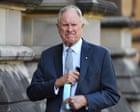
Politics is full of loud voices and short memories. Every so often, a figure leaves the stage who reminds us what public service was supposed to look like. Bruce Baird was that kind of leader. When he died at age 84, Australia lost more than a former minister. We lost a masterclass in how to get things done without losing your decency.
If you only know him as the father of a former New South Wales premier or a prominent journalist, you're missing the engine room of his actual legacy. Baird didn't just drift through politics. He built landmarks, handled impossible portfolios, and stood up for principles that many in his own party preferred to sweep under the rug. If you enjoyed this post, you might want to read: this related article.
The Man Behind Sydney’s Olympic Dream
Let's talk about the 2000 Sydney Olympic Games. It's easy now to look back at Sydney Harbour lit up with fireworks and assume it was always a done deal. It wasn't. Back in the early nineties, securing the Games was an uphill grind against heavy global competition.
Remembering Bruce Baird The Politician Who Shaped Modern Sydney
news For another perspective on this story, see the recent update from Associated Press.
Bruce Baird wasn't your typical career politician. Long before entering the volatile arena of federal and state politics, he was running transit systems and hotel networks. When he passed away at the age of 84, Australia lost a rare breed of public servant. He was someone who actually understood how commerce, urban design, and community life intersected.
If you look back at his tenure as the New South Wales Minister for Transport and Tourism during the late eighties and nineties, you see a masterclass in pragmatic reform. He didn't just talk about modernizing infrastructure. He took massive political risks to push through changes that modern Sydneysiders take completely for granted today.
The Transport Reformer Who Took the Heat
Politics is full of people who want the title without the friction. Bruce Baird was the opposite. During his time in the Greiner and Fahey state governments, he held the transport portfolio when it was a graveyard for political careers.
He didn't shy away from the hard fights. Privatizing certain transport sectors and overhauling the state's rail network wasn't popular. Commuters complained. Unions pushed back hard. Yet, Baird possessed a stubborn dedication to structural efficiency. He understood that a growing global city couldn't rely on 19th-century operational models.
He also recognized the massive economic engine sitting inside New South Wales tourism. He spearheaded initiatives that put Sydney firmly on the international map ahead of the 2000 Olympic Games. He knew that building a world-class destination required more than just nice beaches. It required reliable transit, clean public spaces, and strategic international marketing.
Moving to Canberra and Fighting for the Vulnerable
Transitioning from state politics to federal parliament in 1998 as the Liberal member for Cook, Baird carved out a distinct lane. He wasn't a backbench yes-man. He had strong convictions and wasn't afraid to cross the floor or publicly disagree with his own party leadership when conscience demanded it.
His most notable act of political courage involved immigration policy. While sitting within a conservative federal coalition government, Baird openly criticized mandatory detention policies for asylum seeker children. He didn't do it for theatrical political points. He argued from a humanitarian standpoint backed by common sense and basic empathy. That took guts. Party loyalty is a powerful drug in Canberra, but Baird chose human decency over blind obedience.
That independent streak defined his legacy. He represented a brand of liberalism that valued social tolerance, economic responsibility, and institutional integrity. It is a style of leadership that feels increasingly rare in current political discourse.
A Lasting Legacy Beyond the Ballot Box
After leaving federal parliament in 2007, Baird didn't just fade away into a quiet retirement. He continued shaping public policy through various advisory roles, chairing organizations like Business Events Sydney and the Refugee Council of Australia. He kept working because he genuinely cared about how the country operated.
Look at the state of public debate today. It is loud, polarized, and often obsessed with short-term social media traction. Bruce Baird came from an era where policy substance mattered more than performance. He left behind a physical and economic footprint across New South Wales that still dictates how millions of people move, travel, and live every single day.
Take a moment to appreciate the complex machinery of a major city the next time you ride a train through Sydney or watch international tourists flood Darling Harbour. Much of that foundation was laid by a pragmatic strategist who refused to take the easy path.
True public service is about leaving institutions better than you found them, regardless of the personal political cost. Bruce Baird understood that assignment completely.