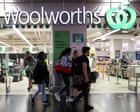
Supermarket giant Woolworths managed to increase the price of essential family staples during a high-profile "Price Freeze" campaign meant to protect consumers from inflation. When grocery titan Woolworths rolled out its three-month promotional freeze on 300 household items under CEO Amanda Bardwell, shoppers were told they could rely on absolute pricing stability at the checkout. Instead, independent tracking data compiled by CW Scanner revealed that core items—including chicken breast fillets, washed potatoes, and fresh donuts—experienced sharp price hikes days after the campaign launched.
This mismatch between corporate public relations and reality exposes deep structural flaws in how major retailers market relief to financially strained households. Consumers walk down supermarket aisles trusting that bold promotional signage means baseline protection. What they encounter instead is a complex shell game of baseline adjustments, promotional baselines, and legal loopholes that favor the ledger over the pantry.
The Mechanics of Promotional Distortion
Supermarket pricing structures rarely operate on flat lines. Retailers rely heavily on high-low pricing models, alternating between standard shelf rates and temporary promotional discounts to entice shoppers. When Woolworths announced its price freeze, executives framed the initiative as a commitment to lock in the shelf price visible on day one.
Yet corporate defense mechanisms built into these campaigns tell a different story. According to retail insiders and corporate justifications, items that were temporarily discounted right before a freeze may not be bound to that temporary floor. If a product sat on a temporary markdown on day zero, the retailer often reserves the right to revert the item to a higher standard shelf price, defining that jump not as a price hike, but as a normalization.
Consider the treatment of RSPCA-approved chicken breast fillets during the recent campaign. Data shows that customers purchasing the 350-gram packs faced a sudden 33 percent markup within the first week of May. A product available at a lower promotional rate just prior to the freeze bounced upward, fluctuated across subsequent weeks, and ultimately settled back down only after the three-month campaign concluded.
This practice turns the concept of consumer protection on its head. Shoppers lack the analytical tools or historical databases required to track hourly and daily pricing shifts across thousands of stock-keeping units. Retailers possess vast data lakes tracking elasticity and purchase behavior, creating an asymmetric information gap where the house always wins.
Regulatory Scrutiny and the Trust Deficit
This controversy does not occur in a vacuum. Major Australian supermarket chains face intense regulatory pressure from agencies like the Australian Competition and Consumer Commission (ACCC). Past and pending legal battles target deceptive discount advertising, accusing retail monopolies of inflating baseline prices temporarily to make subsequent markdowns look far more dramatic than they actually are.
When a company under active regulatory investigation for promotional practices rolls out a massive cost-of-living relief campaign, skepticism is mandatory. Marketing ethics experts point out that the average buyer interprets a price freeze as a ceiling on what they have been paying during normal weekly shops. When that ceiling behaves like a trampoline, bouncing upward based on internal accounting definitions of standard versus promotional pricing, public trust erodes permanently.
The defense offered by corporate representatives usually centers on external pressures. Supply chain disruptions, rising fuel expenses, geopolitical conflicts in the Middle East, and increasing operational overheads are routinely cited as justification for passing costs down the line. Supermarkets argue that freezing 300 items requires absorbing millions in supplier cost increases.
However, absorbing costs on a select list of items while quietly adjusting the baseline or rotating products through high-margin brackets undermines the entire premise of corporate benevolence. If relief is conditional on technical loopholes, it ceases to be relief and transforms into a marketing strategy designed to capture market share during inflationary peaks.
Navigating the Retail Maze
For the everyday shopper, understanding these corporate maneuvers changes how one approaches the weekly grocery run. Relying on promotional banners for budget security is an increasingly risky strategy. Retail analysts recommend several concrete adjustments for households attempting to weather grocery inflation without falling victim to marketing illusions.
- Track unit pricing rather than total package cost to identify hidden shrinkflation and baseline shifts.
- Diversify purchasing channels by incorporating local independent grocers, markets, and smaller alternative chains that lack complex high-low pricing algorithms.
- Ignore promotional campaign titles entirely, focusing strictly on historical price memory for frequently purchased core items.
- Utilize independent barcode scanning and price comparison applications to verify whether a discounted tag represents a genuine saving or a recovered baseline.
Supermarket giants will continue to deploy feel-good marketing campaigns as long as consumer advocacy groups and investigative auditors keep shining a light on checkout discrepancies. Until structural transparency is mandated by law, the burden of proof rests entirely on the consumer walking the aisles with a calculator in hand.